
Discover the best city to set up office in India...
Categories
Tags
- benefits of BOT model
- BOT agreement
- BOT business model
- BOT contract example
- BOT for enterprises
- BOT India services.
- BOT management services
- BOT model advantages
- BOT model India
- BOT model setup
- BOT outsourcing
- BOT project lifecycle
- BOT vs ODC
- build operate transfer contract
- build operate transfer framework
- build operate transfer india
- global expansion models
- IT BOT agreements
- offshore BOT structure
- transfer phase in BOT

BOT Agreement: The Complete 2025–26 Guide to the Build Operate Transfer Contract Model
Why the BOT Agreement Is Redefining Global Business Expansion
In today’s globalized economy, companies are constantly searching for ways to scale faster while maintaining control, efficiency, and cost optimization. Among the many models of outsourcing and offshore development, the BOT Agreement — short for Build Operate Transfer Agreement — has emerged as a strategic, low-risk method to establish offshore operations without losing ownership or agility.
The Build Operate Transfer Contract represents a perfect middle ground between outsourcing and ownership. Instead of simply delegating processes to a vendor, enterprises build offshore centers that are managed by a partner during the operational phase and later transferred to the client — ensuring a smooth, fully controlled transition.
As the world steps into 2025–26, the BOT model is becoming the preferred approach for organizations seeking scalable, compliant, and sustainable global expansion strategies.
What Is a BOT Agreement?
A BOT Agreement is a contractual arrangement in which one company (the service provider) sets up, manages, and operates an offshore facility on behalf of another company (the client), with the understanding that ownership will eventually transfer to the client after a predefined period.
The Build Operate Transfer Contract has three distinct stages:
- Build Phase:
The service provider establishes the offshore center — including infrastructure, staffing, technology setup, and legal compliance. - Operate Phase:
The offshore center is managed by the service provider, handling daily operations, hiring, HR management, project delivery, and quality control. During this time, the client monitors progress and gains operational insights. - Transfer Phase:
After the agreed duration or performance milestones, the ownership, employees, and infrastructure are smoothly transferred to the client, turning the setup into a fully owned Global Capability Centre (GCC) or subsidiary.
This phased approach ensures agility, transparency, and cost efficiency while de-risking expansion into new geographies — especially in markets like India, which has become the global hub for BOT setups.
Key Elements of a Build Operate Transfer Contract
The success of a Build Operate Transfer Contract lies in the clarity of its structure and terms. Key elements include:
- Scope of Work:
Clear definition of what the offshore team or facility will handle — from software development to operations management. - Governance Model:
Joint governance mechanisms between the client and vendor ensure accountability and quality control. - Transfer Terms:
Legal and operational details of the transition phase, including IP transfer, employee retention, and knowledge handover. - Cost Structure:
Transparent pricing across all three phases of the BOT model — setup cost, operational expenses, and transition cost. - Performance Metrics:
Defined KPIs to measure operational efficiency, quality, and readiness for transfer.
A well-structured BOT agreement ensures that the client gains full operational control at the end of the cycle with minimal disruption.

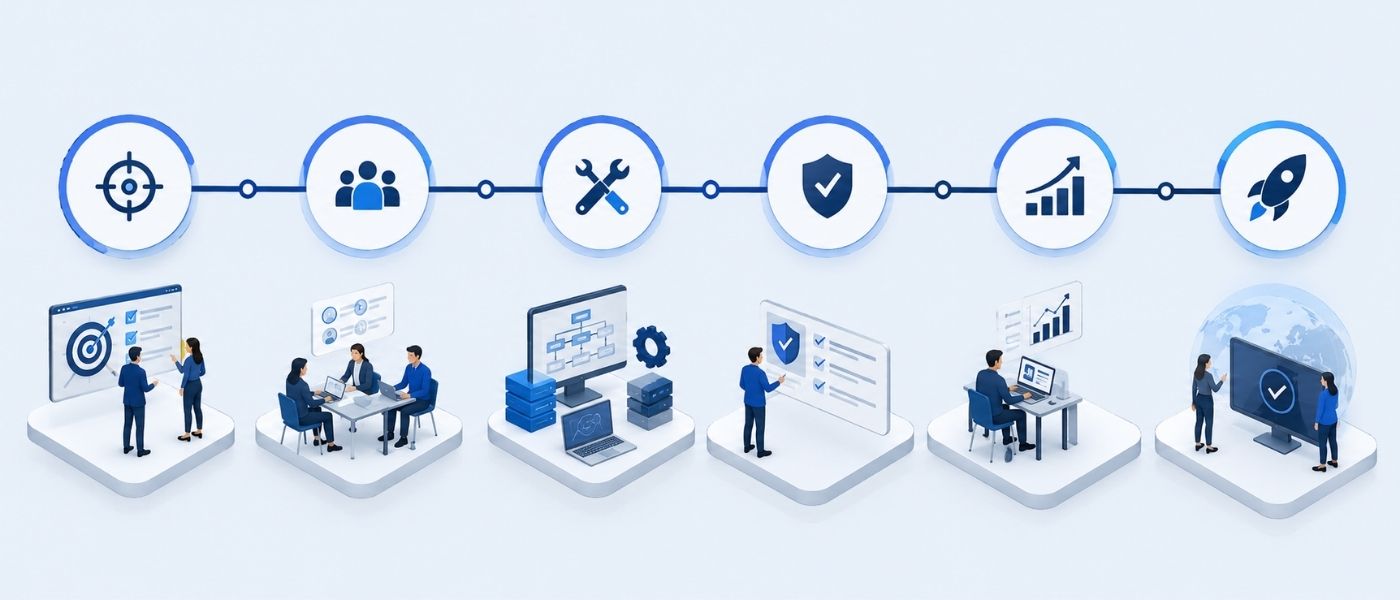
How BOT Agreements Work: A Step-by-Step Breakdown
- Requirement Analysis:
The process begins with understanding the client’s business goals, project requirements, and ideal offshore structure. - Building the Offshore Center:
Infrastructure setup, compliance documentation, and recruitment of skilled teams tailored to the project’s scope. - Operational Phase:
The partner operates the offshore facility efficiently, ensuring delivery, performance, and alignment with client goals. - Knowledge Transfer and Handover:
The transition phase begins once KPIs are met, ensuring a seamless shift of management, assets, and workforce. - Post-Transfer Support:
In many cases, service providers continue to assist during the post-transfer stage to ensure continuity.
This systematic approach transforms a BOT model into a proven mechanism for establishing long-term offshore centers — paving the way toward fully owned GCCs.
Advantages of BOT Agreements
The BOT Agreement is not just another outsourcing model; it’s a strategic partnership model that combines flexibility, control, and scalability.
- Reduced Risk
The service provider shoulders the initial setup risk, handling compliance, hiring, and operational challenges.
- Cost Optimization
Clients save substantially on setup costs while accessing global talent at a fraction of local expenses.
- Faster Market Entry
Setting up through a BOT contract accelerates global expansion timelines — especially in competitive markets like India.
- Full Control and Ownership
Unlike outsourcing, where control is limited, BOT models culminate in full ownership, giving enterprises total strategic autonomy.
- Talent Retention and IP Security
BOT contracts ensure that intellectual property rights, processes, and human capital are securely transferred.
Legal Framework of a Build Operate Transfer Contract
A solid Build Operate Transfer Contract is legally binding and should clearly define every stage.
Important legal components include:
- Confidentiality and Data Protection Clauses
Protect sensitive information and intellectual property during all BOT phases. - Employee Transfer Agreements
Outline terms under which the team transitions to the client organization. - Service-Level Agreements (SLAs)
Define expectations for performance, delivery timelines, and quality metrics. - Termination and Exit Clauses
Protect both parties from unexpected disruptions. - Dispute Resolution Mechanisms
Usually includes arbitration and jurisdiction clauses to handle legal conflicts efficiently.
A professionally drafted BOT agreement minimizes ambiguity and builds trust between both parties.
BOT Agreement vs Other Offshore Models
Model | Ownership | Control | Duration | Risk | Best For |
Outsourcing | Vendor | Limited | Short-term | Low | Cost savings |
Offshore Development Center (ODC) | Client | High | Long-term | Medium | Product development |
BOT Agreement | Gradual transfer to client | High (post-transfer) | Medium | Low | Scalable operations |
Global Capability Centre (GCC) | Fully client-owned | Full | Long-term | Medium | Global expansion |
As shown, the Build Operate Transfer Contract blends the best of all models — providing flexibility and control without long-term risk exposure.
The Rise of BOT in India (2025–26 Outlook)
India is emerging as the global epicenter for BOT agreements due to its robust digital ecosystem, cost-effective operations, and skilled workforce.
Here’s why global enterprises prefer India for BOT setups:
- Abundant Skilled Talent:
Access to millions of IT, finance, and business operations professionals. - Mature Infrastructure:
World-class business parks, connectivity, and cloud-ready environments. - Government Support:
Business-friendly policies for FDI, tech exports, and data protection. - Cost Competitiveness:
Operational costs in India are up to 60% lower than in Western economies. - Proven Track Record:
Thousands of successful BOT and GCC setups by Fortune 500 companies.
The BOT model in India is no longer experimental; it’s a proven, scalable framework for sustainable global growth.

Industries Adopting the BOT Agreement
- IT and Software Development:
Technology companies use BOT structures to scale engineering teams quickly while maintaining IP ownership. - Fintech:
Financial institutions leverage BOT setups for secure, compliant back-office operations. - Healthcare:
BOT models enable cost-efficient medical billing, analytics, and data management centers. - Manufacturing and Telecom:
Global manufacturers use BOT to manage supply chains and R&D operations offshore.
How to Draft a BOT Agreement: Key Legal and Strategic Guidelines
- Define clear objectives and deliverables.
- Include transfer mechanisms — employees, assets, and IP rights.
- Detail performance-based milestones for transition readiness.
- Establish joint governance committees for transparency.
- Plan a structured exit strategy for the operate phase.
- Ensure compliance with local labor, tax, and IP laws.
A legally sound and strategically designed Build Operate Transfer Contract ensures both flexibility and security across all operational stages.
The Future of the Build Operate Transfer Contract Model
The future of BOT agreements is intelligent, automated, and data-driven. Emerging technologies like AI, analytics, and robotic process automation are enhancing how BOT partnerships operate — ensuring higher efficiency and lower risk.
In 2025–26, hybrid models like BOT + GCC are gaining traction, where enterprises begin with a BOT setup and evolve it into a long-term Global Capability Centre for sustained innovation.
Conclusion
The BOT Agreement represents the evolution of global collaboration — balancing the best of outsourcing, ownership, and scalability. For enterprises expanding into markets like India, it provides a tested, low-risk pathway to build world-class operations, reduce costs, and maintain full control.
And when it comes to implementing this model effectively, iValuePlus stands as a trusted partner — helping global enterprises build, operate, and seamlessly transfer offshore centers that drive growth, innovation, and long-term success.
Recent Post
How to Set Up an Offshore QA Center of Excellence in India: A Practical Guide for Global Teams
Learn how to set up an offshore QA center of...
Managed IT Services for Small Businesses: Complete Guide (2026)
Discover what managed IT services for small businesses actually include,...

iValuePlus Services
iValuePlus is a one-stop solution to address all your needs to access, build and grow your business in the Indian market which is cost-effective & has a huge talent pool. Established in 2019 as a ‘Business Solution provider', our team has delivered successful growth projects in the international market.
Our services include setting up ODC (offshore development center), Staff Augmentation, Talent Acquisition, Digital Marketing, in the IT/ITES domain.