
Discover the best city to set up office in India...

How the BOT Framework Reduces GCC Setup Risk and Cost in 2025–2026
Why Companies Are Turning to the BOT Framework for GCC Setup
Global Capability Centers (GCCs) are no longer limited to Fortune 500 giants. In 2025–2026, mid-sized companies, scale-ups, and digital-first enterprises are aggressively expanding into India to build strategic hubs for engineering, IT, R&D, shared services, finance, customer support, and global operations.
However, setting up a GCC from scratch is not easy.
Traditional GCC setup involves:
- High upfront investment
- Lengthy timelines
- Complex regulatory processes
- Scarce access to proven talent
- High compliance and operational risks
- The burden of managing local infrastructure, HR, payroll, and administration
This is where the Build-Operate-Transfer (BOT) Framework changes the entire game.
Instead of establishing a GCC alone, companies partner with an experienced BOT provider who builds the center, operates it smoothly, and transfers full ownership once the business is ready.
This model dramatically reduces risk, time, and cost.
In this guide, we explore:
- What the BOT Framework is
- Why it’s becoming the preferred approach for GCCs
- How the model reduces financial, operational, and compliance risks
- How it accelerates capability building
- Why India is the top destination for BOT-led GCC setups
- Best practices for choosing the right BOT partner
Let’s dive in.
What Is the BOT Framework? A Modern Blueprint for GCC Success
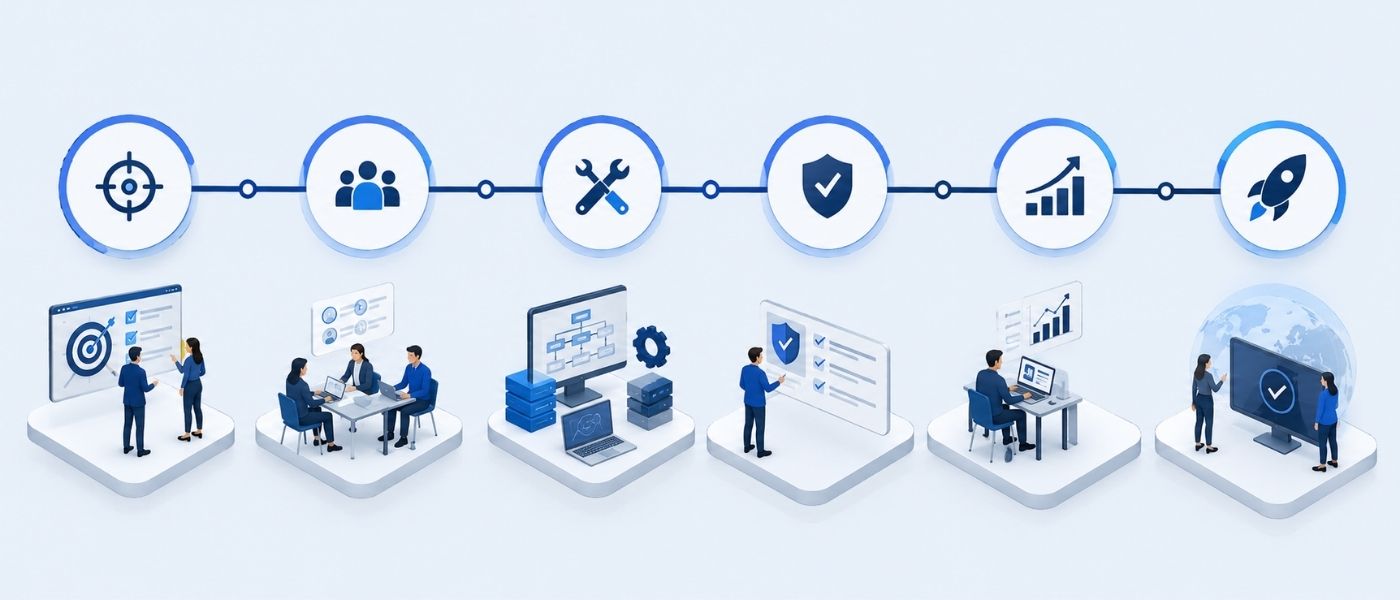
The Build-Operate-Transfer (BOT) model is a strategic outsourcing and expansion framework where a specialized partner sets up and manages an offshore center until it becomes mature enough for full transfer.
The BOT Model Includes Three Phases
- Build Phase
The BOT partner:
- Registers the legal entity if needed
- Sets up office infrastructure (IT, security, workspace)
- Handles compliance, licenses, and documentation
- Designs the org structure and hiring roadmap
- Recruits talent based on client needs
This phase ensures the GCC foundation is strong, compliant, and scalable.
- Operate Phase
The BOT provider runs the center day-to-day, managing:
- HR, administration, and payroll
- IT support and infrastructure maintenance
- Security, audits, and compliance
- Talent management and team productivity
- SOPs, processes, and delivery frameworks
During this period, the GCC grows capability, stabilizes operations, and becomes performance-ready.
- Transfer Phase
Once the center reaches maturity, the BOT partner transfers:
- Full control
- Resources
- Infrastructure
- Teams
- Knowledge frameworks
The company now owns a fully functioning GCC—built securely, at lower cost, and without the risks of going alone.
Why the BOT Framework Is Becoming the Preferred GCC Expansion Strategy
In 2025–2026, global companies face intense pressure to:
- Scale faster
- Reduce operational risk
- Access reliable talent
- Enter new markets cost-effectively
The BOT model solves these challenges better than any traditional approach.
Key reasons behind BOT adoption:
- Rapid scalability and speed-to-market
GCC setup that usually takes 18–24 months can be completed in 4–6 months under BOT.
- No heavy upfront investment
Office space, IT infrastructure, HR systems, and compliance are handled by the BOT partner.
- Lower risk with professional oversight
Compliance, talent management, and operations are pre-handled by experts.
- Predictable costs and transparent pricing
Companies avoid cost overruns, hidden expenses, and inefficient processes.
- Flexibility to scale teams without long-term commitments
BOT allows adjusting headcount based on business priorities.
The BOT framework provides the perfect bridge between outsourcing and owning a GCC combining control with operational excellence.
How the BOT Framework Reduces GCC Setup Risk
Risk reduction is the core benefit of the BOT model. Let’s break down the different types of risks and how BOT mitigates them.
A. Financial Risk Reduction
- No upfront capex burden
Traditional GCC setup requires massive investment in:
- Real estate
- Furniture & office design
- Hardware & IT infrastructure
- Security systems
- Recruitment machinery
- Legal and compliance setup
The BOT partner absorbs these initial costs, significantly lowering financial exposure.
- Monthly predictable OPEX model
Companies pay a structured monthly fee—no surprises, no hidden charges.
- Lower recruitment and attrition costs
BOT partners already have:
- Talent pipelines
- Hiring teams
- Local market knowledge
- Employee retention strategies
This reduces financial leakage from poor hiring.
B. Operational Risk Reduction
- Experts handle day-to-day operations
The BOT provider ensures seamless functioning with mature SOPs and governance.
- No learning curve delays
Global companies often face operational inefficiencies when starting alone. BOT eliminates this by providing pre-established processes.
- Faster productivity curves
Teams hit performance benchmarks faster because the environment is already optimized.
C. Compliance & Legal Risk Reduction
- Adherence to Indian regulations
GCC setup involves complex Indian laws:
- Shops & Establishment Act
- Labour laws
- Taxation rules
- PF, ESIC, gratuity laws
- Data protection laws
BOT partners bring deep local compliance knowledge.
- Secure documentation & regulatory filings
Everything—from contracts to statutory registrations—is handled error-free.
- Zero non-compliance penalties
The BOT provider takes full accountability during the Operate phase.
D. Talent Risk Reduction
- Access to pre-vetted talent pools
BOT partners maintain ready pipelines of:
- software engineers
- R&D specialists
- cloud and DevOps experts
- finance & accounting teams
- HR and operations teams
- customer support specialists
- Faster hiring cycles
Hiring cycles shrink from 3–6 months to 2–8 weeks.
- Lower attrition rates through employee engagement
BOT operators know Indian employee expectations and retention strategies.
E. Strategic Risk Reduction
- Phased ownership avoids early operational shocks
Instead of handling everything from Day 1, companies gradually take over mature operations.
- Immediate access to local knowledge
Market, culture, salary benchmarking, and tech competencies are already mapped by the BOT partner.

How the BOT Model Reduces GCC Setup Cost
Cost reduction is the second major advantage. Here’s where savings occur:
Infrastructure & Real Estate Cost Savings
BOT providers already have:
- Managed office spaces
- IT-secured environments
- Scalable workstations
- Access-controlled areas
- Meeting rooms
This eliminates the need to invest in expensive long-term commercial leases.
Recruitment Cost Savings
Recruiting for GCCs is expensive:
- Hiring agencies charge 12–25% commissions
- Niche talent salaries require premium pricing
- Screening, assessment, and verification add costs
BOT partners cut this drastically through in-house hiring engines.
Technology & IT Cost Savings
The BOT partner provides:
- Hardware procurement
- Network + cybersecurity setup
- IT helpdesk
- Cloud enablement
- Asset management
Companies avoid millions in infra capex.
Compliance & Legal Cost Savings
BOT covers:
- Company registration costs
- Legal contracts
- Statutory filings
- Compliance audits
- HR policy frameworks
This saves both time and recurring costs.
Reduced Operational & Administrative Expenses
The Operate phase includes:
- Payroll
- HR operations
- Admin support
- Facility management
- IT management
- Vendor management
Centralized BOT operations reduce overheads by 25–40%.
Faster Productivity = Higher ROI
Because teams become productive faster, companies achieve:
- Faster product delivery
- Higher operational efficiency
- Reduced rework cost
- Faster return on investment
The BOT Framework vs. Traditional GCC Setup
Criteria | Traditional GCC Setup | BOT Framework |
Setup Time | 18–24 months | 4–6 months |
Upfront Investment | Very high | Near zero |
Compliance Risk | High | Minimal |
Talent Hiring Speed | Slow | Fast |
Operational Maturity | Takes years | Ready from day one |
Ownership | Immediate | After transfer |
Cost Predictability | Low | Very high |
Flexibility | Low | High |
Market Knowledge | Limited | Extensive |
The BOT model clearly offers a more efficient, low-risk path to GCC success.

Why India Is the #1 Destination for BOT-Based GCCs
India is the world’s fastest-growing GCC hub.
Key reasons:
- 2+ million GCC professionals
- Deep tech talent pools
- Cost-effective workforce
- Strong infrastructure
- Mature GCC ecosystem
- Favorable policies
- High English proficiency
- Global delivery mindset
Companies from the US, UK, EU, Middle East, South Korea, Japan, and Australia are increasingly leveraging BOT-led expansion in India.
Best Practices for Implementing the BOT Framework Successfully
To maximize GCC success through BOT, companies should:
- Choose a partner with full-stack capabilities
Not every outsourcing firm understands GCC setup.
Your BOT partner must offer:
- Infrastructure setup
- HR and recruitment
- Finance and compliance
- IT and cybersecurity
- Admin and facility management
- Delivery oversight
- Transition management
- Define clear transfer timelines
Clear milestones prevent extensions and delays.
- Set transparent KPIs for each phase
Some KPIs include:
- hiring timelines
- SLA compliance
- attrition rates
- delivery performance
- operational readiness
- Implement phased knowledge transfer
Avoid sudden transitions; transfer teams, processes, and assets gradually.
- Maintain joint governance
Weekly and monthly governance reviews ensure alignment.
- The Future of GCCs: BOT Will Power the Next Decade
The GCC landscape is evolving fast. Emerging trends for 2025–2030 include:
- AI-led shared services
- Full digital automation
- Multi-disciplinary GCCs
- Hybrid BOT and ODC models
- Faster global expansion cycles
- Demand for compliance-ready centers
The BOT framework will become the default strategy for global companies looking to build India-based capability centers with lower risk and cost.
The Future of GCCs: BOT Will Power the Next Decade
The GCC landscape is evolving fast. Emerging trends for 2025–2030 include:
- AI-led shared services
- Full digital automation
- Multi-disciplinary GCCs
- Hybrid BOT and ODC models
- Faster global expansion cycles
- Demand for compliance-ready centers
The BOT framework will become the default strategy for global companies looking to build India-based capability centers with lower risk and cost.
Conclusion
In a competitive global market, companies cannot afford slow expansion or costly mistakes.
The Build-Operate-Transfer (BOT) model provides the ideal blend of:
- Speed
- Control
- Cost efficiency
- Risk reduction
- Flexibility
It enables companies to build world-class GCCs in India without the complexities of traditional setup. Whether you’re scaling engineering, IT, finance, HR, R&D, or support functions—the BOT framework accelerates success while lowering operational and financial exposure.
Recent Post
How to Set Up an Offshore QA Center of Excellence in India: A Practical Guide for Global Teams
Learn how to set up an offshore QA center of...
Managed IT Services for Small Businesses: Complete Guide (2026)
Discover what managed IT services for small businesses actually include,...

iValuePlus Services
iValuePlus is a one-stop solution to address all your needs to access, build and grow your business in the Indian market which is cost-effective & has a huge talent pool. Established in 2019 as a ‘Business Solution provider', our team has delivered successful growth projects in the international market.
Our services include setting up ODC (offshore development center), Staff Augmentation, Talent Acquisition, Digital Marketing, in the IT/ITES domain.