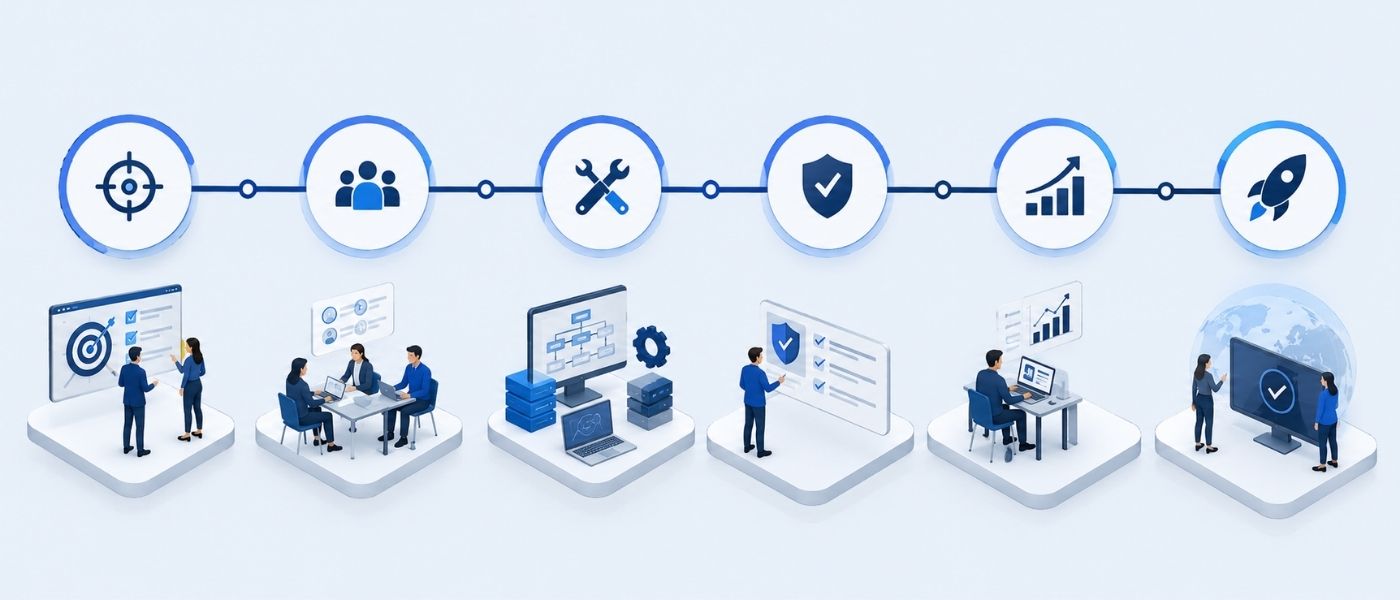

Discover the best city to set up office in India...

Building Resilient IT Operations Through Outsourcing IT Services
Why IT Resilience Is a Board-Level Priority in 2026
In today’s always-on digital economy, IT resilience is no longer optional. System downtime, cyber incidents, cloud outages, or skill shortages can halt operations within minutes—impacting revenue, customer trust, regulatory compliance, and brand reputation.
Modern enterprises face unprecedented challenges:
- Distributed and remote workforces
- Cloud-native but complex IT stacks
- Rising cybersecurity threats
- Talent shortages in critical IT skills
- 24/7 customer and business expectations
Against this backdrop, outsourcing IT services has emerged as a strategic lever for building resilient IT operations—not merely as a cost-saving measure, but as a way to enhance stability, scalability, and risk management.
This article presents a practical, execution-focused view of how organizations can build resilient IT operations through outsourcing IT services, covering:
- What IT resilience truly means
- Why traditional in-house models struggle
- Which IT services should be outsourced
- Governance and security frameworks
- Risk mitigation and continuity planning
- Measuring resilience and ROI
What Does IT Resilience Really Mean?
Defining IT Resilience
IT resilience is the ability of IT systems, teams, and processes to anticipate, withstand, recover from, and adapt to disruptions—without significant impact on business operations.
It goes beyond uptime and includes:
- Operational continuity
- Cyber resilience
- Scalability under stress
- Rapid incident recovery
- Skill and resource availability
- Compliance and audit readiness
Common Threats to IT Resilience
Organizations typically face resilience threats from:
- Infrastructure failures
- Cloud service outages
- Cyberattacks (ransomware, DDoS, breaches)
- Human errors and skill gaps
- Vendor or tool dependency
- Natural disasters and geopolitical events
Building resilience means addressing all of these simultaneously, which is difficult with limited internal resources.
Why Traditional In-House IT Models Struggle With Resilience
Talent Constraints and Skill Gaps
In-house IT teams often struggle to maintain:
- 24/7 coverage
- Specialized skills across cloud, security, networking, DevOps
- Continuous training and certification
This creates single points of failure.
High Fixed Costs and Limited Scalability
In-house teams involve:
- Fixed payroll costs
- Recruitment delays
- Long onboarding cycles
Scaling up during incidents or growth phases is slow and expensive.
Burnout and Operational Fragility
Lean internal teams often operate in “firefighting mode,” leading to:
- Burnout
- Documentation gaps
- Reactive incident management
- Reduced long-term resilience
Inconsistent Governance and Process Maturity
Many organizations lack:
- Mature ITIL processes
- Standardized incident and change management
- Proper monitoring and escalation frameworks
This weakens operational stability.
Why Outsourcing IT Services Strengthens IT Resilience
Outsourcing IT services introduces structural resilience into IT operations.
Access to Deep and Diverse Skill Pools
Outsourced IT providers offer:
- Certified cloud engineers
- Security specialists
- Network and infrastructure experts
- DevOps and SRE professionals
This reduces dependency on individual employees.
Built-In Redundancy and Coverage
Professional IT outsourcing providers operate with:
- Shift-based teams
- Follow-the-sun support models
- Backup resources
This ensures continuity even during unexpected disruptions.
Mature Processes and Tooling
Leading providers bring:
- ITIL-aligned workflows
- Advanced monitoring tools
- Automated incident management
- Knowledge repositories and runbooks
This institutional maturity improves response and recovery times.
Predictable and Scalable Cost Structures
Outsourcing IT services converts:
- Fixed costs → variable or predictable operating costs
- One-off hiring → on-demand capacity
This improves financial resilience.
Which IT Services Should Be Outsourced to Build Resilience?
Not all IT functions should be outsourced equally. Resilient organizations adopt a selective outsourcing model.
Ideal Candidates for Outsourcing
- IT helpdesk (L1/L2 support)
- Infrastructure monitoring and management
- Cloud operations (AWS, Azure, GCP)
- Network operations
- Endpoint and device management
- Application support and maintenance
- Backup and disaster recovery operations
- Security monitoring (SOC)
Functions Best Retained In-House
- IT strategy and architecture
- Vendor governance
- Business alignment and prioritization
- Core security policy ownership
- Enterprise architecture decisions
Outsourcing IT services works best in co-managed models, not full abdication.
Framework: Building Resilient IT Operations Through Outsourcing IT Services
A successful resilience strategy rests on six execution pillars.
Pillar 1: Strategic Alignment and Readiness
Define Resilience Objectives
Before outsourcing, organizations must define:
- Acceptable downtime thresholds
- Recovery time objectives (RTO)
- Recovery point objectives (RPO)
- Security risk tolerance
- Compliance requirements
These objectives guide outsourcing decisions.
Map Critical IT Dependencies
Document:
- Business-critical systems
- Data flows
- Integration points
- Vendor dependencies
This helps determine which services require higher resilience controls.
Pillar 2: Scope Definition and Service Segmentation
Clear Scope Prevents Fragility
Ambiguous scope weakens resilience. Define:
- What is included
- What is excluded
- Hand-off points
- Escalation responsibilities
RACI Model for Outsourced IT Services
Each service should have:
- Responsible: Outsourcing partner
- Accountable: Internal IT owner
- Consulted: Security/compliance teams
- Informed: Business stakeholders
Tiered Service Classification
Classify services as:
- Tier 1: Mission-critical
- Tier 2: Business-supporting
- Tier 3: Non-critical
Apply stricter SLAs and redundancy to higher tiers.
Pillar 3: Vendor Selection Focused on Resilience
Operational Maturity Assessment
Evaluate vendors on:
- Incident management maturity
- Documentation standards
- Knowledge management practices
- Transition methodology
Security and Compliance Readiness
Mandatory checks include:
- ISO 27001 / SOC 2 certifications
- Incident response frameworks
- Access control policies
- Compliance experience (GDPR, HIPAA, etc.)
Business Continuity Capability
Assess:
- Disaster recovery readiness
- Workforce redundancy
- Geographic delivery diversity
- Backup infrastructure
Pillar 4: Governance and Operating Model
Why Governance Drives Resilience
Governance ensures:
- Accountability
- Visibility
- Continuous improvement
- Risk control
Multi-Layer Governance Structure
A resilient outsourcing model includes:
- Operational governance: Daily/weekly reviews
- Tactical governance: Monthly performance reviews
- Strategic governance: Quarterly steering committees
Internal Ownership Remains Essential
Organizations must retain:
- Service owners
- Security owners
- Vendor managers
Resilience fails when ownership is unclear.
Pillar 5: Security, Risk, and Compliance Integration
Shared Responsibility Model
Security responsibilities must be clearly defined:
- Vendor: operational controls
- Client: policy, oversight, approvals
Zero-Trust Access Controls
Best practices include:
- Role-based access
- MFA for all systems
- Time-bound privileges
- Continuous access reviews
Incident Response and Crisis Management
Ensure:
- Defined response SLAs
- Joint incident simulations
- Communication protocols
- Post-incident root cause analysis
Pillar 6: SLAs, KPIs, and Performance Monitoring
SLAs That Support Resilience
Key SLA metrics:
- Mean time to detect (MTTD)
- Mean time to respond (MTTR)
- System availability
- Incident resolution time
- Backup success rates
KPIs Beyond SLAs
Track:
- Incident recurrence rates
- Automation coverage
- Change failure rate
- User satisfaction scores
Continuous Improvement Mechanisms
Resilient IT operations require:
- Regular process optimization
- Automation initiatives
- Knowledge base updates
Business Continuity and Disaster Recovery Through Outsourcing
DRaaS and Backup Management
Outsourcing IT services enables:
- Managed backups
- Off-site replication
- Regular recovery testing
Geographic and Workforce Redundancy
Providers offer:
- Multi-location delivery centers
- Redundant staffing models
This minimizes single points of failure.
Cost, ROI, and Value of Resilient IT Outsourcing
Cost Comparison
In-house resilience investments require:
- Additional hires
- Overtime and on-call costs
- Tooling and infrastructure
Outsourcing IT services spreads these costs across clients.
Measuring Resilience ROI
Key metrics include:
- Reduced downtime costs
- Faster recovery times
- Lower security incident impact
- Improved employee productivity
Outsourcing IT Services vs In-House Teams: A Resilience View
Dimension | In-House | Outsourced |
24/7 Coverage | Costly | Built-in |
Skill Redundancy | Limited | High |
Scalability | Slow | Rapid |
Cost Predictability | Low | High |
Process Maturity | Variable | Mature |
Hybrid models often deliver optimal resilience.
Future Trends: IT Resilience and Outsourcing
Key developments include:
- AI-driven operations (AIOps)
- Predictive incident prevention
- Outcome-based outsourcing contracts
- Integrated security operations
- Co-managed digital operations centers
Outsourcing IT services will increasingly be resilience-led, not cost-led.
Conclusion
Building resilient IT operations is no longer achievable through isolated internal efforts alone. The complexity, scale, and speed of modern IT demand specialization, redundancy, and operational maturity.
When executed through a structured framework, outsourcing IT services enables organizations to:
- Reduce operational risk
- Improve uptime and recovery
- Enhance security posture
- Scale without fragility
- Maintain cost control
The most resilient organizations treat outsourcing not as delegation, but as a governed partnership that strengthens IT foundations.
In 2026 and beyond, resilience will define IT success—and outsourcing IT services will remain one of its most powerful enablers.
Recent Post
How to Set Up an Offshore QA Center of Excellence in India: A Practical Guide for Global Teams
Learn how to set up an offshore QA center of...
Managed IT Services for Small Businesses: Complete Guide (2026)
Discover what managed IT services for small businesses actually include,...

iValuePlus Services
iValuePlus is a one-stop solution to address all your needs to access, build and grow your business in the Indian market which is cost-effective & has a huge talent pool. Established in 2019 as a ‘Business Solution provider', our team has delivered successful growth projects in the international market.
Our services include setting up ODC (offshore development center), Staff Augmentation, Talent Acquisition, Digital Marketing, in the IT/ITES domain.