
Discover the best city to set up office in India...
The Rise of Hybrid GCC Models: Why Modern Enterprises Choose India
In today’s globalized business environment, agility and innovation are no longer optional — they’re essential. As enterprises seek to balance cost efficiency with innovation and operational control, Hybrid Global Capability Center (GCC) models are emerging as the smartest path forward.
For companies looking to expand in India — the world’s leading destination for GCCs — the hybrid model combines the ownership and control of a captive center with the flexibility and scalability of partner-led operations. This evolving model isn’t just a trend; it’s a strategic response to the realities of modern business.
Let’s explore how hybrid GCCs are reshaping the future of global enterprises — and why partnering with experts like iValuePlus can make the journey smoother, faster, and more successful.
Understanding the Hybrid GCC Model
Traditionally, businesses followed one of two routes when setting up offshore operations:
Captive GCC Model – The company fully owns and manages its offshore center.
Third-Party / Outsourced Model – The company delegates operations to a partner or vendor.
The Hybrid GCC Model sits perfectly between these two. It offers the strategic control of a captive center while retaining the operational flexibility, expertise, and scalability of an outsourcing partner.
Think of it as “build smart, operate flexible” — a partnership-driven model that ensures both stability and innovation
Why Hybrid GCC Models Are Gaining Momentum
The traditional models, while successful, face several modern challenges:
- Rapid technological evolution demands agility.
- The global talent gap limits scalability.
- Rising compliance and regulatory pressures increase complexity.
Hybrid GCCs overcome these challenges by combining the best of both worlds — control and collaboration. According to recent industry data, over 70% of new GCCs in India are now exploring or adopting hybrid operating models.
Here’s why enterprises are making the switch:
- Scalable and Cost-Efficient Expansion
A hybrid model allows businesses to scale operations faster without massive upfront investments.
Instead of spending millions building everything from scratch, companies can leverage a local partner’s infrastructure, compliance setup, and talent network — optimizing cost and time.
- Access to World-Class Talent
India remains the global talent hub for IT, engineering, finance, analytics, and digital transformation.
Through a hybrid GCC setup, businesses gain direct access to skilled talent without the long hiring cycles or local administrative burdens.
- Operational Control with Strategic Flexibility
Hybrid GCCs let companies retain control over core business functions — strategy, governance, data, and product roadmaps — while partners handle non-core yet essential operations such as HR, payroll, facilities, or tech support.
- Faster Time-to-Market
In today’s competitive ecosystem, speed is everything. Hybrid GCCs accelerate setup timelines — often within 90 to 120 days — compared to traditional captives that take over a year to stabilize.
- Seamless Transition to Captive Ownership
The Build-Operate-Transfer (BOT) framework works perfectly within the hybrid model.
Businesses can start with a partner (Build + Operate) and gradually take over full ownership (Transfer) once the center is stable — minimizing risk while ensuring long-term control.
Why India Is the Global Hub for Hybrid GCCs
India’s GCC ecosystem has evolved rapidly, transforming into a powerhouse of innovation and global capability. With over 1,600+ GCCs already established across cities like Bengaluru, Hyderabad, Pune, Chennai, and Gurgaon — the country offers unmatched advantages:
- Deep Talent Pool: Millions of skilled IT, analytics, and R&D professionals.
- Cost Efficiency: Up to 60% lower operational costs compared to Western economies.
- Innovation Ecosystem: Strong presence of startups, accelerators, and R&D institutions.
- Government Support: Business-friendly policies and digital infrastructure initiatives.
- Cultural Alignment: Proven capability to integrate seamlessly with global teams.
The hybrid GCC model thrives in India because it leverages these strengths while mitigating the risks associated with a full-fledged captive setup.
Key Components of a Successful Hybrid GCC Model
When executed strategically, a hybrid GCC can drive lasting transformation.
Here’s what an effective model typically includes:
- Shared Governance Framework
Both the enterprise and its Indian partner define clear boundaries of decision-making, data ownership, and performance metrics to ensure alignment.
- Integrated IT Infrastructure
A secure, scalable, and compliant infrastructure is crucial for smooth global operations — ensuring seamless communication, data protection, and business continuity.
- Localized HR and Compliance Management
Your local partner manages all regional HR, payroll, labor laws, and administrative compliance — enabling your global teams to focus purely on strategic work.
- Talent Development and Retention
Top hybrid GCCs focus on career growth, learning, and engagement to retain top performers and build long-term value.
- Transition Planning (BOT Pathway)
A clear roadmap defines how and when ownership transitions from the partner to the enterprise — ensuring no operational disruption during the handover.

How iValuePlus Accelerates Hybrid GCC Success
Setting up a hybrid GCC requires more than just space and staff — it needs strategic foresight, execution excellence, and operational depth. That’s where iValuePlus comes in.
As a trusted partner for GCC enablement, BOT setup, staff augmentation, and IT services, iValuePlus helps global enterprises design and execute their India strategy with precision.
iValuePlus GCC Solutions Include:
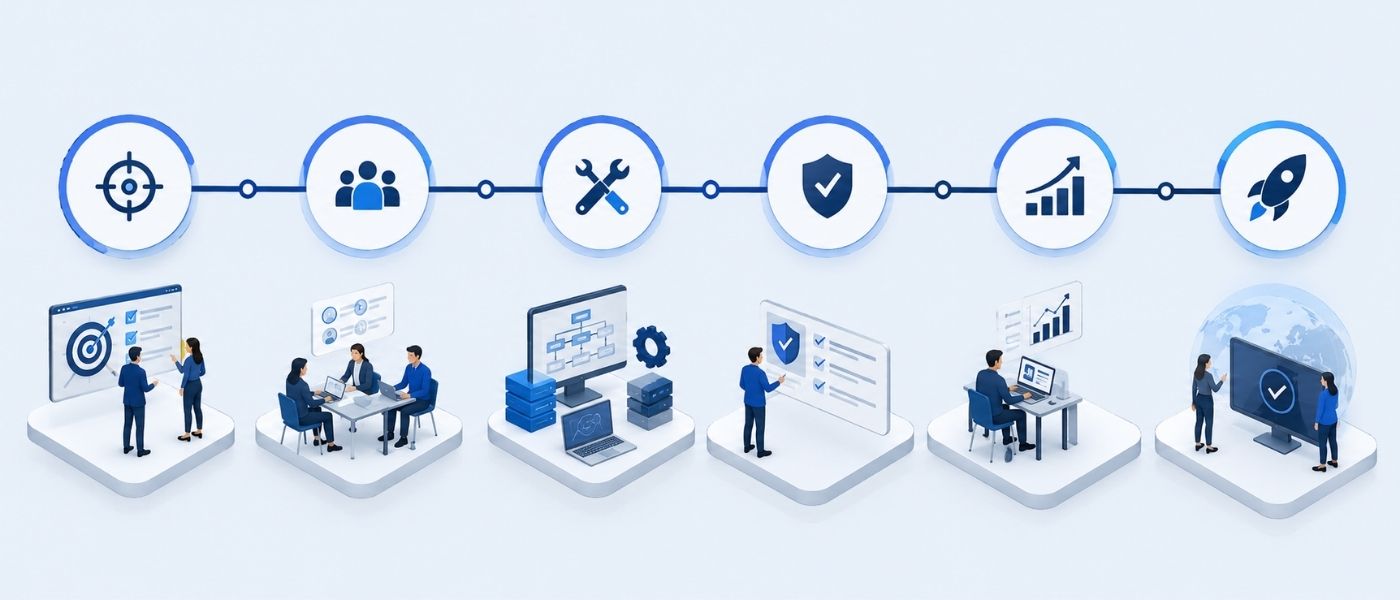
- Pre-GCC Consultation & Feasibility Study
Assess talent availability, cost analysis, and ideal city selection for your operations.
- Build Phase (Infrastructure & Setup)
Ready-to-operate facilities, IT infrastructure, and local compliance setup within 90 days.
- Operate Phase (Talent, HR & Governance)
Dedicated recruitment, payroll, and operations management with transparent reporting.
- Transfer Phase (Full Ownership)
Seamless handover of assets, employees, and processes once your center stabilizes.
With this approach, iValuePlus empowers businesses to scale smartly — reducing risks while ensuring maximum ROI from their India operations.
Hybrid GCC vs Traditional GCC: A Quick Comparison
Feature | Traditional GCC | Hybrid GCC |
Ownership | 100% captive | Shared / Transition-ready |
Setup Time | 12–18 months | 3–6 months |
Cost Efficiency | High upfront cost | Lower capital investment |
Flexibility | Limited | Highly flexible |
Talent Access | Internal hiring only | Access via partner network |
Governance | Fully internal | Shared with local partner |
Transition | Not required | Built into BOT model |
Industries Benefiting from Hybrid GCCs
While hybrid GCCs are now widespread, certain sectors are leading the adoption wave:
- Technology & Product Engineering
- Banking & Financial Services
- Healthcare & Life Sciences
- Telecommunications
- Retail & E-commerce
- Energy & Utilities
These industries rely heavily on innovation, digital transformation, and customer-centric models, making hybrid GCCs a natural fit for growth and efficiency.
The Road Ahead: The Future of Hybrid GCCs
By 2026, India’s GCC landscape is expected to surpass $110 billion in total value contribution, with hybrid setups playing a dominant role.
Enterprises that adopt the hybrid model today are not just outsourcing — they’re co-creating the future of their global operations.
From AI-driven analytics centers to R&D-focused innovation hubs, the hybrid GCC model will be the cornerstone of how companies innovate, scale, and lead in the coming decade.
Final Thoughts
The rise of hybrid GCC models marks a turning point in global business strategy.
Enterprises no longer have to choose between control and flexibility — they can have both.
And with India’s thriving ecosystem and partners like iValuePlus offering end-to-end enablement, setting up a hybrid GCC has never been more accessible or efficient.
If you’re looking to build, operate, and scale a Global Capability Center in India, the hybrid path isn’t just the smarter choice — it’s the future.
Recent Post
How to Set Up an Offshore QA Center of Excellence in India: A Practical Guide for Global Teams
Learn how to set up an offshore QA center of...
Managed IT Services for Small Businesses: Complete Guide (2026)
Discover what managed IT services for small businesses actually include,...

iValuePlus Services
iValuePlus is a one-stop solution to address all your needs to access, build and grow your business in the Indian market which is cost-effective & has a huge talent pool. Established in 2019 as a ‘Business Solution provider', our team has delivered successful growth projects in the international market.
Our services include setting up ODC (offshore development center), Staff Augmentation, Talent Acquisition, Digital Marketing, in the IT/ITES domain.