
Discover the best city to set up office in India...
Tags
- build operate transfer
- cost efficiency GCC
- GCC governance
- GCC setup in India
- GCC talent hub
- GCC transformation strategy
- global business expansion
- Global Capability Center
- India GCC market
- iValuePlus GCC services
- ODC expansion
- ODC maturity
- ODC model India
- ODC to GCC
- ODC vs GCC
- offshore development center
- offshore scalability
- transition from ODC to GCC
- when to build GCC

When to Move from ODC to GCC? Key Indicators & Strategy 2025–26
Why the ODC to GCC Transition Matters in 2025–26
Global enterprises have relied on the Offshore Development Center (ODC) model for decades to achieve cost savings, scale quickly, and access skilled talent. But as businesses mature digitally, the Global Capability Center (GCC) model has emerged as the next step — transforming back-office support into strategic innovation hubs.
In 2025–26, this evolution from ODC to GCC is no longer just an option — it’s a competitive necessity. With India becoming the world’s fastest-growing GCC destination, understanding when and how to make this transition can define your long-term global strategy.
Understanding the Basics: ODC vs. GCC
Before determining the right time to transition, it’s important to understand how ODCs and GCCs differ in structure, scope, and strategic value.
- Offshore Development Center (ODC)
An Offshore Development Centre is typically an extension of a company’s IT or development team, set up offshore (often in India) through a third-party service provider like iValuePlus.
It focuses on delivering operational tasks such as software development, testing, and support — while ownership and strategic control largely remain with the parent company.
Key features of an ODC:
- Vendor-managed operations
- Focus on project execution and delivery
- Cost-effective and agile scaling
- Minimal strategic control
- Global Capability Center (GCC)
A Global Capability Centre, on the other hand, is a fully integrated, company-owned entity that performs high-value business functions — from R&D and product design to finance, HR, analytics, and innovation.
Key features of a GCC:
- Full operational and strategic ownership
- End-to-end business capabilities
- Innovation-driven, not just cost-driven
- Acts as a global hub for digital transformation
The ODC to GCC journey typically represents a company’s maturity curve — from tactical outsourcing to strategic global expansion.

Why Companies Transition from ODC to GCC
Many organizations begin with an ODC model to minimize risk and cost during early offshore operations. But as they establish local expertise, stable operations, and deeper business goals, they transition into a GCC model.
Here’s what usually drives this shift:
- Increased Control Needs:
Companies want direct control over quality, IP, and long-term strategy. - Strategic Innovation Goals:
ODCs execute tasks; GCCs drive innovation and product development. - Talent Integration:
With GCCs, businesses can build unified global teams under one governance framework. - Cost and Efficiency:
While ODCs reduce costs, GCCs optimize value creation and business continuity.
Brand Presence in India:
Setting up a GCC enhances employer branding and stakeholder confidence in the local market.
When Is the Right Time to Move from ODC to GCC?
The transition from ODC to GCC is not an impulsive decision — it’s a strategic move based on readiness, scale, and long-term intent. Here are the key indicators to assess if your organization is ready.
- Operational Maturity Has Been Achieved
If your offshore operations have been running smoothly for over 2–3 years with predictable delivery, quality consistency, and team stability — your ODC has reached maturity.
This stability signals readiness for ownership and expansion through a GCC structure.
- Strategic Workload Is Growing
When your offshore teams start handling core business processes, product development, or R&D, it’s time to consider transitioning.
A GCC allows greater autonomy and IP protection — critical when innovation becomes a competitive differentiator.
- You Need Direct Control and Governance
In an ODC, control lies with your outsourcing partner. As your business scales, you might need:
- Data security under your own policies
- In-house governance structures
- Cultural and operational alignment
A GCC gives you complete control over systems, people, and decisions.
- You Want to Build Long-Term Capability, Not Just Cost Savings
ODCs are transactional; GCCs are transformational.
If your focus has shifted from cost optimization to value creation, it’s a clear sign to move toward a GCC.
By investing in a GCC, you’re building a sustainable capability hub that drives business growth globally.
- You’re Scaling Beyond 100–200 Employees
Once your offshore operations grow significantly in size, it becomes more efficient — and often cheaper — to run your own GCC instead of continuing under a vendor-managed ODC model.
At this stage, having your own entity ensures legal compliance, brand visibility, and retention advantages.
- You Seek to Strengthen Employer Branding
Top talent in India often prefers joining reputed global firms directly rather than through third-party vendors.
By setting up a GCC, you can:
- Recruit premium talent directly
- Build stronger brand loyalty
- Enhance market credibility

How iValuePlus Helps in the ODC to GCC Transition
Transitioning from ODC to GCC involves complex planning — from regulatory setup and HR policies to infrastructure, IT systems, and long-term governance.
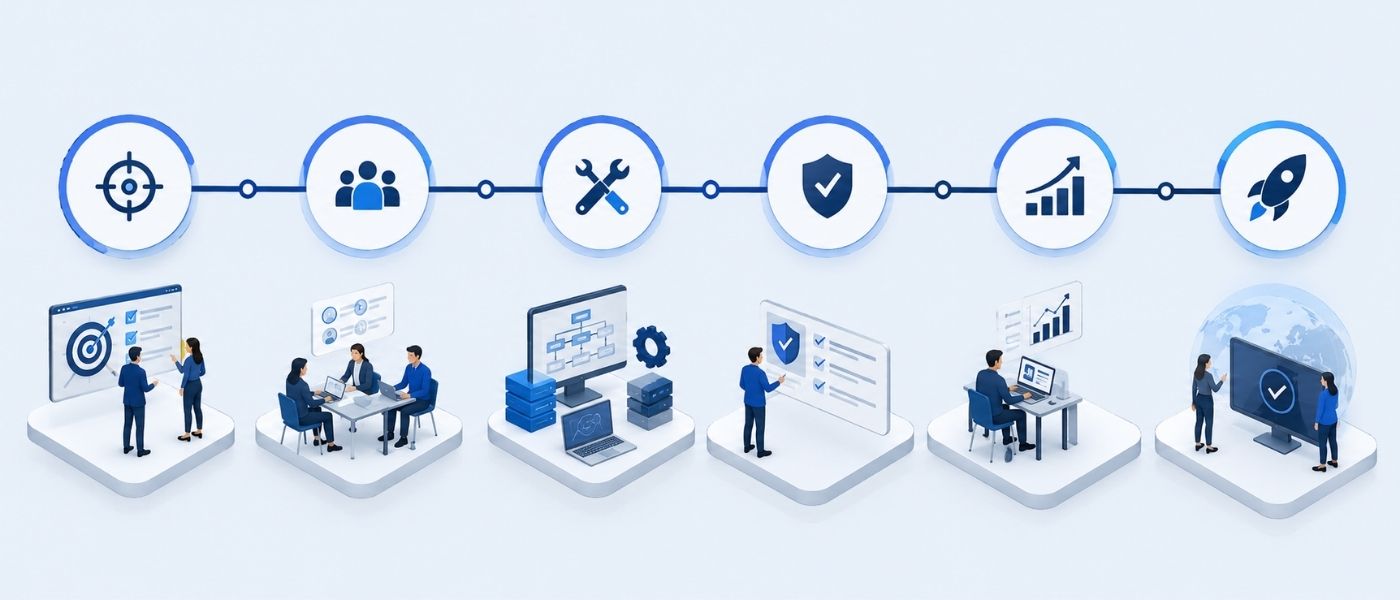
iValuePlus provides a complete Build-Operate-Transfer (BOT) and GCC setup model, helping companies make this transition seamlessly.
Our expertise covers:
- ODC setup and management
- Legal, compliance, and HR structuring
- Talent acquisition and training
- Facility and IT infrastructure setup
- Governance and performance frameworks
- Smooth transfer of ownership
With iValuePlus, you can start with a low-risk ODC and evolve into a fully owned GCC without disruption — leveraging our proven offshore ecosystem.
The 2025–26 Outlook: India as the Global GCC Destination
India has emerged as the world’s GCC powerhouse, housing over 1,900+ centers with combined exports exceeding USD 46 billion (NASSCOM 2024).
By 2026, this number is expected to surpass 2,400 GCCs, employing more than 2 million professionals.
Why India?
- Deep tech and multilingual talent
- Strong IP and data protection laws
- Cost efficiency with innovation mindset
- Global-standard infrastructure and cities like Bengaluru, Hyderabad, Pune, and NCR
For companies already operating ODCs in India, this ecosystem provides a natural progression path to set up their own GCCs.
ODC to GCC Transition Models: Which One Is Right for You?
- Direct Conversion Model:
Convert your existing ODC into a GCC with the same team and location — best for stable operations. - Hybrid BOT Model:
Partner with a provider like iValuePlus to build and operate the GCC initially, then transfer ownership once it’s stable. - Greenfield GCC Setup:
Establish a new GCC entity from scratch with fresh infrastructure and governance.
Key Challenges During the Transition (and How to Overcome Them)
- Regulatory Complexity:
Navigating tax, labor, and corporate compliance in India requires local expertise.
Solution: Partner with experienced GCC enablers like iValuePlus. - Talent Transition Risks:
Retaining your ODC talent during the move can be tricky.
Solution: Clear communication, incentives, and brand integration. - Operational Downtime:
Moving systems and infrastructure without disrupting ongoing work.
Solution: Phased migration and dual-operating structure during transition.
Conclusion
Transitioning from ODC to GCC is not merely a structural shift — it’s a strategic leap that positions your business for innovation, agility, and long-term success.
As global enterprises reimagine their digital operations, the ODC to GCC transition in India offers unmatched benefits — cost optimization, operational control, and access to a world-class talent ecosystem.
And with an experienced partner like iValuePlus, you can make this transition smooth, compliant, and scalable — setting the stage for global leadership in 2025–26 and beyond.
Recent Post
How to Set Up an Offshore QA Center of Excellence in India: A Practical Guide for Global Teams
Learn how to set up an offshore QA center of...
Managed IT Services for Small Businesses: Complete Guide (2026)
Discover what managed IT services for small businesses actually include,...

iValuePlus Services
iValuePlus is a one-stop solution to address all your needs to access, build and grow your business in the Indian market which is cost-effective & has a huge talent pool. Established in 2019 as a ‘Business Solution provider', our team has delivered successful growth projects in the international market.
Our services include setting up ODC (offshore development center), Staff Augmentation, Talent Acquisition, Digital Marketing, in the IT/ITES domain.