
Discover the best city to set up office in India...

Payroll Services 2.0: Building Accuracy and Trust in a Digital Workforce
Payroll in the Age of the Digital Workforce
Payroll has quietly become one of the most critical functions in modern organizations. What was once a routine administrative task calculating salaries and issuing payslips has evolved into a strategic pillar of business trust, compliance, and scalability.
In 2026, businesses operate with:
- Distributed and hybrid teams
- Offshore and remote employees
- Multiple currencies and tax jurisdictions
- Increasing regulatory scrutiny
- Higher employee expectations for transparency and accuracy
In this environment, Payroll Services 2.0 represents a new generation of payroll management technology that is enabled, compliance-driven, employee-centric, and built for scale.
This article explores how modern payroll services help organizations build accuracy, compliance, and trust across a digital workforce—and why forward-looking companies are rethinking payroll as a strategic advantage rather than a back-office burden.
What Is Payroll Services 2.0?
Payroll Services 2.0 refers to the next evolution of payroll management, combining automation, regulatory intelligence, data security, and workforce experience.
Unlike traditional payroll services that focus only on salary processing, Payroll Services 2.0 delivers:
- End-to-end payroll lifecycle management
- Real-time compliance monitoring
- Integration with HR, finance, and workforce systems
- Support for remote, offshore, and global teams
- Enhanced employee self-service and transparency
This evolution aligns closely with broader finance functions such as accounting services, ensuring payroll data flows seamlessly into financial reporting and compliance frameworks.
Traditional Payroll vs Payroll Services 2.0
Traditional Payroll | Payroll Services 2.0 |
Manual or semi-manual | Fully automated |
Reactive compliance | Proactive compliance |
Location-bound | Global-ready |
Error-prone | Accuracy-focused |
Admin-driven | Employee-centric |
Why Payroll Accuracy Equals Employee Trust
Payroll is one of the few processes employees interact with every month. When payroll fails even once it directly impacts trust.
The Cost of Payroll Errors
Payroll inaccuracies lead to:
- Employee dissatisfaction
- Increased HR queries
- Loss of confidence in leadership
- Attrition, especially in competitive talent markets
In digital and remote workplaces, payroll accuracy becomes even more important because:
- Employees lack physical HR touchpoints
- Trust is built through systems, not proximity
- Delays and errors feel amplified
Payroll Services 2.0 emphasizes zero-error payroll, ensuring that every employee is paid accurately, on time, and transparently—especially critical when payroll is outsourced as part of a compliance-first operating model such as outlined in this payroll and accounting outsourcing strategy.
The Compliance Challenge in a Digital Workforce
Compliance is the most complex and risky aspect of payroll.
Modern Payroll Compliance Includes:
- Income tax deductions and filings
- Social security and pension contributions
- Labor law adherence
- Minimum wage and overtime compliance
- Leave and benefits regulations
- Country-specific statutory filings
As workforces become global, compliance requirements multiply. Managing this internally is increasingly unsustainable.
Payroll Services 2.0 uses:
- Rule-based compliance engines
- Continuous regulatory updates
- Automated filings and reports
This transforms compliance from a reactive headache into a controlled system.
Payroll Services for Remote and Hybrid Teams
Remote work is now permanent. Payroll services must adapt accordingly.
Key Payroll Challenges for Remote Teams
- Different tax jurisdictions
- Cross-border employment classifications
- Multiple currencies and pay cycles
- Varying statutory benefits
Payroll Services 2.0 supports:
- Location-based payroll rules
- Centralized reporting across geographies
- Local compliance without local payroll teams
For organizations managing hybrid teams, especially in India, structured payroll services for hybrid workforces provide operational clarity and compliance confidence.

Payroll Services and Offshore Workforce Management
Offshore teams especially in countries like India are a core part of global operating models.
Why Payroll Is Critical for Offshore Teams
- Local labor laws must be followed
- Statutory filings are country-specific
- Salary structures differ from onshore markets
Payroll Services 2.0 enables:
- Seamless payroll for offshore delivery centers
- Compliance with local employment laws
- Transparent cost visibility for global finance teams
For GCCs and offshore centers, payroll services ensure control without micromanagement.
Technology Behind Payroll Services 2.0
Modern payroll services are powered by robust technology stacks.
Core Technology Elements
Automation Engines
- Salary calculations
- Deductions and reimbursements
- Payslip generation
Compliance Intelligence
- Real-time regulatory updates
- Rule-based validations
- Automated statutory reports
Integrations
- HRIS platforms
- Time and attendance systems
- Accounting and ERP software
Security Architecture
- Encrypted data storage
- Role-based access controls
- Audit trails and compliance logs
Technology ensures payroll services are accurate, scalable, and auditable.
Payroll Services and Data Security
Payroll data is among the most sensitive data organizations handle.
Payroll Services 2.0 prioritizes:
- Data encryption (at rest and in transit)
- Access control and authorization
- Compliance with data protection laws
- Secure backups and disaster recovery
For digital workforces, secure payroll systems are essential to maintaining trust—not just with employees, but also with regulators.
Real-World Use Case: Global Tech Company Expands in India
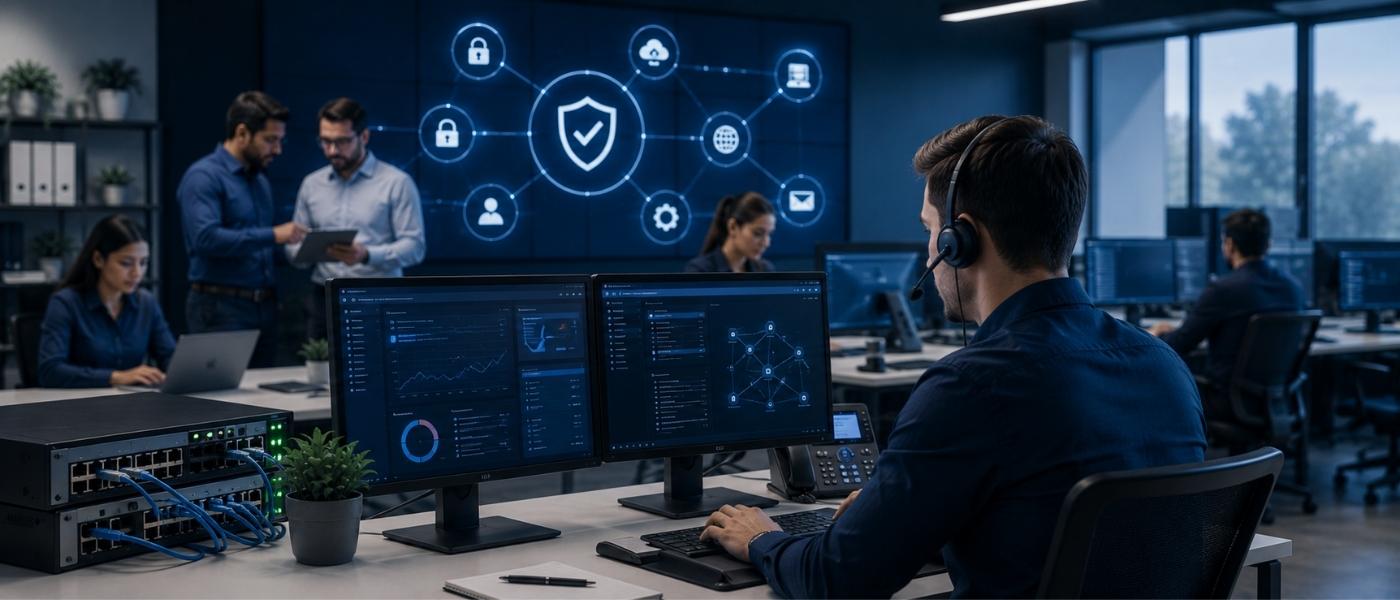
An Australia-based SaaS firm wanted to set up a 40-member offshore development center in Pune, India. With iValuePlus managing infrastructure:
- Office space was fully set up within 30 days
- Workstations, internet, and VoIP systems were installed and tested
- Compliance, security, and data backups were implemented
- Onboarding was streamlined for the entire tech team
The client was able to start operations in record time, saving over 50% in infrastructure costs while maintaining enterprise-grade standards.
In-House Payroll vs Payroll Services 2.0
Many organizations still manage payroll internally—but the risks are growing.
In-House Payroll Challenges
- Dependency on key personnel
- Manual errors
- High compliance risk
- Limited scalability
- Costly system upgrades
Payroll Services 2.0 Advantages
- Dedicated payroll experts
- Continuous compliance monitoring
- Predictable costs
- Scalability without hiring
- Business continuity assurance
For most growing businesses, Payroll Services 2.0 offers better ROI and lower risk.
Payroll Services for Different Business Stages
Startups
- Avoid compliance mistakes early
- Focus founders on growth
- Scale headcount without admin burden
Mid-Sized Companies
- Standardize payroll processes
- Handle audits confidently
- Support multi-location teams
Enterprises and GCCs
- Manage complex compensation structures
- Integrate payroll with finance strategy
- Support global workforce models
Payroll Services 2.0 adapts to each stage without disruption.

Payroll Services as a Business Continuity Tool
Payroll must function even during:
- Mergers and acquisitions
- Rapid hiring phases
- Leadership transitions
- Market expansions
Payroll Services 2.0 provides:
- Process continuity
- Documentation and audit readiness
- Reduced dependency on individuals
This ensures operational resilience.
Cost Efficiency of Payroll Services 2.0
While payroll services may seem like an added cost, they deliver significant savings.
Direct Savings
- Reduced internal staffing
- Lower compliance penalties
- No payroll software investments
Indirect Value
- Reduced employee disputes
- Higher retention
- Faster expansion
Payroll Services 2.0 shifts payroll from a cost center to a value enabler.
Payroll Analytics and Strategic Insights
Modern payroll services provide more than processing—they deliver insights.
Examples of Payroll Analytics
- Compensation cost trends
- Overtime analysis
- Headcount growth impact
- Compliance risk indicators
These insights support:
- Better workforce planning
- Smarter budgeting
- Data-driven decision-making
Payroll Services and Employee Experience
Employee experience is no longer limited to perks and culture.
Payroll Services 2.0 improves experience through:
- Timely and accurate payments
- Transparent payslips
- Self-service portals
- Faster issue resolution
In a digital workforce, payroll reliability is employee experience.
Global Payroll Services and Multi-Country Operations
Global companies face exponential payroll complexity.
Payroll Services 2.0 enables:
- Centralized oversight
- Local compliance execution
- Standardized reporting
This balance of global control and local compliance is essential for international growth.
Choosing the Right Payroll Services Partner
Key evaluation criteria:
- Proven compliance expertise
- Scalable technology platform
- Industry experience
- Strong data security standards
- Transparent SLAs
A payroll partner should operate as an extension of your HR and finance teams.
The Future of Payroll Services Beyond 2026
Payroll Services 2.0 is just the beginning.
Emerging trends include:
- AI-driven anomaly detection
- Predictive compliance alerts
- Deeper integration with workforce analytics
- Enhanced employee self-service
Payroll will increasingly influence strategic workforce decisions.
FAQs
- What is Payroll Services 2.0?
Payroll Services 2.0 combines automation, compliance intelligence, and employee-centric design to manage modern payroll needs.
- Is Payroll Services 2.0 suitable for remote teams?
Yes. It is specifically designed to support remote, hybrid, and offshore workforces.
- How does Payroll Services 2.0 improve compliance?
It uses rule-based systems, real-time regulatory updates, and automated filings.
- Can payroll services handle global employees?
Yes. Modern payroll services support multi-country payroll and local compliance.
- Is outsourced payroll secure?
Reputable providers use enterprise-grade security, encryption, and audits.
Conclusion
In a digital workforce, payroll is more than a transaction it is a promise. A promise of accuracy, fairness, and reliability.
Payroll Services 2.0 helps businesses keep that promise. By combining technology, compliance expertise, and employee-centric design, modern payroll services build trust at scale.
For organizations navigating global expansion, remote work, and regulatory complexity, Payroll Services 2.0 is no longer optional it is foundational.
Recent Post
How to Set Up an Offshore QA Center of Excellence in India: A Practical Guide for Global Teams
Learn how to set up an offshore QA center of...
Managed IT Services for Small Businesses: Complete Guide (2026)
Discover what managed IT services for small businesses actually include,...

iValuePlus Services
iValuePlus is a one-stop solution to address all your needs to access, build and grow your business in the Indian market which is cost-effective & has a huge talent pool. Established in 2019 as a ‘Business Solution provider', our team has delivered successful growth projects in the international market.
Our services include setting up ODC (offshore development center), Staff Augmentation, Talent Acquisition, Digital Marketing, in the IT/ITES domain.