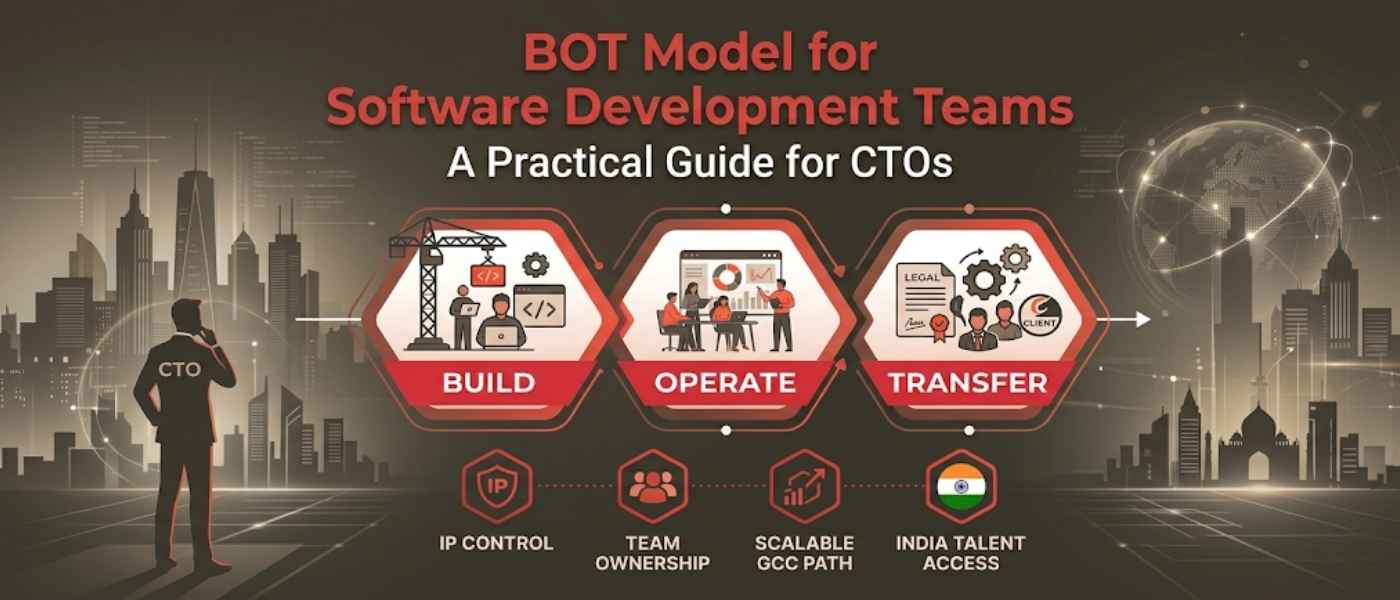

Learn how the BOT Model for Software Development Teams helps...

How Fast-Growing Companies Combine Hiring + Automation to Scale Without the Chaos
Fast-growing companies scale efficiently by combining staff augmentation with business process automation. Staff augmentation fills critical skill gaps with on-demand, cost-effective talent — while automation eliminates repetitive manual work across HR, payroll, IT, and operations. Together, they reduce costs, improve speed, and allow every hire to deliver more value from day one.
The Scaling Paradox That's Costing You
Here’s a scenario that plays out in thousands of fast-growing companies every year: Revenue is climbing. The pipeline is full. Customers are happy. But internally, everything feels like it’s breaking.
Your HR team is drowning in onboarding paperwork. Your IT team is fielding five helpdesk tickets a day for the same password reset issue. Your payroll run takes two days of manual effort every month. And you just spent three months — and $40,000 — hiring a software developer who resigned after 90 days.
This is the scaling paradox. Growth creates demand, but the wrong response to that demand — hiring indiscriminately, adding headcount to every problem — creates a new set of problems: rising costs, operational bloat, and a workforce that’s too busy with manual work to actually deliver value.
The companies that break out of this trap don’t just hire more people. They build systems that make every hire more productive from day one.
This article breaks down exactly how high-growth companies are combining staff augmentation and automation strategy to scale efficiently — and how you can implement the same playbook regardless of your size, sector, or budget.
The Modern Scaling Challenge: Why Traditional Hiring Alone Fails
The Old Playbook vs. The New Reality
A decade ago, the answer to growth was straightforward: hire more people. Add a sales rep, add an ops manager, add an IT engineer. Scale your headcount to match your revenue targets.
That model is broken. Here’s why:
- Global talent shortages mean quality hires are harder and slower to find.
- Time-to-hire averages 40–60 days for specialized roles, meaning you’re bleeding productivity during the search.
- Full-time employment costs — benefits, taxes, office space, equipment, management overhead — often run 1.25x to 1.4x the base salary.
- Early-stage attrition is high; replacing a mid-level employee costs an estimated 50–200% of their annual salary.
- Growing companies often hire reactively (to fight fires) rather than strategically (to build capability).
What Fast-Growing Companies Do Differently
Leaders at high-growth companies — from SaaS startups to scaling SMEs in manufacturing and professional services — have shifted to a two-track strategy:
- Automate everything that is repetitive, rule-based, or administratively heavy.
- Augment strategically with skilled talent where human judgment, creativity, or specialized expertise is genuinely required.
This is not a binary choice. It’s a sequenced, deliberate approach. And it’s why companies using this model grow faster, with lower operational costs and stronger workforce productivity.
What is Staff Augmentation—And Why It's Not Outsourcing
Staff augmentation is a workforce strategy where a business supplements its existing team with skilled external professionals — on a short-term, project, or long-term basis — without the full overhead of traditional employment. Unlike outsourcing, the augmented staff works under your direct management, as part of your team, following your processes and culture.
Staff Augmentation vs. In-House Hiring vs. Outsourcing
Factor | In-House Hiring | Staff Augmentation |
Time to onboard | 60–90 days | 1–2 weeks |
Cost | High (salary + benefits + overhead) | Predictable contract rate |
Control | Full | Full (you manage the person) |
Flexibility | Low (difficult to exit) | High (scale up/down) |
Risk | High attrition cost | Low — no long-term commitment |
Best for | Core, permanent roles | Skill gaps, project surges, new markets |
Factor | Staff Augmentation | Traditional Outsourcing |
Management | You manage directly | Vendor manages |
Integration | Embedded in your team | External to your team |
Control over quality | High | Variable |
IP / knowledge retention | Stays with you | Stays with vendor |
Flexibility | High | Moderate |
Best for | Capability extension | Non-core, volume tasks |
The key difference is control and integration. When iValuePlus provides an offshore development team or a remote operations professional, that person becomes an extension of your team — embedded in your workflows, your communication tools, your objectives. The result is the agility of a contractor with the cohesion of a full-time hire.
What is Business Process Automation — And Where It Wins
Business process automation (BPA) is the use of technology to execute recurring tasks or processes where manual effort can be replaced by automated workflows. This includes HR automation, payroll processing, IT helpdesk routing, applicant tracking, onboarding, reporting, and more.
Where Automation Delivers the Highest ROI for Scaling Companies
Business Function | High-Impact Automation Opportunities |
Human Resources | Onboarding workflows, leave management, document collection, compliance tracking |
Payroll | Automated salary runs, tax calculations, contractor payments, payslip generation |
IT Operations | Helpdesk ticket routing, password resets, asset tracking, access provisioning |
Recruitment | ATS workflows, candidate screening, interview scheduling, offer letter generation |
Finance | Invoice processing, expense approvals, PO matching, financial reporting |
Operations | Task assignment, SLA tracking, escalation workflows, vendor management |
Digital Marketing | Lead capture, email nurture sequences, social scheduling, reporting dashboards |
Manual Operations vs. Automated Workflows: A Cost Comparison
Consider a mid-sized company with 100 employees processing payroll manually:
- Monthly payroll run: ~12–16 hours of HR/finance staff time
- Error rate: 1–3% — which triggers costly corrections, employee dissatisfaction, and compliance risk
- Compliance tracking: manual, spreadsheet-based, audit-unfriendly
With an automated payroll management system:
- Monthly run time: under 2 hours (review and approve, no data entry)
- Error rate: near zero (rule-based calculations, tax tables auto-updated)
- Compliance: built-in audit trails, automatic regulatory updates
The time savings alone — 10+ hours per month — is equivalent to reclaiming nearly 1.5 working days back into your operations.
IVPHub, the platform arm of iValuePlus, delivers exactly this kind of integrated automation across HR, payroll, IT helpdesk, and operations — replacing multiple disconnected tools with a single operational efficiency platform.

The Combined Strategy: How to Use Hiring + Automation Together
The Decision Framework: Hire, Automate, or Both?
Here is the most practical decision-making framework for business leaders evaluating any operational challenge:
If the task is… | …the answer is | Implementation |
Repetitive, rule-based, high volume | Automate first | Deploy BPA / workflow software |
Requires human judgment, creativity, client relationship | Hire or augment | Staff augmentation for speed |
A short-term project surge | Augment temporarily | Staff augmentation (contract basis) |
Core to long-term competitive advantage | Full-time hire | In-house hiring investment |
Both repetitive admin AND skilled judgment | Automate the admin, augment the skills | Combined approach — iValuePlus + IVPHub |
When to Hire vs. When to Automate
Signs You Should Automate First
- Your team repeatedly performs the same task more than 3 times per week
- Manual errors are causing rework, compliance issues, or customer complaints
- You’re thinking of hiring someone primarily for administrative or data-entry functions
- Multiple disconnected tools are creating integration gaps and reporting delays
- Reporting and analytics depend on manual spreadsheet compilation
- IT support tickets are flooding your team for routine, repetitive issues
Signs You Should Augment (Hire Strategically)
- You need a specific skill set (e.g., React development, SEO expertise, data analysis) that doesn’t exist in-house
- You’re launching a time-bound project that requires temporary capacity
- A key team member has left and you need continuity while searching for a permanent hire
- You’re entering a new market and need local or domain expertise quickly
- Customer-facing roles require human relationship management and judgment
Signs You Need Both — Right Now
- You’re scaling rapidly and manually managing an increasingly complex operation
- Your people are spending more than 30% of their time on admin rather than core work
- Remote team management is creating visibility and accountability gaps
- You’re running multiple tools that don’t talk to each other
This is precisely the use case that iValuePlus and IVPHub are built for: iValuePlus provides the skilled talent layer; IVPHub provides the automation and operational intelligence layer. Together, they remove the biggest barriers to scalable, efficient growth.
The Systems Stack: Tools That Enable Scale
Multiple Tools vs. All-in-One Platform — The Hidden Cost of Fragmentation
Most scaling companies don’t start with fragmented tools by design. It happens organically: one team adopts Slack, another uses a different project management tool, HR runs on a separate HRMS, payroll is handled in yet another system, and IT ticketing is somewhere else entirely.
The result is operational chaos — duplicated data entry, disconnected workflows, no single source of truth, and IT overhead managing integrations that are constantly breaking.
Fragmented Multi-Tool Stack | Integrated Platform (e.g., IVPHub) |
5–8 separate subscriptions | Single platform subscription |
Manual data syncing between tools | Real-time data flow across modules |
Limited reporting visibility | Unified dashboards and analytics |
High training overhead | Single learning curve |
Integration maintenance burden | Vendor-managed integrations |
Compliance risk from data silos | Centralized compliance and audit trails |
Avg. 20–30% productivity loss from tool-switching | Streamlined workflow continuity |
HRMS vs. ERP vs. Custom Systems: Which Do You Actually Need?
System Type | Best For | Consideration |
HRMS (HR Management System) | HR-focused automation: onboarding, leaves, payroll, compliance | Ideal for companies scaling headcount rapidly |
ERP (Enterprise Resource Planning) | Large enterprises needing finance, supply chain, and HR in one | Complex, expensive, long implementation cycles |
Custom-Built Systems | Unique workflows not served by off-the-shelf software | High upfront cost, long build time, maintenance overhead |
Integrated BPA Platform (IVPHub) | SMEs and fast-growing companies needing HR + IT + Ops automation without ERP complexity | Fastest time-to-value, purpose-built for scaling companies |
For most startups, SMEs, and scaling companies in the 20–500 employee range, a purpose-built operational automation platform like IVPHub delivers the right balance of functionality, speed of deployment, and cost-effectiveness — without the ERP complexity or the custom development risk.
Managing Remote and Offshore Teams Without Losing Control
The Remote Workforce Management Challenge
One of the most common objections to offshore hiring or staff augmentation is: “How do I manage someone I can’t see?”
It’s a legitimate concern — but it’s the wrong question. The right question is: “Do I have the systems in place to manage any distributed team effectively?”
The answer, for most scaling companies, is no. And that’s not a talent problem — it’s a systems problem.
What Effective Remote Team Management Looks Like
- Centralized task and project visibility — every team member’s work is visible in real time, regardless of time zone
- Async-first communication protocols — documented processes reduce dependency on synchronous meetings
- Automated time tracking — removes the ambiguity of productivity in remote settings
- Performance dashboards — KPIs tracked automatically, not through manual reporting
- Onboarding workflows — new remote hires are productive within days, not weeks
IVPHub’s remote workforce management module is built specifically for this use case: it gives managers real-time visibility into team activity, automates routine check-ins, and consolidates performance data — so managing a team in Bangalore feels exactly like managing a team three floors down.
When paired with iValuePlus’s offshore development teams and remote operations professionals, this creates a complete managed-talent solution: the right people, in the right roles, supported by the right systems.
Digital Transformation at Scale: Where Hiring and Automation Converge
What Digital Transformation Actually Means for SMEs
“Digital transformation” is one of the most overused phrases in business. For most SMEs and scaling companies, it simply means: replacing slow, manual, people-dependent processes with fast, automated, data-driven ones — while building the right team to execute and evolve those systems.
This is not a one-time project. It’s an ongoing operational discipline. And the companies that do it well share three characteristics:
- They automate foundational operations first (HR, payroll, IT, reporting) before investing in advanced capabilities.
- They augment their core team with specialists who bring skills the business needs but doesn’t have internally.
- They treat their tools and their people as an integrated system — not as separate decisions.
The iValuePlus + IVPHub Operational Stack
How the Combined Stack Works:
iValuePlus (Execution Layer): Provides skilled talent across software development, IT support, digital marketing, payroll, accounting, and operations — on demand, at scale, globally. IVPHub (Efficiency Layer): Delivers integrated automation across HR management, payroll processing, IT helpdesk, applicant tracking, remote workforce management, and operational workflows. Together: Every person iValuePlus places operates within a system designed to maximize their productivity from day one — with clear workflows, automated admin, real-time visibility, and integrated reporting.
Implementation Roadmap: How to Get Started in 90 Days
Phase 1 — Audit and Identify (Days 1–30)
- Map every operational function and estimate time spent on manual, repetitive tasks
- Identify the top 5 skill gaps that are limiting growth or causing project delays
- Assess your current tool stack: what’s fragmented, duplicated, or missing entirely
- Calculate actual hiring cost per role vs. augmentation equivalents
Phase 2 — Automate the Foundation (Days 30–60)
- Deploy an integrated HR automation platform (IVPHub) covering onboarding, payroll, and IT helpdesk
- Standardize and document 3–5 core workflows to be automated first (highest time savings)
- Set up remote team management infrastructure: dashboards, async protocols, performance tracking
Phase 3 — Augment Strategically (Days 60–90)
- Identify 2–3 roles to fill via staff augmentation — prioritize skills gaps that are blocking growth
- Onboard augmented team members into the automated system (they become productive in days, not weeks)
- Track and report on productivity, cost savings, and output quality vs. the pre-automation baseline
Automate before you augment. If you bring in new team members before your workflows are systematized, they inherit the same manual chaos as your existing team. Build the systems first — then scale the people into them. This is how you make every hire 2–3x more productive from day one.
FAQ
Q1: Is staff augmentation better than automation for scaling a business?
They serve different purposes and work best together. Staff augmentation fills skill gaps and provides flexible human talent where judgment and expertise are required. Automation eliminates repetitive, manual processes. The most efficient scaling companies use both: automate administrative functions first, then augment with skilled people to drive execution and growth.
Q2: How do fast-growing companies manage remote teams effectively?
Effective remote team management requires three elements: clear documented workflows, automation tools that provide real-time visibility (time tracking, task management, performance dashboards), and asynchronous communication protocols. Platforms like IVPHub centralize these capabilities, while iValuePlus ensures the remote talent placed is experienced in distributed work environments.
Q3: What is the difference between staff augmentation and outsourcing?
In staff augmentation, the professional works directly under your management as an extension of your team — following your processes, using your tools, contributing to your culture. In traditional outsourcing, a vendor manages the work and you buy the output. Staff augmentation gives you the cost advantage of outsourcing with the control and integration of an in-house hire.
Q4: How do I know if my company is ready to implement business process automation?
You’re ready if: your team spends more than 25–30% of their time on repetitive manual tasks; you’re using 4+ disconnected tools that require manual data syncing; you’re planning to hire primarily for administrative functions; or your payroll, onboarding, or IT operations are error-prone and time-consuming. Most scaling companies are ready earlier than they think.
Q5: What types of roles can be filled through staff augmentation?
The most common augmented roles include software developers (frontend, backend, full-stack), IT support engineers, DevOps and cloud specialists, digital marketing professionals, data analysts, payroll and accounting staff, operations coordinators, and customer support teams. iValuePlus covers all of these functions across offshore and remote delivery models.
Q6: How quickly can augmented staff be onboarded and productive?
With the right systems in place, augmented team members can typically be productive within 3–7 days. Without automated onboarding workflows and documented processes, this can stretch to 3–4 weeks — which is why deploying tools like IVPHub before augmenting is the recommended sequence. The platform’s automated onboarding module handles documentation, access provisioning, and workflow orientation automatically.
Ready to Build Your Scaling Stack?
Partner With iValuePlus + IVPHub
iValuePlus provides skilled, on-demand talent across software development, IT support, digital marketing, payroll, and operations — embedded directly into your team and culture. IVPHub provides the automation infrastructure to make every hire count: HR automation, payroll management, IT helpdesk, remote workforce management, and integrated reporting — all in one platform. Fast-growing companies don’t just hire more people. They build systems that make every person they hire dramatically more productive. Get in touch today!
Recent Post
Offshore Development Team for Startups: Benefits, Risks & Costs
Should your startup hire an offshore development team? Explore real...
Staff Augmentation for Startups: Can You Hire 2–3 Developers Without Setting Up an Office?
Hire 2–3 offshore developers from India without setting up an...

iValuePlus Services
iValuePlus is a one-stop solution to address all your needs to access, build and grow your business in the Indian market which is cost-effective & has a huge talent pool. Established in 2019 as a ‘Business Solution provider', our team has delivered successful growth projects in the international market.
Our services include setting up ODC (offshore development center), Staff Augmentation, Talent Acquisition, Digital Marketing, in the IT/ITES domain.