
Discover the best city to set up office in India...
Categories
Tags
- BOT contract structure
- BOT engagement model
- BOT in software development
- BOT IT partnership
- BOT model IT
- BOT outsourcing framework
- BOT vs traditional outsourcing
- build operate transfer approach
- build operate transfer services
- IT development outsourcing
- it outsourcing model
- IT project transfer model
- long-term outsourcing models
- offshore BOT model
- offshore development BOT model
- scalable BOT development
- transition from build to operate to transfer

Inside the Build-Operate-Transfer Model: A Modern IT Outsourcing Blueprint
Why BOT IT Outsourcing is a Strategic Imperative in 2026
The modern enterprise faces unprecedented pressures: rapid technological disruption, global talent shortages, and the need for faster time-to-market. Traditional outsourcing models often deliver short-term cost savings but lack long-term strategic impact. This is where Build-Operate-Transfer (BOT) IT outsourcing emerges as a transformative solution.
By leveraging a BOT IT partnership, enterprises can establish dedicated offshore teams, retain ownership, and scale efficiently. BOT aligns development operations with business strategy, enabling offshore software development to become a driver of innovation, not just a cost center.
This comprehensive guide explores the BOT model IT, detailing each phase, governance strategies, pitfalls, emerging trends, and real-world applications—equipping businesses to maximize ROI and operational control in 2026.
BOT vs Traditional Outsourcing: Strategic and Operational Differences
While conventional outsourcing focuses on short-term delivery and cost savings, BOT offers a long-term value proposition:
| Feature | Traditional Outsourcing | BOT IT Outsourcing |
|---|---|---|
| Ownership | Vendor-managed | Enterprise-managed post-transfer |
| IP Security | Limited | Full ownership post-transfer |
| Strategic Value | Operational | Transformational |
| Scalability | Limited | Structured, scalable BOT development |
| Team Control | Low | High, fully integrated |
| Innovation Potential | Moderate | High, supports enterprise-wide digital transformation |
The BOT IT engagement model allows organizations to integrate remote development center teams into enterprise workflows while ensuring IT staff augmentation services align with strategic goals.
The Three Phases of BOT: From Build to Transfer
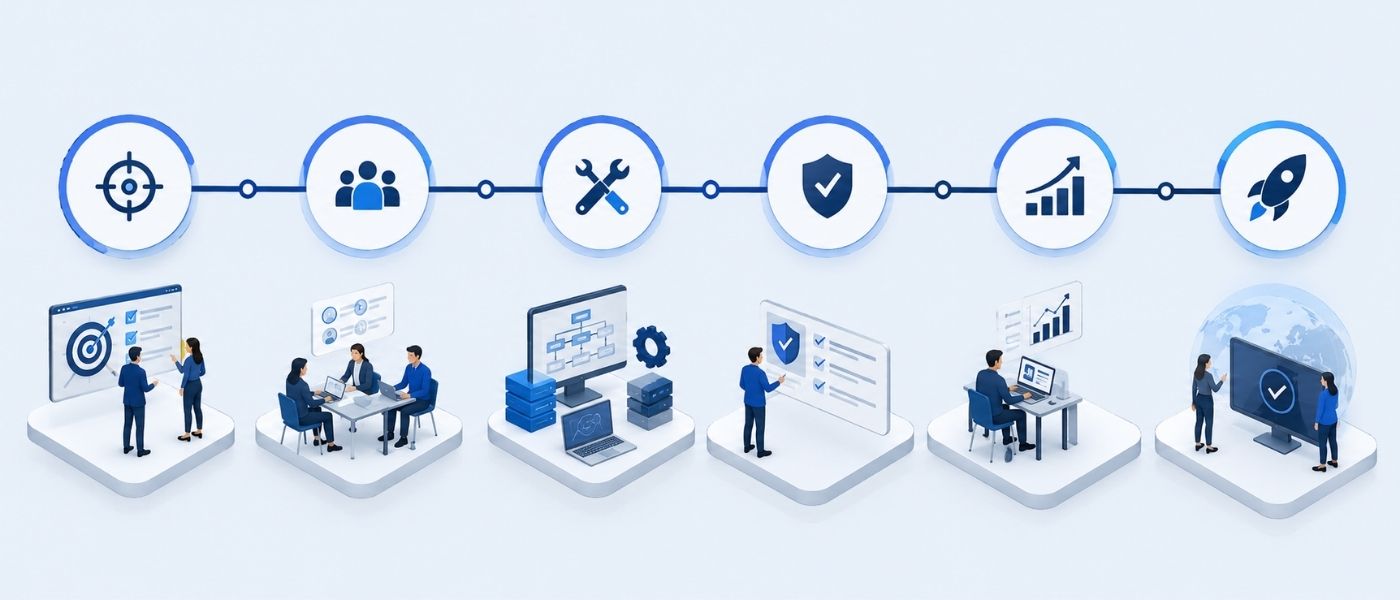
BOT consists of three structured phases—Build, Operate, and Transfer—each with specific objectives and deliverables.
Phase 1: Build
The Build phase lays the foundation for a successful BOT engagement:
Team Design & Hiring: Define roles (developers, QA, DevOps, architects) and recruit through offshore BOT model frameworks.
Infrastructure Setup: Establish secure cloud environments, remote software development teams, and collaboration tools.
Process Definition: Implement agile methodologies, CI/CD pipelines, and IT development outsourcing workflows.
Contract and KPIs: Develop a BOT contract structure with clear SLAs, timelines, and success metrics.
Example: A SaaS enterprise used BOT to establish a 40-member offshore engineering team. The build phase involved setting up infrastructure in India, defining agile workflows, and implementing DevOps pipelines—laying the foundation for scalable, high-quality development.
Phase 2: Operate
In this phase, the BOT team is fully operational under enterprise oversight:
Performance Tracking: Monitor sprint velocity, defect density, and release cycles.
Knowledge Management: Document processes, coding standards, and offshore development team models.
Security & Compliance: Ensure IP protection, regulatory compliance, and data governance.
Continuous Improvement: Implement best practices for cost-effective software development and scalability.
Example: A fintech company leveraged BOT in the Operate phase to achieve a 35% faster release cycle while maintaining strict compliance standards. The team adopted automated testing and integrated DevOps monitoring, ensuring high operational efficiency.
Phase 3: Transfer
Transfer is the culmination of BOT, where enterprise ownership is fully realized:
Gradual Handover: Move all team operations, knowledge, and infrastructure to the enterprise.
Knowledge Transfer: Conduct workshops, documentations, and shadowing sessions.
Operational Integration: Embed the team within enterprise governance and management frameworks.
IP Transfer: Ensure all intellectual property, source code, and operational assets are securely handed over.
Example: A healthcare application transitioned its offshore BOT team to enterprise ownership without service disruption, demonstrating the transition from build to operate to transfer as a smooth, strategic process.

Strategic Advantages of BOT IT Outsourcing
Scalable Development Capacity
The BOT approach allows enterprises to scale software development teams dynamically, adding resources based on project complexity and timelines. By leveraging offshore development team models, businesses can maintain high-quality delivery while keeping costs predictable.
Cost Efficiency
BOT reduces infrastructure and HR overheads while ensuring long-term operational continuity. Enterprises benefit from long-term outsourcing models with predictable financial planning.
Operational Control
Unlike traditional outsourcing, BOT provides dedicated IT resources fully aligned with enterprise policies, standards, and culture. This ensures seamless integration and adherence to quality metrics.
Innovation Enablement
BOT teams act as remote software development teams capable of embedding AI, cloud-native development, and automation practices, transforming IT operations into a strategic innovation center.
BOT Governance: Contracts, KPIs, and Risk Mitigation
Effective governance is critical for BOT success:
BOT Contract Structure: Clearly define phases, SLAs, escalation protocols, and handover terms.
Key Performance Indicators (KPIs): Measure sprint velocity, delivery predictability, defect rates, and team utilization.
Risk Management: Address cultural alignment, knowledge retention, and IP protection proactively.
BOT Engagement Model: Ensure transparency between vendor and enterprise throughout Build and Operate phases.
Example: A retail enterprise used structured KPIs to track team performance, achieving a 25% improvement in productivity over 12 months while maintaining IP security.
Emerging Trends in BOT IT Outsourcing
AI-Enabled BOT Teams: Predictive analytics, automated testing, and AI-assisted project management enhance operational efficiency.
Hybrid Onshore-Offshore BOT Models: Seamless timezone coverage, improved communication, and knowledge sharing.
Cloud-Native Development: BOT teams are increasingly building offshore software development pipelines in cloud-first environments.
Innovation Hubs: BOT teams act as incubators for enterprise-wide technology innovation.
Common Pitfalls and How to Avoid Them
Knowledge Transfer Failures: Mitigate with structured documentation, training, and workshops.
Cultural Misalignment: Cross-cultural training, clear communication, and onboarding protocols.
Underestimated Costs: Plan for infrastructure, recruitment, training, and operational overhead.
Governance Gaps: Establish a BOT outsourcing framework with measurable SLAs.
Industry-Specific BOT Applications
SaaS Platforms
Scaled from 20 to 50 developers offshore
Improved release cycles by 40%
Maintained IP ownership and code quality
FinTech Companies
BOT teams integrated compliance requirements seamlessly
Reduced operational costs by 30%
Enhanced customer-facing features with agile delivery
Healthcare Software
HIPAA-compliant offshore teams via BOT
Seamless handover to enterprise ownership
Accelerated digital transformation with automation
Retail & E-Commerce
BOT teams handle backend platform development
Improved scalability and high traffic resilience
Cost-effective IT staff augmentation services embedded
Measuring BOT Success
Financial Metrics: Cost savings, ROI, infrastructure efficiency
Operational Metrics: Sprint velocity, defect resolution, team productivity
Strategic Metrics: Innovation contribution, scalability, integration with enterprise strategy
Long-Term Impact: BOT teams evolve into permanent innovation and development hubs
Future-Proofing Your BOT Model
Integrate AI and Automation: Enhance speed and reliability
Adopt Hybrid Nearshore-Offshore Models: Maximize coverage and minimize risks
Focus on Strategic Outcomes: Use BOT to drive enterprise-wide innovation, not just staffing
Continuous Governance: Regular audits, KPI tracking, and process optimization
Conclusion
The Build-Operate-Transfer IT outsourcing model is the blueprint for enterprises seeking scalable, secure, and innovation-driven IT capabilities. BOT combines the benefits of offshore development team models, long-term outsourcing frameworks, and strategic operational control—enabling enterprises to build teams that drive measurable business value.
Ready to implement a strategic BOT IT outsourcing model? Get in touch today to build, operate, and seamlessly transfer your offshore development team with guaranteed results.
Recent Post
How to Set Up an Offshore QA Center of Excellence in India: A Practical Guide for Global Teams
Learn how to set up an offshore QA center of...
Managed IT Services for Small Businesses: Complete Guide (2026)
Discover what managed IT services for small businesses actually include,...

iValuePlus Services
iValuePlus is a one-stop solution to address all your needs to access, build and grow your business in the Indian market which is cost-effective & has a huge talent pool. Established in 2019 as a ‘Business Solution provider', our team has delivered successful growth projects in the international market.
Our services include setting up ODC (offshore development center), Staff Augmentation, Talent Acquisition, Digital Marketing, in the IT/ITES domain.