
Discover the best city to set up office in India...

Choosing the Right Business IT Support Services: A Practical Buyer’s Guide
Business IT support services have moved far beyond troubleshooting laptops and resetting passwords. In 2026, they sit at the intersection of business continuity, cybersecurity, employee productivity, regulatory compliance, and scalability.
Yet many organizations still select IT support providers based on:
- Price alone
- Generic SLAs
- Brand familiarity
This often leads to poor outcomes: recurring downtime, hidden costs, security gaps, and IT teams stuck in reactive firefighting.
This guide is written for decision-makers who want to buy IT support strategically, not tactically. It explains:
- What modern business IT support services actually include
- How to assess internal IT gaps honestly
- Which service models fit different growth stages
- What questions to ask vendors (and what red flags to avoid)
- How to structure contracts, governance, and KPIs for long-term success
Why Business IT Support Services Matter More Than Ever
IT Is No Longer a Support Function It’s Business Infrastructure
Every critical business process today depends on IT:
- Sales relies on CRM uptime
- Finance depends on secure systems and integrations
- HR runs on cloud platforms and digital workflows
- Customer experience is shaped by application performance
When IT support fails, the impact is not “technical” it is commercial.
Modern business IT support services exist to:
- Minimize downtime and disruption
- Maintain security and compliance
- Enable rapid scaling without operational friction
- Free leadership from IT firefighting
The Cost of Poor IT Support Is Usually Invisible Until It Isn’t
The real cost of weak IT support shows up as:
- Lost productivity from slow systems
- Security incidents that damage trust
- Delayed product launches
- Burned-out internal IT teams
Many of these challenges are explored in depth in this breakdown of top IT support challenges and solutions faced by growing organizations.
Choosing the right business IT support services is therefore a risk management decision, not just an operational one.
What Business IT Support Services Actually Include in 2026
Many buyers underestimate the scope of modern IT support.
Core Service Areas
A comprehensive business IT support services provider typically covers:
End-User Support
- L1/L2 helpdesk
- Device and OS support
- Remote and on-site troubleshooting
Infrastructure Support
- Servers (on-prem and cloud)
- Network monitoring and management
- Backup and disaster recovery
Cloud & SaaS Support
- Microsoft 365 / Google Workspace
- Cloud access and identity management
- SaaS application troubleshooting
Cybersecurity Support
- Endpoint protection
- Patch management
- Incident response coordination
IT Operations Management
- Monitoring and alerting
- Change management
- Asset and license tracking
What Separates Basic Support from Business-Grade Support
Basic IT support focuses on ticket resolution.
Business-grade IT support focuses on outcomes, such as:
- System availability
- Security posture
- User productivity
- Scalability
When evaluating providers, the key question is:
“Do they manage IT tasks — or do they manage IT risk?”
Understanding Your Real IT Support Needs
One of the biggest buyer mistakes is engaging vendors before clarifying internal realities.
Key Internal Questions to Answer
Before selecting business IT support services, assess:
- What systems are truly business-critical?
- Where do outages or delays hurt revenue or reputation?
- Which IT tasks are reactive vs strategic?
- What skills are missing internally?
- How predictable (or unpredictable) is your growth?
Without this clarity, vendor selection becomes guesswork.
Common Internal IT Gaps
Most growing organizations struggle with:
- 24/7 coverage
- Security monitoring
- Cloud cost optimization
- Documentation and process discipline
- Staff burnout
These gaps are especially visible in globally distributed environments, where IT support for distributed teams becomes essential for continuity and productivity.
The right IT support partner should fill these gaps, not duplicate existing effort.
Business IT Support Service Models Explained
There is no one-size-fits-all model. Buyers need to match the support model to their business stage.
Fully Managed IT Support
The provider assumes end-to-end responsibility for IT operations.
Best for:
- SMBs without internal IT leadership
- Companies seeking simplicity and predictability
Risks if misused:
- Loss of strategic control
- Vendor dependency
Co-Managed IT Support
Internal IT retains ownership while the provider augments capacity and expertise.
Best for:
- Growing companies
- IT teams stretched thin
This is increasingly the preferred model for mid-market and enterprise organizations.
Offshore / Global IT Support Services
Support delivery from offshore locations, often 24/7.
Benefits:
- Cost efficiency
- Follow-the-sun coverage
- Scalability
Key requirement: strong governance and communication discipline.

Evaluating Business IT Support Providers: A Buyer’s Framework
Capability Assessment (Beyond Marketing Claims)
Evaluate providers across:
- Technical depth (not just certifications)
- Industry familiarity
- Security maturity
- Cloud and SaaS experience
- Process documentation
Ask for how they do things, not just what they do.
Governance and Accountability
Strong business IT support services include:
- Clear escalation paths
- Named account managers
- Defined response and resolution metrics
- Regular service reviews
If governance is vague, accountability will be too.
Security and Compliance Readiness
Ask providers:
- How do you manage access control?
- How are incidents handled and documented?
- How do you support audits and compliance reviews?
Security cannot be an afterthought.
SLAs, KPIs, and What Actually Matters
The Problem with Generic SLAs
Many SLAs look good on paper but fail in practice:
- Response time ≠ resolution time
- High ticket closure rates ≠ user satisfaction
Buyers should insist on business-aligned metrics.
Metrics That Matter
Effective business IT support services track:
- Mean time to resolution (MTTR)
- Recurring incident reduction
- System availability
- Security incidents prevented
- User satisfaction trends
Cost Structures and Hidden Risks
Understanding Pricing Models
Common pricing structures:
- Per user
- Per device
- Flat monthly fee
- Hybrid models
The cheapest option often becomes the most expensive when:
- Scope gaps appear
- Growth outpaces contracts
- Security incidents occur
Hidden Costs to Watch For
- After-hours support fees
- Change request charges
- Poor documentation leading to rework
- Vendor lock-in
Organizations evaluating providers locally often compare best IT support services in India to understand regional maturity, cost efficiency, and delivery quality.
Transparent pricing is a sign of provider maturity.
Transitioning to a New IT Support Provider Without Disruption
The Transition Is Where Most Failures Occur
Even strong providers can fail if transition is rushed or poorly planned.
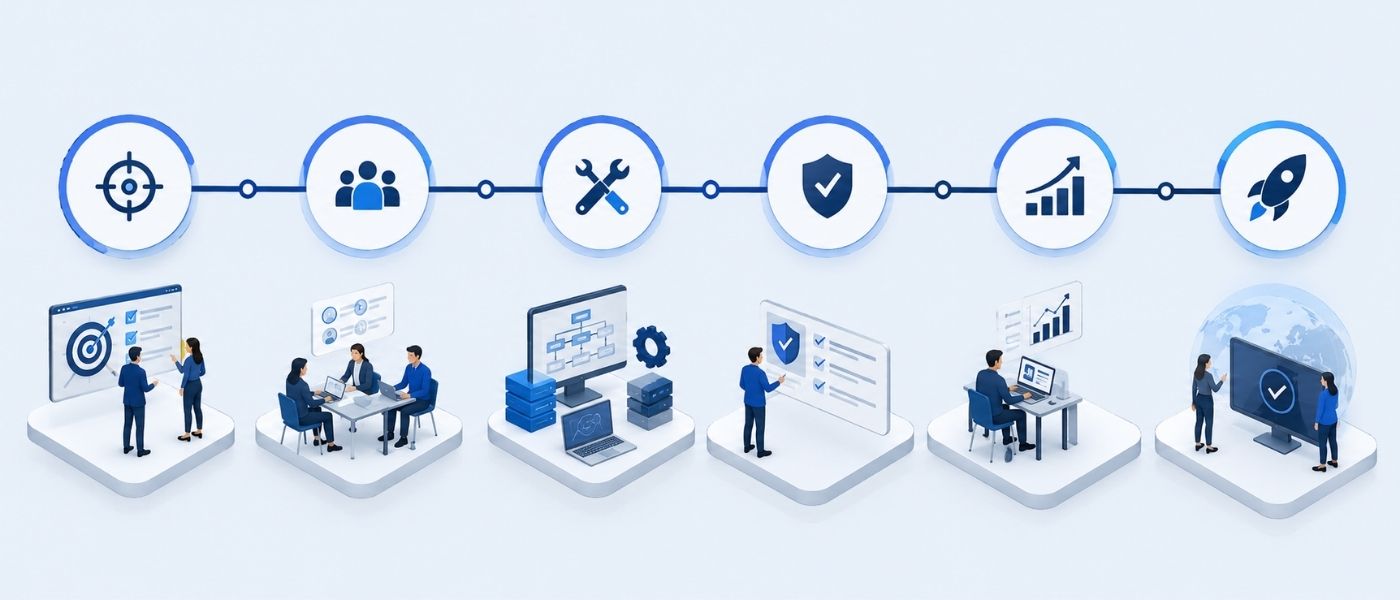
A structured transition should include:
- Asset and access audits
- Knowledge transfer
- Parallel support periods
- Documentation validation
What Buyers Should Demand
- A detailed transition plan
- Named transition owners
- Risk mitigation steps
- Clear timelines
A provider unwilling to invest in transition is a long-term risk.
Red Flags Buyers Should Never Ignore
Avoid providers who:
- Can’t clearly explain their delivery model
- Avoid security questions
- Offer “one-size-fits-all” solutions
- Resist transparency on processes
- Overpromise unrealistic SLAs
Good business IT support services prioritize stability over hype.
The Strategic Value of the Right IT Support Partner
The best IT support providers:
- Reduce operational noise
- Strengthen security posture
- Enable leadership to focus on growth
- Scale alongside the business
For many SMEs, adopting IT support solutions designed specifically for SMEs is the difference between reactive survival and structured growth.
They function as long-term partners, not reactive vendors.
Future Trends in Business IT Support Services
By 2026–2028, expect:
- Increased automation in L1 support
- Predictive monitoring
- Deeper cybersecurity integration
- More offshore-hybrid delivery models
Buyers should choose providers ready for this future, not stuck in legacy models.
Conclusion
Choosing the right business IT support services is not about:
- Tickets
- Tools
- Or technology alone
It is about:
- Risk management
- Operational resilience
- Business continuity
- Scalable growth
Organizations that approach this decision strategically gain a quiet but powerful advantage — IT that simply works, even as the business evolves.
Recent Post
How to Set Up an Offshore QA Center of Excellence in India: A Practical Guide for Global Teams
Learn how to set up an offshore QA center of...
Managed IT Services for Small Businesses: Complete Guide (2026)
Discover what managed IT services for small businesses actually include,...

iValuePlus Services
iValuePlus is a one-stop solution to address all your needs to access, build and grow your business in the Indian market which is cost-effective & has a huge talent pool. Established in 2019 as a ‘Business Solution provider', our team has delivered successful growth projects in the international market.
Our services include setting up ODC (offshore development center), Staff Augmentation, Talent Acquisition, Digital Marketing, in the IT/ITES domain.