
Discover the best city to set up office in India...

From Legacy to Leading Edge: Discover the Best IT Solutions for 2025
November 12, 2025
The Offshore IT Services Advantage: Driving Sustainable Global Value
November 13, 2025
Categories
Tags
- dedicated remote teams
- digital transformation
- distributed teams
- Future of Work
- future workforce
- global remote hiring
- global talent strategy
- hybrid work models
- it outsourcing
- iValuePlus
- offshore development
- Offshore Teams
- remote collaboration
- remote productivity
- remote team management
- remote work trends
- remote workforce 2030
- team scalability
- virtual teams
- workforce automation

Future of Work 2030: Why Dedicated Remote Teams Are the New Global Norm
The New Workforce Reality
The global workforce is undergoing its most profound transformation since the Industrial Revolution. By 2030, nearly 70% of the professional workforce will operate in hybrid or fully remote structures. What began as a necessity during global disruptions has now become a strategic model for scalability, efficiency, and innovation.
At the heart of this evolution lies one key concept — dedicated remote teams. Unlike freelancers or short-term contractors, these are full-time, highly skilled professionals working exclusively for an organization, often through offshore or nearshore partnerships.
From startups seeking agility to Fortune 500 enterprises expanding into new markets, dedicated remote teams have become the backbone of global digital transformation.
The Rise of Dedicated Remote Teams: A 2030 Perspective
The last decade redefined what “workplace” means. Offices moved from physical spaces to digital ecosystems. Talent boundaries dissolved. Companies no longer needed to choose between cost savings and quality — they could achieve both through the dedicated remote model.
- The Acceleration of Remote Work
- The pandemic accelerated digital adoption by a decade.
- Global businesses realized productivity wasn’t tied to geography but to engagement, structure, and technology.
- Remote collaboration tools matured — enabling 24/7 operations, seamless communication, and transparent project management.
- Dedicated Teams as a Strategic Asset
Unlike traditional outsourcing, dedicated remote teams:
- Integrate deeply with company culture and values
- Operate under shared KPIs and performance metrics
- Offer full control with lower operational overhead
- Provide continuity, institutional knowledge, and scalability
This balance of ownership and flexibility makes the model indispensable in 2025–2030’s digital-first era.
Why Dedicated Remote Teams Are the New Global Norm
- Global Talent Without Borders
Organizations are no longer constrained by regional hiring limitations. The new workforce model enables companies to access top-tier talent in India, Eastern Europe, and Southeast Asia — regions that offer high-skill professionals with global exposure.
Platforms like iValuePlus help organizations set up dedicated offshore teams, providing access to specialized skills across IT, marketing, analytics, and support — at a fraction of Western costs.
- Cost Efficiency and Predictability
The traditional office model involves high fixed costs — infrastructure, utilities, local compliance, and benefits.
Dedicated remote teams turn these into predictable operating expenses, reducing capital investment while ensuring access to enterprise-level expertise.
By 2030, businesses operating with remote-first structures report up to 45% savings in operational costs, with 35% higher employee retention.
- 24/7 Productivity Through Time-Zone Synergy
Projects move seamlessly from one region to another, ensuring round-the-clock productivity — a key differentiator in the age of real-time digital service delivery.
- Built-In Agility and Crisis Resilience
Dedicated remote teams proved vital during global disruptions.
Their decentralized structure reduces dependency on single-location risks and allows quick scaling or restructuring as business priorities shift.
- Enhanced Employee Experience
Today’s professionals prioritize flexibility, autonomy, and purpose.
Remote teams empower employees to work from anywhere while maintaining strong engagement through digital collaboration, recognition systems, and inclusive leadership.
The Strategic Value Chain of Dedicated Remote Teams
Dedicated teams are not merely cost-saving instruments — they are strategic enablers of growth and innovation.
Here’s how they integrate into an enterprise’s global value chain:
Function | Traditional Model | Dedicated Remote Model |
Talent Sourcing | Local recruitment | Global hiring through specialized partners |
Management Control | Vendor-led | Client-led with full visibility |
Scalability | Rigid | On-demand, scalable by project phase |
Integration | Partial | Deep alignment with culture, systems, and goals |
IP Ownership | Shared | Fully retained by client |

From ODCs to Dedicated Remote Teams: A Natural Evolution
Many organizations start with an Offshore Development Center (ODC) model to build specific capabilities — like IT, analytics, or operations. Over time, they evolve into dedicated remote teams that are:
- Functionally integrated into enterprise workflows
- Trained to align with brand and culture
- Capable of innovation, not just execution
By combining the structure of ODCs and the flexibility of remote teams, companies achieve a powerful synergy — cost control with innovation continuity.
Technology as the Backbone of Remote Collaboration
The success of dedicated remote teams depends on a robust digital infrastructure.
Some of the enablers that define high-performing distributed workforces include:
- Secure Cloud Platforms
Ensure seamless collaboration, data storage, and compliance management.
- AI-Powered Workflows
AI and machine learning streamline communication, project tracking, and predictive analytics for decision-making.
- Cybersecurity and Compliance
As remote models expand, ensuring GDPR, ISO, and SOC2 compliance becomes critical for risk-free operations.
- Unified Communication Systems
Tools like Slack, MS Teams, and Asana enable transparent collaboration and real-time accountability across teams and time zones.
Building and Managing a Dedicated Remote Team: A Step-by-Step Framework
To build a high-performing remote team, businesses need a strategic foundation.
Here’s a roadmap to success:
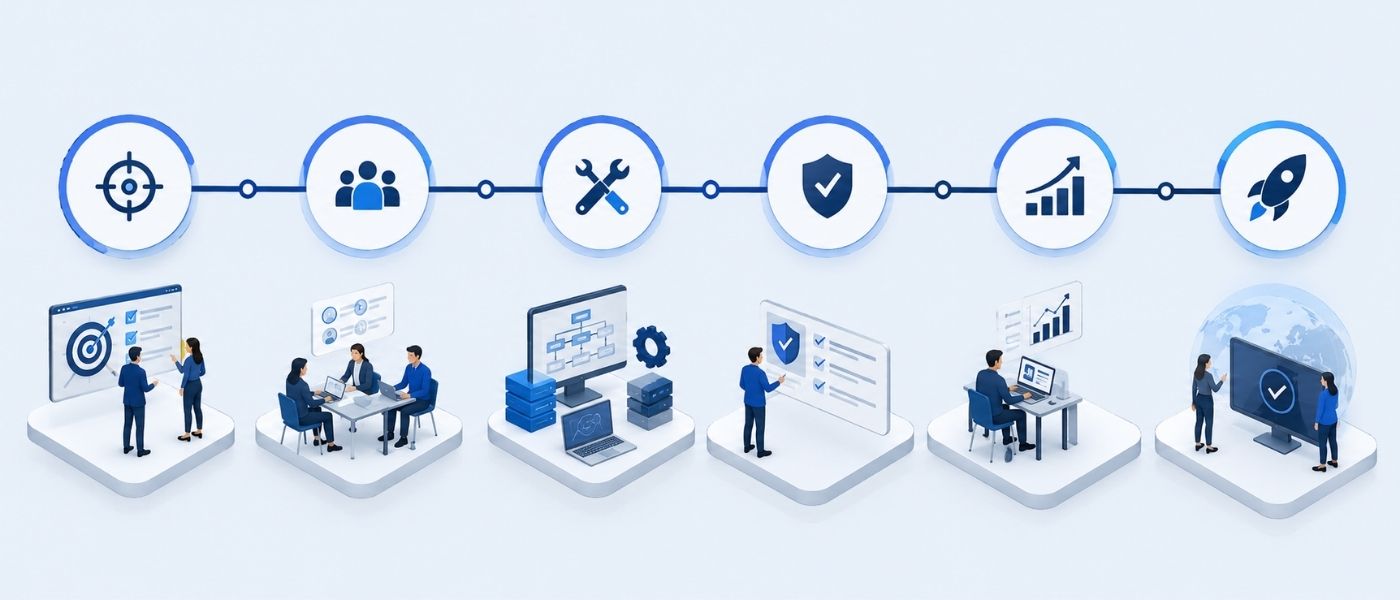
Step 1: Define Objectives and Roles
Outline business goals, deliverables, and key success metrics before hiring.
Step 2: Choose the Right Partner
Collaborate with an experienced offshore partner like iValuePlus, which provides infrastructure, HR, compliance, and operational support for global team setups.
Step 3: Establish Communication Cadence
Define daily/weekly reporting structures and governance systems.
Step 4: Leverage Technology
Adopt secure, scalable tools for project management, communication, and data protection.
Step 5: Nurture a Shared Culture
Host virtual events, recognize achievements, and maintain transparent feedback loops.
Step 6: Scale with Flexibility
Use a modular approach — start small, evaluate outcomes, and scale across departments.
Challenges in Managing Dedicated Remote Teams (and How to Overcome Them)
- Cultural Integration
Invest in onboarding, cross-cultural training, and shared leadership models.
- Communication Barriers
Use structured collaboration platforms and clearly defined workflows.
- Data Security Risks
Enforce strong cybersecurity policies and regular audits.
- Retention and Motivation
Build career pathways, offer incentives, and ensure alignment with global organizational goals.
Future Outlook: What 2030 Holds for Dedicated Remote Teams
By 2030, dedicated remote teams will become the default workforce model for industries ranging from IT to finance, marketing, and R&D.
Key projections include:
- 85% of enterprises will maintain at least one dedicated offshore team.
- The “Remote-First” approach will become the primary business model for global expansion.
- AI-driven performance analytics will redefine remote workforce management.
- The integration of Metaverse workspaces and virtual collaboration hubs will transform engagement.

How iValuePlus Enables Global Remote Collaboration
iValuePlus, a trusted global partner, empowers enterprises to build and manage dedicated offshore teams with end-to-end operational support. From recruitment and infrastructure setup to compliance and governance, iValuePlus ensures businesses can scale globally — seamlessly and securely. With expertise in offshore staffing, IT development, and team augmentation, iValuePlus stands at the forefront of the Future of Work 2030 revolution — enabling organizations to focus on growth while managing distributed teams efficiently.
FAQ
Q1: What are dedicated remote teams?
Dedicated remote teams are full-time professionals working exclusively for a company but based offshore or remotely. They provide continuity, cost efficiency, and cultural integration.
Q2: How do dedicated remote teams differ from outsourcing?
Unlike traditional outsourcing, dedicated teams integrate deeply into company culture, processes, and KPIs, giving businesses full operational control.
Q3: Why are dedicated remote teams essential in 2030?
They enable businesses to access global talent, reduce costs, ensure 24/7 operations, and build agile, crisis-resilient structures.
Q4: How can companies manage remote team challenges?
Through structured communication, strong cybersecurity, cultural training, and collaboration platforms.
Q5: How does iValuePlus help in setting up dedicated remote teams?
iValuePlus provides end-to-end offshore staffing, infrastructure, and compliance management helping global companies scale efficiently with dedicated remote teams.
Conclusion
As we step into 2030, dedicated remote teams represent not just a shift in where work happens — but how value is created.
They embody the balance between technology, talent, and trust — the three pillars of tomorrow’s enterprise.
Businesses that embrace this evolution early will lead the next global growth wave — with dedicated remote teams as their strategic engine.
Recent Post
How to Set Up an Offshore QA Center of Excellence in India: A Practical Guide for Global Teams
Learn how to set up an offshore QA center of...
Managed IT Services for Small Businesses: Complete Guide (2026)
Discover what managed IT services for small businesses actually include,...

iValuePlus Services
iValuePlus is a one-stop solution to address all your needs to access, build and grow your business in the Indian market which is cost-effective & has a huge talent pool. Established in 2019 as a ‘Business Solution provider', our team has delivered successful growth projects in the international market.
Our services include setting up ODC (offshore development center), Staff Augmentation, Talent Acquisition, Digital Marketing, in the IT/ITES domain.