
Discover the best city to set up office in India...

DevOps and Cloud Automation: Enabling Faster, Scalable Digital Transformation
Digital Transformation in a Cloud-Driven Era
Digital transformation is no longer a future initiative—it is a present-day necessity. Organizations across industries are under constant pressure to release features faster, scale systems seamlessly, maintain high availability, and ensure security across increasingly complex IT environments. Traditional IT operations, built around manual processes and siloed teams, struggle to meet these demands.
Cloud computing has fundamentally changed how businesses design and operate their technology platforms. However, cloud adoption alone does not guarantee agility or efficiency. Without automation, governance, and operational discipline, cloud environments can quickly become complex, costly, and difficult to manage.
This is where DevOps and cloud automation play a critical role. Together, they enable organizations to modernize application delivery, automate infrastructure operations, and achieve continuous innovation while maintaining reliability, security, and cost control.
Understanding DevOps and Cloud Automation
What Is DevOps?
DevOps is a set of practices, tools, and cultural principles that bring together software development and IT operations. Its primary objective is to shorten development cycles, improve deployment frequency, and deliver reliable software through automation and collaboration.
DevOps replaces rigid handoffs with shared responsibility across the entire application lifecycle—from code development and testing to deployment, monitoring, and optimization. By automating repetitive tasks and standardizing workflows, DevOps enables teams to deliver software faster with fewer errors.
What Is Cloud Automation?
Cloud automation refers to the use of scripts, templates, and tools to automatically provision, configure, manage, and optimize cloud infrastructure and services. Instead of relying on manual processes, automation ensures consistency, scalability, and repeatability across environments.
Automation covers areas such as infrastructure provisioning, scaling, patching, security enforcement, monitoring, backup, and cost optimization across cloud platforms.
How DevOps and Cloud Automation Work Together
DevOps provides the operational framework and mindset, while cloud automation enables execution at scale. Together, they allow organizations to:
Deploy applications faster and more reliably
Maintain consistent environments across development, testing, and production
Scale infrastructure dynamically based on demand
Reduce operational risk through automation and observability
This combination forms the foundation of modern, cloud-native IT operations.
Why Enterprises Are Adopting DevOps and Cloud Automation
Faster Time-to-Market
Automated CI/CD pipelines allow teams to integrate, test, and deploy code continuously. This significantly reduces release cycles and enables faster delivery of new features, updates, and fixes—helping businesses stay competitive.
Improved Scalability and Flexibility
Cloud automation enables infrastructure to scale automatically based on workload requirements. Organizations can respond to traffic spikes, seasonal demand, or business growth without manual intervention or over-provisioning.
Enhanced Reliability and Stability
Automated infrastructure provisioning, monitoring, and self-healing systems reduce human error and improve system availability. Proactive monitoring ensures issues are detected and resolved before they impact users.
Cost Optimization
Automation helps organizations control cloud spending by enforcing policies, right-sizing resources, and eliminating unused infrastructure. This ensures optimal performance without unnecessary costs.
Key Components of DevOps and Cloud Automation
CI/CD Pipelines
Continuous Integration and Continuous Deployment pipelines automate code testing, integration, and deployment. Tools such as Jenkins, GitLab CI, GitHub Actions, Azure DevOps, and AWS CodePipeline ensure faster and more reliable releases.
Infrastructure as Code (IaC)
IaC enables infrastructure to be defined and managed through code using tools like Terraform, AWS CloudFormation, and Azure ARM templates. This ensures consistency, version control, faster provisioning, and easier recovery.
Containerization and Kubernetes
Containers package applications with their dependencies, ensuring consistency across environments. Kubernetes orchestrates containerized workloads, enabling automated scaling, high availability, and efficient resource utilization across cloud platforms.
Monitoring, Observability, and SRE
Modern DevOps relies on deep visibility into system performance and user experience. Monitoring and observability tools provide real-time insights into availability, latency, errors, and resource usage—enabling proactive operations and faster incident resolution.
DevSecOps and Compliance Automation
DevSecOps integrates security into every stage of the DevOps lifecycle. Automated vulnerability scanning, policy enforcement, secrets management, and compliance checks ensure secure deployments without slowing down delivery.
Role of Cloud Platforms in DevOps Automation
AWS DevOps
AWS offers a mature ecosystem for DevOps automation, supporting scalable CI/CD pipelines, container services, serverless architectures, and comprehensive monitoring. It is well-suited for enterprises requiring flexibility and deep automation capabilities.
Azure DevOps
Azure DevOps is ideal for Microsoft-centric and hybrid environments. Its integrated toolchain, combined with Azure Arc and enterprise-grade security features, enables seamless DevOps operations across cloud and on-premise systems.
Google Cloud DevOps
Google Cloud is optimized for Kubernetes-native, data-driven, and AI-focused workloads. Its built-in CI/CD, observability, and container orchestration capabilities make it suitable for modern cloud-native applications.
Challenges in Implementing DevOps and Cloud Automation
Despite its benefits, implementing DevOps and cloud automation at scale presents several challenges.
Skill Gaps and Talent Shortage
DevOps requires expertise across cloud platforms, automation tools, CI/CD pipelines, containers, security, and monitoring. Finding professionals with these combined skills is difficult and costly, leading to operational gaps.
Toolchain Complexity
Modern DevOps environments involve multiple tools across development, deployment, monitoring, and security. Without proper integration and governance, tool sprawl increases complexity and reduces efficiency.
Security and Compliance Risks
Automated deployments introduce new security risks, such as misconfigured infrastructure, unsecured pipelines, and unmanaged secrets. Meeting regulatory requirements in industries like finance and healthcare adds further complexity.
Managing Multi-Cloud and Hybrid Environments
Many organizations operate across AWS, Azure, GCP, and on-premise systems. Ensuring consistent performance, security, and cost control across these environments requires advanced automation and expertise.
Cost Visibility and Control
Without automation and governance, cloud costs can escalate quickly due to unused resources, inefficient scaling, and lack of monitoring.

Business Benefits of DevOps and Cloud Automation
When implemented effectively, DevOps and cloud automation deliver measurable business value beyond IT efficiency.
Accelerated Innovation
Automated pipelines enable frequent, reliable releases—allowing organizations to innovate faster and respond quickly to market demands.
Improved Reliability and Availability
Automation minimizes human error, enables proactive monitoring, and supports self-healing systems, resulting in higher uptime and better user experience.
Stronger Security and Compliance
DevSecOps ensures security is embedded throughout the delivery lifecycle, reducing vulnerabilities while meeting regulatory requirements.
Optimized Cloud Spending
Automation enables right-sizing, policy enforcement, and continuous cost monitoring—helping organizations achieve predictable and optimized cloud costs.
Enhanced Collaboration and Productivity
DevOps improves collaboration between development, operations, and security teams, increasing productivity and reducing operational friction.
Scalability for Growth
Automated infrastructure allows organizations to scale applications and services seamlessly as business demands evolve.
How Managed DevOps Services Simplify Transformation
Managed DevOps services help organizations overcome these challenges by providing access to certified experts, proven frameworks, and 24×7 operational support.
Access to Certified DevOps Experts
Organizations gain specialized skills without the cost of building in-house teams.
24×7 Monitoring and Managed Support
Continuous monitoring ensures system stability and rapid incident response.
SLA-Driven Operations
Defined service-level agreements ensure predictable performance and accountability.
Continuous Optimization
Ongoing improvements help optimize performance, security, and cloud costs.
DevOps and Cloud Automation Across Industries
DevOps and cloud automation deliver value across multiple sectors:
Telecom: High availability, network automation, and scalability
Healthcare: Secure, compliant application delivery
Fintech: Rapid innovation with strong security controls
Banking: Resilient platforms with regulatory compliance
Logistics: Scalable systems for real-time tracking
Gaming and EdTech: High-performance platforms for fluctuating demand
Getting Started with DevOps and Cloud Automation
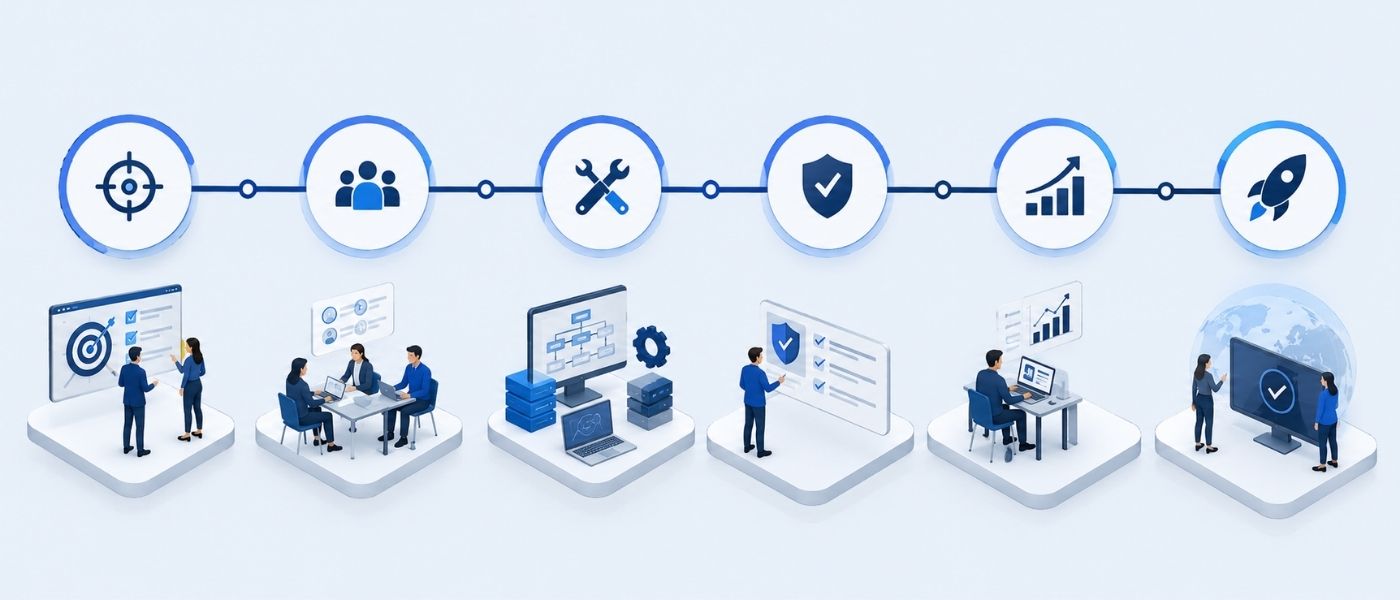
A successful DevOps transformation follows a structured approach:
- Assessment and Strategy – Evaluate existing systems, tools, and objectives
- Implementation and Automation – Build CI/CD pipelines and automated infrastructure
- Monitoring and Optimization – Ensure performance, security, and cost control
- Continuous Improvement – Evolve platforms to support future growth
Why iValuePlus for DevOps and Cloud Automation
Choosing the right DevOps partner is critical to achieving sustainable digital transformation. iValuePlus combines technical expertise, enterprise-grade processes, and continuous operational support to deliver predictable and scalable DevOps outcomes.
Cloud-Agnostic and Vendor-Neutral Approach
iValuePlus supports AWS, Azure, and Google Cloud Platform, enabling organizations to choose the best-fit cloud strategy without vendor lock-in. This flexibility ensures long-term scalability and cost control.
Certified DevOps and Cloud Experts
Our teams include certified AWS, Azure, Kubernetes, and Terraform professionals with hands-on experience in complex enterprise environments. Clients gain immediate access to specialized expertise without the cost of building internal teams.
Strong DevSecOps Focus
Security and compliance are embedded into every DevOps workflow. Automated security checks, compliance monitoring, and access controls ensure safe and compliant cloud operations—even in highly regulated industries.
24×7 Monitoring and Managed Services
Through IVPHUB, iValuePlus provides round-the-clock monitoring, incident management, and performance optimization. SLA-driven operations ensure system stability, faster recovery, and predictable service levels.
Proven Engagement Models
Whether through managed services, project-based delivery, dedicated ODC teams, or BOT models, iValuePlus offers flexible engagement options aligned with business objectives.
Measurable Business Outcomes
Our DevOps and cloud automation solutions help clients achieve faster deployments, higher system availability, and up to 30 percent cost optimization—delivering tangible business value.
Conclusion
DevOps and cloud automation are no longer optional for organizations seeking long-term competitiveness. They enable faster innovation, stronger reliability, enhanced security, and scalable growth in a cloud-driven world.
By adopting the right strategy and partnering with experienced DevOps specialists, enterprises can transform IT operations into a powerful enabler of business success. With automation at the core, digital transformation becomes predictable, secure, and sustainable.
Get in touch now and simplify your DevOps and cloud operations with automation-first, enterprise-grade delivery.
Recent Post
How to Set Up an Offshore QA Center of Excellence in India: A Practical Guide for Global Teams
Learn how to set up an offshore QA center of...
Managed IT Services for Small Businesses: Complete Guide (2026)
Discover what managed IT services for small businesses actually include,...

iValuePlus Services
iValuePlus is a one-stop solution to address all your needs to access, build and grow your business in the Indian market which is cost-effective & has a huge talent pool. Established in 2019 as a ‘Business Solution provider', our team has delivered successful growth projects in the international market.
Our services include setting up ODC (offshore development center), Staff Augmentation, Talent Acquisition, Digital Marketing, in the IT/ITES domain.