
Discover the best city to set up office in India...

India Market Entry Through Team Setup: Options for US and EU Companies
US and EU companies can enter the India market through four primary team setup models: staff augmentation (fastest, low commitment), Offshore Development Centers or ODCs (dedicated, scalable), the Build-Operate-Transfer (BOT) model (structured path to ownership), and subsidiary/entity setup (full legal presence). The right model depends on your timeline, headcount needs, risk appetite, and long-term India strategy.
The India Opportunity Is Real — But Most Companies Get the Entry Wrong
Every week, another US SaaS company or European enterprise announces an India team. The cost savings are cited. The talent pool is praised. The announcement gets a LinkedIn post.
Six months later, half of them are quietly dealing with compliance gaps, attrition crises, or management overhead that nobody budgeted for — because they entered India without a structured strategy.
India’s technology and services workforce now exceeds 5.4 million professionals (NASSCOM, 2024). Compensation benchmarks for senior engineers in Bangalore, Hyderabad, and Pune remain 60–75% below equivalent roles in the US, even accounting for benefits and employer costs. For mid-market and enterprise companies in the US and EU, that arithmetic is hard to ignore.
But the real question isn’t whether to enter India — it’s how. Specifically: which team setup model fits your scale, risk tolerance, regulatory requirements, and growth horizon?
This guide is written for CXOs, founders, HR directors, and operations heads who need a commercially grounded, legally aware view of India market entry options — without the sales pitch.
Key Takeaways
- Four viable models exist: Staff augmentation, ODC, BOT, and direct entity setup — each with distinct cost, control, and compliance profiles.
- Timeline matters: Staff augmentation can onboard talent in 2–4 weeks; entity setup takes 3–6 months.
- Compliance is non-negotiable: India’s labor laws (Shops & Establishments Act, PF, ESI, gratuity) apply regardless of your operating model.
- ODCs and BOT are underused: Most SMBs default to freelancers or generic outsourcing, missing the structured middle ground these models provide.
- The BOT model de-risks ownership: It lets you build, validate, and then take over a captive India operation — ideal for companies planning 5+ year India presence.
- Payroll and HR infrastructure are often afterthoughts: They should be among the first decisions you make, not the last.
- Partner selection is a strategic decision: The right India market entry partner reduces setup time, eliminates legal risk, and accelerates time-to-productivity.
Why India Is the Default Destination for Global Team Setup
Several factors have converged to make India the most commercially attractive destination for US and EU companies building offshore or nearshore capabilities:
Talent Density at Scale
India produces approximately 1.5 million engineering graduates annually. Beyond volume, the talent mix spans full-stack development, cloud infrastructure, data science, DevOps, QA, digital marketing, and finance operations — making it feasible to build cross-functional teams in a single geography.
Major tech hubs — Bangalore, Hyderabad, Pune, Chennai, and Noida — have established ecosystems with experienced professionals who have worked with global clients, operate comfortably in English, and are familiar with agile, SCRUM, and international delivery standards.
Cost Efficiency That Actually Holds Up
The cost differential between a senior software engineer in San Francisco (~$160,000–$200,000 annually) and an equivalent-level professional in Bangalore ($25,000–$40,000 including employer costs) remains substantial. Even factoring in management overhead, infrastructure, and compliance costs, companies typically realize 50–65% net cost savings on a like-for-like role basis.
For EU companies, the arbitrage is similar — and the time zone overlap with India (IST is UTC+5:30) offers workable overlap windows with both Western Europe and the US East Coast.
Regulatory Maturity
India’s corporate and labor law framework — while complex — is well-established and predictable. Structures like Private Limited Companies, LLPs, and Professional Employer Organizations (PEOs) are recognized pathways for foreign entities. International arbitration is available for dispute resolution, and IP protection frameworks have improved substantially under recent legislative updates.
The Four Primary India Market Entry Models for Team Setup
Model 1: Staff Augmentation
Staff augmentation is the fastest and lowest-commitment model for accessing Indian talent. Under this arrangement, the foreign company works with an India-based staffing or technology partner who employs the professionals on their payroll, handles compliance, benefits, and local HR — while the client company directs the day-to-day work.
- Best for: Project-based needs, fast ramp-ups, skills gaps, or companies testing India delivery before committing to a larger setup.
- Typical timeline: 2–4 weeks to first productive resource.
- Headcount range: 1 to 30 professionals.
- Risk level: Low — no permanent establishment obligations, no local entity required.
- Watch out for: Dependency on the staffing partner’s bench, limited cultural integration, and higher per-head cost versus ODC or captive models at scale.
Staff augmentation works exceptionally well for roles like software development, QA, UI/UX, data engineering, and digital marketing execution — where skill specifications are clear and deliverables are measurable.
Model 2: Offshore Development Center (ODC)
An Offshore Development Center is a dedicated team of professionals — engineers, designers, analysts, operations staff — working exclusively for one client company, typically housed in a managed facility provided by the India-based partner.
Unlike staff augmentation, an ODC is not project-scoped. It’s a permanent, scalable capability center that operates as an extension of the client’s internal team, with shared culture, tooling, processes, and leadership structures.
- Best for: Companies with 10+ headcount requirements, ongoing product development or operations work, and 12+ month engagement timelines.
- Typical timeline: 6–10 weeks to operational team.
- Headcount range: 10 to 500+.
- Risk level: Medium — requires active management, structured onboarding, and cultural alignment investment.
- Cost advantage: At scale, ODC cost per FTE typically runs 20–30% lower than equivalent staff augmentation arrangements.
The ODC model is the most commonly adopted structure among mid-market software companies, SaaS businesses, and enterprises building technology or back-office capability in India.
Model 3: Build-Operate-Transfer (BOT)
The Build-Operate-Transfer model is arguably the most sophisticated — and underutilized — approach to India market entry. Under this structure, the foreign company partners with an India-based service provider who builds the team and operational infrastructure on the client’s behalf, operates it for a defined period (typically 12–36 months), and then transfers full ownership and management to the client.
Think of it as a structured path from managed service to captive entity — with the partner absorbing setup risk and operational complexity during the build phase.
- Best for: Companies with a clear long-term India strategy but limited local expertise to set up independently.
- Typical timeline: 3–6 months to full operationalization; transfer in 18–36 months.
- Headcount range: 20 to 200+ at point of transfer.
- Key benefit: By the time you take ownership, you have a proven team, established processes, and a compliant entity — not a startup from scratch.
- Watch out for: Transfer terms, IP assignment clauses, and employee retention commitments need to be negotiated upfront with legal rigor.
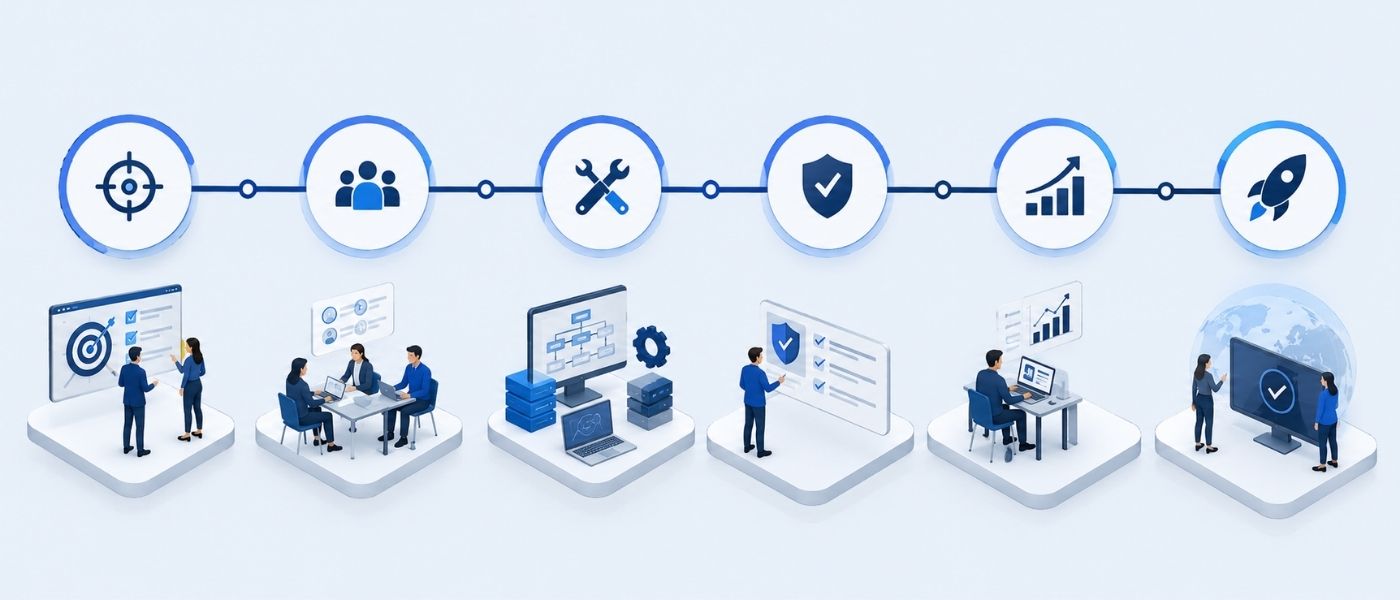
How the BOT Process Works: Step-by-Step
Scoping & Agreement Define team size, roles, location, KPIs, transfer timeline, and ownership terms. Negotiate IP rights, non-compete clauses, and employee transfer conditions. |
Build Phase (Months 1–6) Partner recruits, onboards, and trains the team. Sets up infrastructure, payroll, compliance, and management systems. |
Operate Phase (Months 6–36) Partner manages operations, HR, and delivery. Client integrates team into workflows, builds culture alignment, and validates quality. |
Transfer Phase Legal entity (typically a Private Limited Company) is transferred or incorporated by the client. Employees move to client payroll with continuity of benefits. |
Post-Transfer Client operates a fully owned India subsidiary with zero setup disruption — team is already productive, compliant, and culturally integrated. |
Model 4: Direct Entity Setup (India Subsidiary)
For companies making a definitive long-term commitment to India, incorporating a Private Limited Company or a Liaison/Branch Office is the most direct route. This gives the foreign parent full legal control, IP ownership, and the ability to build a true employer brand in the Indian market.
- Best for: Companies with 50+ headcount plans, those seeking access to Indian capital markets or government contracts, or businesses requiring full operational independence.
- Typical timeline: 3–6 months (company incorporation, bank account setup, FEMA compliance, RBI filings).
- Ongoing compliance: Annual filings with MCA, GST registration and returns, TDS compliance, PF/ESI registration, labor law adherence.
- Watch out for: Significant legal and accounting overhead; not cost-effective below 30–40 headcount.
Which India Entry Strategy Fits Your Business?
Criteria | Staff Augmentation | ODC | BOT Model | Direct Entity |
Setup Time | 2–4 weeks | 6–10 weeks | 3–6 months | 3–6 months |
Upfront Investment | Low | Low–Medium | Medium | High |
Ownership of Team | None (partner) | Shared | Full (post-transfer) | Full |
Compliance Risk | Partner-managed | Shared | Partner → Client | Client-managed |
Scalability | Limited | High | High | Highest |
Ideal Headcount | 1–30 | 10–500+ | 20–200+ | 50–500+ |
Best Timeline | Immediate need | 6–18 months out | Long-term plan | Long-term commitment |
Exit Flexibility | Very High | High | Medium | Low |

India Compliance Essentials Every Foreign Company Must Know
Regardless of which entry model you choose, certain compliance obligations are universal in India. Getting these wrong — or delegating them without oversight — is the single most common source of unexpected cost and legal exposure for foreign entrants.
Employment Law Fundamentals
- Provident Fund (PF): Mandatory for employees earning below INR 15,000/month basic (though often extended to all employees). Employer contribution: 12% of basic salary.
- Employee State Insurance (ESI): Applicable for employees earning below INR 21,000/month. Employer contributes 3.25% of gross wages.
- Gratuity: Mandatory lump-sum payment to employees who complete 5 or more years of service. Equal to 15 days’ salary per year of service.
- Shops & Establishments Act: State-level legislation governing working hours, leave entitlements, and workplace conditions. Registration required in each state where you operate.
- Income Tax (TDS): Employers must deduct tax at source from salaries and remit to the government monthly. Annual Form 16 issuance to employees is mandatory.
Foreign Direct Investment (FDI) Rules
Most technology, IT services, and back-office functions fall under the automatic FDI route — meaning foreign investment is permitted without prior RBI or government approval. However, certain sectors (financial services, defense, media) require government route approvals. FEMA compliance is required for all inward remittances from the foreign parent to the India entity.
Choosing the Right India Location for Your Team
City selection has more strategic impact than most companies anticipate. The right location affects talent availability, compensation benchmarks, real estate costs, and attrition risk.
City | Primary Strength | Cost Index vs. Bangalore | Talent Pool Depth | Best For |
Bangalore | Tech, product, deep engineering | Baseline (100) | Very Deep | Product companies, R&D, SaaS |
Hyderabad | IT services, finance ops | ~85 | Deep | IT services, BFSI operations |
Pune | Engineering, auto-tech, BFSI | ~80 | Strong | Engineering firms, banks |
Chennai | Manufacturing tech, analytics | ~75 | Strong | Analytics, enterprise IT |
Noida/Gurgaon (NCR) | BPO, sales, digital marketing | ~80 | Broad | Sales, marketing, support |
Tier-2 (Coimbatore, Jaipur, Indore) | Cost efficiency, lower attrition | ~55–65 | Growing | Scaling cost-sensitive roles |
Common Mistakes US and EU Companies Make in India Market Entry
These are the mistakes that show up consistently in post-mortem reviews of India expansions that underperformed — not from lack of intent, but from insufficient operational planning.
- Underestimating attrition: India’s IT sector experiences average annual attrition of 18–24%. Companies that don’t build retention programs, career progression structures, and manager-level leadership into their ODC from the start pay for it in productivity loss and recruitment costs.
- Treating India as a cost center, not a capability center: Teams that are given only low-complexity work deliver low-complexity output. High-performing India teams are given real ownership, decision-making authority, and visibility into company strategy.
- Skipping the management layer: The most common structural failure in offshore teams is insufficient India-side leadership. A senior delivery manager or country head who can own culture, escalation, and stakeholder management is not optional — it’s foundational.
- Ignoring payroll and accounting setup: Payroll delays, incorrect TDS calculations, and PF non-compliance are the fastest ways to damage trust with your India team. These functions must be operational before you onboard your first employee.
- Starting with too many vendors: Companies that engage separate vendors for recruitment, payroll, facilities, IT, and compliance end up with coordination gaps and accountability diffusion. A managed delivery partner who covers the full stack reduces this risk significantly.
What a Full-Service India Entry Partner Should Provide
If you’re engaging a partner for India market entry, the scope of services they cover determines how much management bandwidth your internal team needs to allocate. Here’s what a comprehensive partner engagement should include:
Talent Acquisition & Staff Augmentation
Role definition, JD drafting, sourcing, technical screening, cultural fit assessment, and onboarding management. Ongoing bench management for scaling or replacing resources.
Offshore Development Center (ODC) Management
Dedicated team setup, physical or virtual infrastructure provisioning, SLA-based delivery management, integration with client tooling (Jira, Confluence, GitHub, Slack), and periodic performance reviews.
BOT Model Execution
Full lifecycle management from team build to operational handover. Includes legal entity setup support, transition planning, employee agreement management, and post-transfer advisory.
IT Infrastructure & Security
Endpoint management, VPN and network security, cloud provisioning (AWS, Azure, GCP), VAPT support, and IT helpdesk — ensuring your India team operates with the same security posture as your headquarters.
Payroll, Accounting & Compliance
Monthly payroll processing, PF/ESI registration and remittances, TDS calculation and filing, GST returns, annual statutory compliance, and management reporting. This is the operational backbone of a compliant India entity.
Digital Marketing for India Market Activation
For companies entering India as both an employer and a commercial market, brand-building and demand generation in India require local expertise. This includes SEO for Indian SERPs, LinkedIn campaigns targeting Indian enterprises, and content localized for the Indian business audience.
India Market Entry Readiness Checklist
- Define your 12-month and 36-month headcount projections for India
- Identify the entry model that fits your timeline and risk profile (staff aug, ODC, BOT, or direct entity)
- Select city/cities based on talent type, cost, and time zone needs
- Engage an India-based legal advisor to review FDI applicability and FEMA requirements
- Set up or outsource payroll, PF, ESI, and TDS compliance before first hire
- Define onboarding and performance management processes for India team members
- Identify India-side leadership (delivery manager, country head) — don’t defer this
- Establish IT security protocols and endpoint management before devices are deployed
- Define IP assignment, confidentiality, and non-compete clauses for all India-based employees
- Plan attrition mitigation: competitive compensation, ESOP/bonus structure, career growth pathways
FAQ
Q: How long does it take to set up a team in India?
A: Timeline depends on the model. Staff augmentation can place resources in 2–4 weeks. An ODC takes 6–10 weeks to operationalize. A BOT engagement becomes fully operational in 3–6 months, with entity transfer in 18–36 months. Direct entity setup (incorporating a Private Limited Company) typically takes 3–6 months including all regulatory filings.
Q: Do we need a legal entity in India to hire employees?
A: Not immediately. Staff augmentation and ODC models allow you to access Indian talent through a third-party employer of record — meaning the partner entity is the legal employer. You only need your own legal entity if you’re setting up a direct subsidiary or completing a BOT transfer.
Q: What are the real cost savings from an India team?
A: On a like-for-like role basis, most US and EU companies achieve 50–70% cost reduction compared to equivalent domestic hires. This accounts for salaries, employer contributions (PF, ESI, gratuity), benefits, and management overhead. At scale (20+ headcount), ODC models reduce per-FTE costs further due to shared infrastructure and management efficiency.
Q: What is the BOT model and is it right for our business?
A: The Build-Operate-Transfer (BOT) model involves a third-party partner building and managing your India team for a defined period, then transferring the operational entity to you. It’s ideal for companies that want a captive India operation long-term but lack local expertise to build it independently. It reduces setup risk while giving you a proven, compliant, productive team at the point of ownership transfer.
Q: How do we protect our IP when working with an India team?
A: IP protection starts with your employment agreements — all India-based employees should sign IP assignment clauses stating that work product created in the course of employment is owned by the company. For ODC and BOT models, the master service agreement must include work-for-hire provisions and confidentiality obligations. India is a signatory to the TRIPS agreement, and Indian courts do enforce IP rights, though enforcement timelines can be longer than Western jurisdictions.
Q: Can EU companies enter India directly, or do they need an India-based intermediary?
A: EU companies can incorporate a Private Limited Company in India directly through the automatic FDI route (for most technology and services sectors). However, using an India market entry partner — especially for the first 12–24 months — significantly reduces compliance risk, accelerates hiring, and provides operational infrastructure without requiring the EU parent to navigate India’s regulatory environment independently.
Conclusion
The companies that succeed in India aren’t the ones that move fastest — they’re the ones that think most clearly about what they’re building and how they’re building it. Choosing the wrong model, skipping compliance infrastructure, or under-investing in India-side leadership creates costs that dwarf whatever was saved by taking shortcuts.
The four models covered in this guide — staff augmentation, ODC, BOT, and direct entity setup — give you a structured vocabulary for this decision. The right choice depends on your growth horizon, headcount projections, risk appetite, and how much management bandwidth you can allocate to an India operation in its first 24 months.
If you’re still weighing options, the most valuable next step isn’t more research — it’s a 30-minute conversation with someone who has navigated this before on behalf of companies at your scale.
Ready to Build Your India Team?
iValuePlus helps US and EU companies enter India with zero setup risk—through staff augmentation, ODC, BOT, and full managed services. We handle compliance, hiring, payroll, and infrastructure so you stay focused on growth. Get in touch today!
Recent Post
How to Set Up an Offshore QA Center of Excellence in India: A Practical Guide for Global Teams
Learn how to set up an offshore QA center of...
Managed IT Services for Small Businesses: Complete Guide (2026)
Discover what managed IT services for small businesses actually include,...

iValuePlus Services
iValuePlus is a one-stop solution to address all your needs to access, build and grow your business in the Indian market which is cost-effective & has a huge talent pool. Established in 2019 as a ‘Business Solution provider', our team has delivered successful growth projects in the international market.
Our services include setting up ODC (offshore development center), Staff Augmentation, Talent Acquisition, Digital Marketing, in the IT/ITES domain.