
Discover the best city to set up office in India...
Categories
Tags
- Dedicated offshore team India
- GCC setup strategy India
- global capability center setup
- how companies build GCC in India
- India GCC expansion strategy
- India offshore operations setup
- ODC before GCC
- offshore delivery center india
- offshore development center India
- offshore development center vs GCC
- offshore team expansion strategy
- offshore team scaling India

Why Global Companies Start with an ODC Before Building a GCC in India
India has become one of the most strategic destinations for global capability center expansion, offshore engineering growth, and distributed delivery operations. Yet despite the growing momentum around GCCs, many organizations still hesitate before committing to a full captive setup.
That hesitation is understandable.
Launching an offshore development center before GCC setup has increasingly become the preferred path for companies that want operational control without immediately absorbing the complexity of a large scale India expansion.
On paper, direct GCC establishment looks efficient. Operationally, it often introduces avoidable complexity much earlier than expected.
Companies entering India frequently encounter challenges around:
- Offshore hiring scalability
- Infrastructure readiness
- Governance frameworks
- Compliance execution
- Leadership bandwidth
- Delivery continuity
- Workforce retention
- Operational ownership planning
This is where many global companies encounter operational friction.
An Offshore Development Center (ODC) allows businesses to validate offshore scalability, delivery maturity, hiring capability, and operational governance before investing heavily into a full Global Capability Center structure.
For many organizations, the ODC becomes the operational bridge between early offshore expansion and long term GCC ownership.
Instead of rushing into a captive setup, companies use ODC models to build execution maturity first.
That phased approach significantly reduces risk.
Why Companies Hesitate Before Setting Up a GCC in India
India offers one of the world’s strongest ecosystems for engineering talent, product development, IT operations, analytics, AI, and enterprise delivery functions.
Still, GCC setup involves far more than hiring employees.
The operational reality is significantly more layered.
Global companies entering India must simultaneously manage:
- Legal and entity structuring
- Hiring operations
- IT infrastructure
- Data security governance
- Payroll and compliance
- Leadership hiring
- Office procurement
- Vendor coordination
- Delivery management
- Workforce scalability planning
Most organizations underestimate how interconnected these functions become during expansion.
A company may initially plan for a 40 person engineering center but quickly realize that scaling effectively also requires:
- Secure cloud infrastructure
- Device lifecycle management
- Workforce onboarding systems
- Performance governance
- Cybersecurity frameworks
- HR operational maturity
- Cross-border collaboration systems
Without local operational expertise, execution slows quickly.
According to Deloitte, India’s GCC ecosystem continues to expand because companies increasingly view India not only as a cost advantage destination but as a long term innovation and engineering hub.
However, the companies scaling successfully are usually the ones adopting phased operational maturity instead of aggressive expansion too early.
What an Offshore Development Center Actually Solves
An offshore development center India model is often misunderstood as simple outsourcing.
Operationally, it is very different.
A well structured ODC provides:
- Dedicated offshore engineering teams
- Managed operational infrastructure
- Offshore governance frameworks
- Hiring scalability
- Delivery continuity
- Workforce flexibility
- Infrastructure readiness
- Compliance support
- Long term scalability pathways
Unlike traditional outsourcing vendors that operate through shared resource pools, ODC models are designed around dedicated operational alignment.
The offshore team works as an extension of the client organization.
That distinction matters significantly for businesses prioritizing:
- Product ownership
- Engineering consistency
- Agile collaboration
- IP security
- Long term offshore strategy
- Future GCC transition
Many companies initially enter India through an ODC because it enables operational testing before large scale investment.
This reduces uncertainty substantially.
To understand how structured offshore delivery ecosystems are built, explore:
Offshore Development Centre Services
Why Companies Start with an ODC Before Building a GCC
The biggest reason companies adopt ODC before GCC models is operational validation.
Businesses want to answer critical questions before committing to a full captive center:
- Can we scale engineering hiring efficiently?
- Can distributed delivery operate smoothly?
- Is our offshore governance mature enough?
- How well does collaboration work across geographies?
- Can leadership manage offshore delivery effectively?
- Are our infrastructure and compliance systems scalable?
An ODC allows companies to validate these areas gradually.
This phased approach reduces:
- Financial risk
- Operational disruption
- Leadership overload
- Hiring inefficiencies
- Infrastructure waste
- Governance failures
For example, a SaaS company planning a 200 person India GCC may first establish a 25 person offshore engineering team through an ODC model.
That smaller operational layer helps validate:
- Hiring quality
- Delivery workflows
- Team retention
- Product collaboration
- Infrastructure scalability
- Leadership effectiveness
Only after operational maturity stabilizes does the organization move toward a full GCC structure.
This is increasingly becoming the preferred India GCC expansion strategy.
ODC vs GCC: Operational Differences That Matter
Factor | Offshore Development Center | Global Capability Center |
Setup Speed | Faster | Slower |
Initial Investment | Lower | High |
Infrastructure Ownership | Managed initially | Fully captive |
Operational Complexity | Moderate | High |
Hiring Scalability | Flexible | Internal responsibility |
Compliance Burden | Shared support | Fully internal |
Workforce Flexibility | Strong | Structured |
Governance Requirements | Moderate | Extensive |
Leadership Dependency | Lower initially | High |
Long Term Ownership | Can transition later | Immediate ownership |
Expansion Risk | Lower | Higher upfront |
Offshore Maturity Requirement | Moderate | Advanced |
Scalability Validation | Easier | Complex |
Delivery Stability | Fast to establish | Slower initially |
The choice is rarely about one model being universally better.
The real question is operational timing.
Many organizations simply are not ready for full GCC ownership during the initial stages of India expansion.
How ODCs Reduce India Expansion Risk
One of the biggest advantages of an offshore development center before GCC setup is controlled scalability.
ODCs allow companies to expand gradually without overcommitting infrastructure and operational resources too early.
This helps reduce risks associated with:
- Workforce volatility
- Hiring unpredictability
- Delivery inconsistency
- Compliance exposure
- Infrastructure underutilization
- Leadership fragmentation
Most organizations recognize scalability gaps only after offshore hiring accelerates.
That is when operational strain begins surfacing.
An ODC helps businesses identify operational weaknesses earlier while the environment is still manageable.
According to McKinsey & Company, phased transformation models often outperform aggressive expansion strategies because they improve organizational adaptability and operational resilience.
The same principle applies to offshore scaling.
Offshore Scalability Validation Through ODC Models
Scalability is not simply about hiring more people.
True offshore scalability depends on whether operational systems continue functioning efficiently as teams grow.
ODCs help companies validate:
- Engineering workflows
- Agile collaboration
- Infrastructure resilience
- Remote workforce coordination
- Productivity governance
- Security frameworks
- Talent retention
- Delivery management maturity
This validation stage becomes critical before large scale GCC expansion.
For example:
A company may successfully manage 20 offshore engineers but encounter serious governance gaps at 150 employees.
Those gaps usually emerge in:
- Reporting structures
- Team management layers
- Communication alignment
- Operational accountability
- Security governance
- Delivery ownership
The ODC model exposes these realities earlier.
Hiring and Infrastructure Advantages of ODCs
Hiring remains one of the largest operational bottlenecks during India expansion.
Companies entering India independently often struggle with:
- Long hiring cycles
- Competitive talent markets
- Weak technical screening
- Recruitment inefficiencies
- Poor retention frameworks
ODC providers already maintain recruitment infrastructure.
This significantly accelerates offshore team setup.
An experienced offshore team setup partner often already possesses:
- Technical recruitment pipelines
- HR onboarding systems
- Infrastructure readiness
- Device provisioning processes
- Cloud enablement systems
- Workforce management frameworks
This reduces setup friction dramatically.
For organizations evaluating offshore expansion pathways, this resource may help:
Offshore Team Setup Partner India
When Companies Transition from ODC to GCC
The transition usually happens once operational maturity stabilizes.
This often includes:
- Proven hiring scalability
- Stable delivery governance
- Mature offshore leadership
- Predictable workforce retention
- Established infrastructure systems
- Cross-functional operational alignment
At this stage, companies begin prioritizing:
- Full operational ownership
- Captive governance
- Long term infrastructure investment
- Strategic India expansion
- Internal operational optimization
The transition is rarely immediate.
Most successful companies scale gradually through phases.
For detailed transition planning insights, explore:
When to Move from ODC to GCC Strategy 2025-26

Signs a Business Is Ready for GCC Expansion
A company is usually operationally ready for GCC setup when:
Offshore Hiring Is Predictable
Recruitment systems consistently deliver quality talent at scale.
Leadership Structures Are Stable
Delivery governance no longer depends heavily on external operational support.
Operational Processes Are Mature
Infrastructure, compliance, onboarding, and workforce systems operate smoothly.
Long-Term India Presence Is Strategic
The company views India as a core operational ecosystem rather than a short term scaling solution.
Distributed Delivery Is Proven
Cross-border collaboration functions efficiently across engineering, operations, and product teams.
This is where many companies shift from managed offshore operations toward captive ownership models.
Common Mistakes Companies Make During India Expansion
Expanding Too Fast
Aggressive hiring without operational governance creates delivery instability quickly.
Treating GCC Setup as Only a Hiring Initiative
GCCs require operational ecosystems, not just employees.
Underestimating Infrastructure Complexity
Infrastructure scaling includes:
- Cybersecurity
- Cloud systems
- Network governance
- Workforce access control
- Compliance architecture
Ignoring Transition Planning
Companies often fail to define how operational ownership evolves over time.
Choosing Cost Over Scalability
Low-cost operational decisions frequently create expensive long-term scalability problems.
Expert Insights on Offshore Operational Maturity
The companies succeeding in India today are not necessarily the ones hiring fastest.
They are the ones building sustainable operational systems.
According to Gartner, distributed engineering ecosystems increasingly depend on workforce flexibility, delivery resilience, and governance maturity.
That operational maturity becomes essential during GCC expansion.
This is particularly true in:
- AI-enabled product organizations
- Cloud-native engineering teams
- Hybrid workforce models
- Remote-first delivery operations
- Data-sensitive industries
Operational maturity usually develops through phased scaling, not overnight expansion.
ODC to GCC Transition Strategy
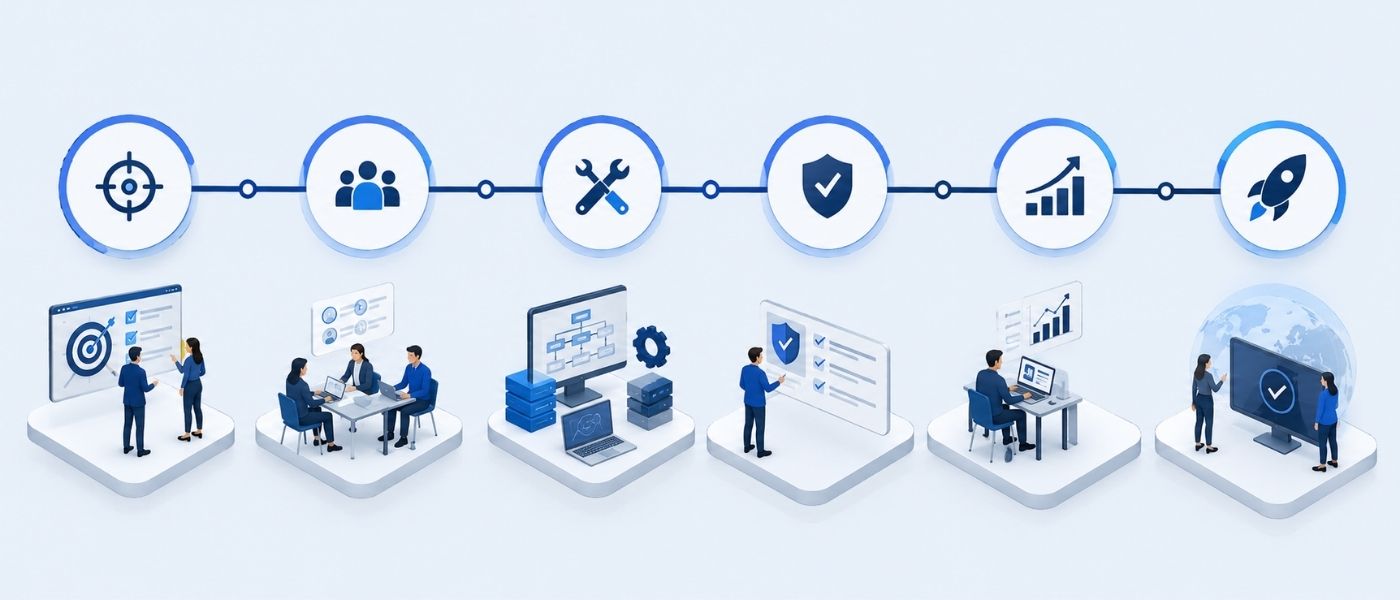
The most successful transitions follow a staged operational roadmap.
Phase 1: Initial ODC Launch
Companies establish offshore engineering or operational teams through managed ODC models.
Phase 2: Delivery Stabilization
The organization validates delivery performance, governance maturity, and scalability.
Phase 3: Leadership Localization
Local leadership structures strengthen operational independence.
Phase 4: Infrastructure Expansion
The business begins investing in long-term infrastructure and governance systems.
Phase 5: GCC Conversion
Operational ownership transitions into a captive Global Capability Center framework.
Comparison Table
Factor | Direct GCC Setup | ODC First Approach |
Initial Cost | High | Moderate |
Setup Timeline | Slow | Faster |
Hiring Complexity | High | Managed support |
Infrastructure Investment | Immediate | Gradual |
Governance Burden | Heavy | Shared initially |
Scalability Validation | Difficult | Easier |
Operational Risk | Higher | Lower |
Compliance Complexity | Internal management | Supported |
Workforce Flexibility | Moderate | Strong |
Delivery Readiness | Slower initially | Faster |
Expansion Adaptability | Lower | Higher |
Transition Flexibility | Limited | Strong |
Offshore Ownership Path | Immediate captive | Phased ownership |
Quick Decision Summary
Business Goal | Recommended Approach |
Test India expansion | ODC |
Rapid offshore engineering setup | ODC |
Immediate captive ownership | GCC |
Lower operational risk | ODC |
Validate scalability before large investment | ODC |
Long-term India capability center | ODC to GCC |
Enterprise-scale mature operations | GCC |
Future Trends in India GCC Expansion
India’s offshore ecosystem continues evolving rapidly.
Key trends shaping GCC expansion in 2025-26 include:
AI-Enabled GCC Operations
AI is improving workforce analytics, operational forecasting, and engineering productivity.
Distributed Engineering Teams
Global companies increasingly operate across multi-location offshore ecosystems.
Hybrid Offshore Models
Remote-first and hybrid workforce structures are becoming standard.
Cloud-Native Infrastructure
Modern GCCs rely heavily on scalable cloud infrastructure and automated operations.
Cybersecurity Governance
As offshore operations grow, security governance frameworks are becoming central to expansion planning.
Data-Driven Offshore Operations
Organizations increasingly use operational analytics to optimize workforce productivity and delivery performance.
According to Statista and LinkedIn, India continues seeing strong growth in digital engineering talent, making it a preferred destination for scalable technology operations.
FAQ
What is the difference between an ODC and a GCC?
An ODC is typically a managed offshore operational setup designed for faster scalability and lower expansion risk. A GCC is a fully captive operational center owned and managed directly by the company.
Why do companies start with an offshore development center before GCC setup?
Companies use ODCs to validate offshore scalability, delivery governance, hiring maturity, and infrastructure readiness before committing to large-scale captive investment.
How long does it take to launch an offshore development center in India?
Depending on hiring needs and operational scope, companies can often begin offshore operations significantly faster through ODC models than through direct GCC establishment.
Can an ODC transition into a GCC later?
Yes. Many companies intentionally use phased expansion models where the ODC eventually evolves into a captive GCC after operational maturity is established.
Is ODC more cost effective than direct GCC setup?
In early stages, yes. ODC models reduce upfront infrastructure and operational investment while improving flexibility during expansion.
What are the biggest risks during direct GCC expansion?
Common challenges include hiring delays, infrastructure complexity, governance gaps, compliance management, leadership bandwidth issues, and delivery instability.
How do ODCs support offshore engineering scalability?
ODCs provide hiring pipelines, infrastructure readiness, operational governance, and workforce management systems that support scalable distributed engineering operations.
When should a company move from ODC to GCC?
Companies usually transition once hiring scalability, operational governance, infrastructure maturity, and long-term India strategy stabilize successfully.
Conclusion
For global companies evaluating India expansion, the decision is rarely just about cost optimization anymore. It is about operational scalability, delivery resilience, workforce maturity, and long-term ownership strategy.
That is why many organizations now prefer an offshore development center before GCC setup.
Recent Post
How to Set Up an Offshore QA Center of Excellence in India: A Practical Guide for Global Teams
Learn how to set up an offshore QA center of...
Managed IT Services for Small Businesses: Complete Guide (2026)
Discover what managed IT services for small businesses actually include,...

iValuePlus Services
iValuePlus is a one-stop solution to address all your needs to access, build and grow your business in the Indian market which is cost-effective & has a huge talent pool. Established in 2019 as a ‘Business Solution provider', our team has delivered successful growth projects in the international market.
Our services include setting up ODC (offshore development center), Staff Augmentation, Talent Acquisition, Digital Marketing, in the IT/ITES domain.