
Discover the best city to set up office in India...
Categories
How US Companies Get 24/7 IT Helpdesk Support by Outsourcing to India
For many US businesses, IT problems rarely wait for business hours. A server alert at midnight, a VPN failure during off-hours, or a backlog of unresolved employee tickets can quietly erode operations, frustrate staff, and in some cases affect revenue-generating systems, all before a single US team member logs in the next morning.
This is precisely why more US companies are choosing to outsource IT helpdesk to India, and why that decision has shifted from a cost-cutting measure to a core operational strategy. Instead of building expensive overnight US support teams or leaving tickets unattended until 9 AM EST, businesses are running continuous helpdesk operations by partnering with offshore IT support teams in India who work through US nighttime hours as a standard part of their day.
At iValuePlus, we support US and UK clients from our operations centre in India, providing IT helpdesk coverage, remote monitoring, patch management, and infrastructure support across time zones. The model works because of geography, not compromise.
This guide explains how the model operates, what to realistically expect, and how to structure an offshore helpdesk engagement that genuinely improves operational continuity for your business.
Why US Companies Need 24/7 IT Helpdesk Support
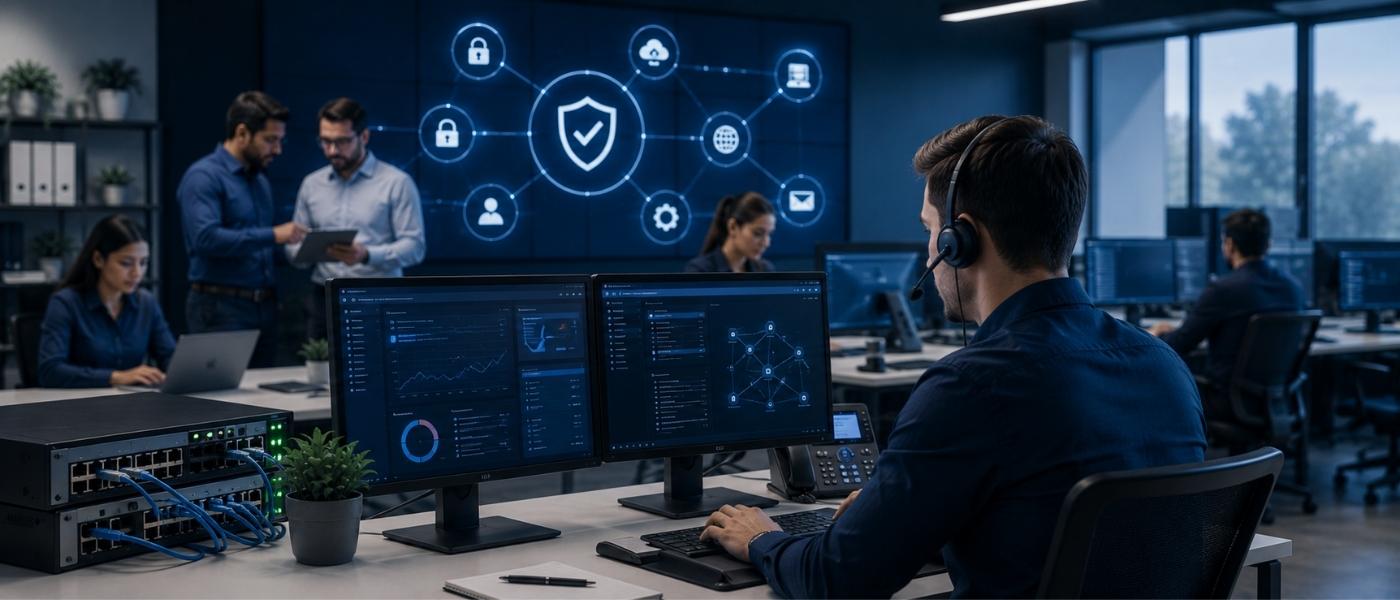
Modern business infrastructure doesn’t observe office hours. Cloud environments run continuously. Remote employees work across time zones. Cybersecurity systems generate alerts around the clock. Customers expect digital services to stay available regardless of where the IT team is sitting.
For most mid-sized US companies, the operational gap is the same: the business runs 24 hours a day, but IT support stops at 6 PM.
Common overnight IT incidents that go unresolved until morning include:
- VPN failures blocking remote access
- Email and Microsoft 365 access issues
- Cloud platform downtime alerts
- Failed or incomplete backups
- User authentication and MFA problems
- Endpoint security incidents requiring investigation
- Software access requests from employees in other time zones
- Infrastructure monitoring alerts that need a human response
Each of these issues may seem manageable in isolation. Cumulatively, they represent hours of lost productivity, delayed customer service, and in some cases, compliance exposure particularly where cybersecurity incidents are involved.
The business case for 24/7 IT helpdesk coverage is no longer about premium service. For many organisations, it has become a continuity baseline.
Why India Has Become the Default Offshore IT Helpdesk Location
India’s position as a global IT services hub didn’t happen by accident. Over the past two decades, the country built the infrastructure, talent pipeline, and enterprise experience to support complex IT operations for businesses in North America, Europe, and Australia.
The practical advantages for US companies are well-documented:
Technical workforce depth. India produces over 1.5 million engineering graduates annually, a significant proportion of whom move into IT services, cloud operations, and enterprise support roles. This creates a talent pool that goes well beyond password resets and entry-level tickets.
Enterprise IT familiarity. Indian IT support teams are experienced with the platforms US businesses actually use — Microsoft 365, Azure, AWS, Salesforce, ServiceNow, Jira, Zendesk, endpoint management tools, and cloud security platforms. Integration into existing US environments is typically seamless.
Operational maturity. According to NASSCOM, India remains one of the largest global technology outsourcing destinations, hosting operations for thousands of multinational companies. The processes, governance frameworks, and service management disciplines required to run reliable offshore support are well-established.
Scalability. Building an in-house overnight US support team involves significant hiring, training, and retention costs for a relatively small number of roles. An India-based partner can scale support coverage up or down based on business growth, seasonal demand, or changing support requirements without the operational overhead of hiring full-time staff.
English communication. Business-level English communication across written tickets, escalation calls, and handoff documentation is standard across India’s enterprise IT workforce.
For businesses evaluating whether they need professional IT support, the combination of these factors makes India the practical first choice for most US organisations.
How the India–US Time Difference Enables Overnight IT Coverage
The timezone mechanics are straightforward, and they are the core operational advantage of this model.
Region | Typical Business Hours | India Equivalent (IST) |
US Eastern (EST) | 9:00 AM – 6:00 PM | 6:30 PM – 3:30 AM IST |
US Central (CST) | 9:00 AM – 6:00 PM | 7:30 PM – 4:30 AM IST |
US Mountain (MST) | 9:00 AM – 6:00 PM | 8:30 PM – 5:30 AM IST |
US Pacific (PST) | 9:00 AM – 6:00 PM | 9:30 PM – 6:30 AM IST |
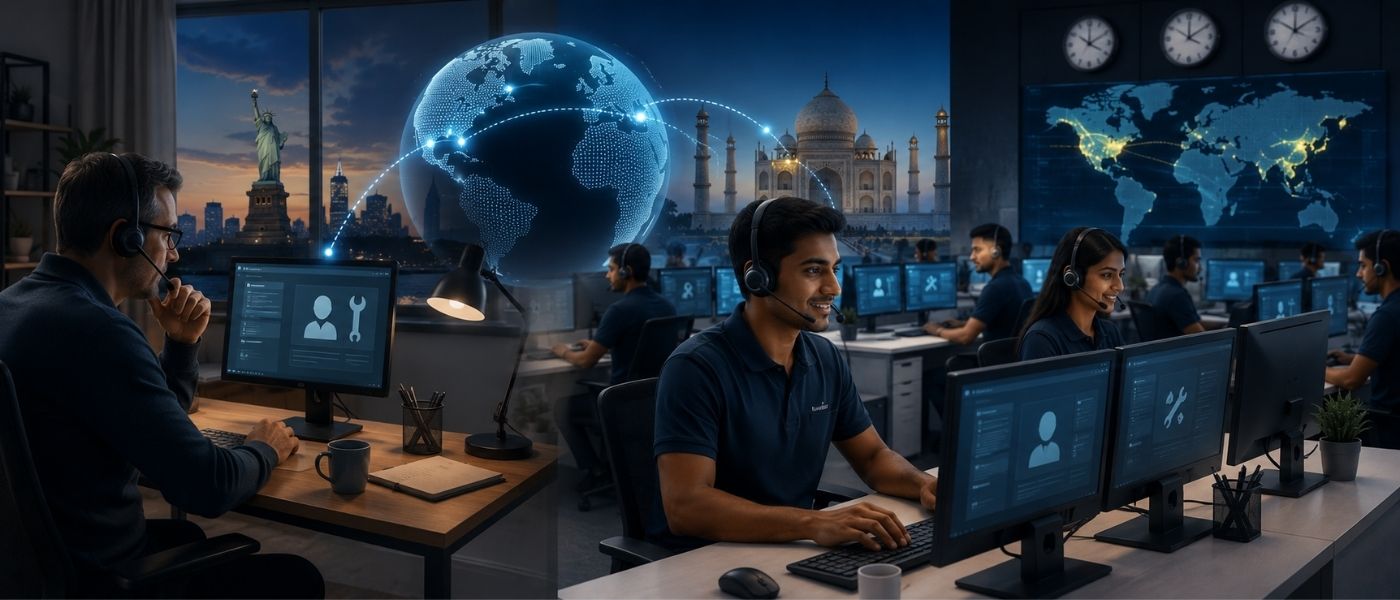
When US teams close for the evening, India-based support teams are beginning their working day. There is no enforced overnight shift, no premium pay for unsociable hours, no fatigue factor affecting the quality of late-night ticket handling, because for the team in Gurugram, it is a normal business day.
In practical terms, this means:
- Tickets submitted after US hours are picked up and worked on overnight
- Infrastructure monitoring runs continuously with active human oversight
- Alerts are investigated and escalated before US teams arrive in the morning
- Scheduled maintenance windows complete without requiring US staff to stay late
- Morning briefings are waiting for US operations managers when they log in
For businesses with customers, employees, or systems operating beyond US working hours, this coverage model transforms what was previously an operational gap into a genuine advantage.

Understanding the Follow-the-Sun IT Support Model
The follow-the-sun model is the structured version of what timezone-based offshore support enables naturally. Rather than an ad-hoc arrangement where some tickets happen to get resolved overnight, it is a deliberately designed support operation that uses geographic time zone distribution to maintain continuous IT coverage.
The support workflow in a well-structured follow-the-sun model looks like this:
Support Stage | Responsible Team | Key Activities |
US business hours (daytime) | US operations / onshore team | Live user support, escalations, stakeholder communication |
End-of-day handoff | Shared handoff channel | Open ticket review, priority flagging, overnight priorities |
US overnight hours | India offshore team (iValuePlus) | Ticket resolution, monitoring, alert response, maintenance |
Pre-morning briefing | India team outgoing shift | Summary report, escalation flags, resolved ticket log |
US morning review | US operations manager | Overnight incident review, open escalations, priority response |
At iValuePlus, we build this handoff structure into every engagement from the start. Shift handoffs are documented in the shared ITSM system, escalation paths are defined before go-live, and US operations managers receive a structured morning summary covering overnight activity, resolved tickets, open incidents, and any items requiring attention.
The model delivers measurable benefits across several operational dimensions: ticket backlog reduction, faster resolution times, improved uptime, better SLA compliance, and reduced pressure on US teams who otherwise start each morning working through the previous night’s accumulation of unresolved issues.
What IT Helpdesk Tasks iValuePlus Handles from India
A common misconception is that offshore IT helpdesk teams are limited to first-line support, password resets, basic queries, ticket logging. That may have been true of early-generation outsourcing. It is not true of how mature offshore IT support operations work today.
At iValuePlus, our helpdesk teams cover a broad and expanding range of IT support functions for US clients:
Tier 1 Support
- Password resets and account unlocks
- Software installation and access requests
- Email and Microsoft 365 troubleshooting
- Basic network connectivity issues
- Printer and peripheral support
- Ticket logging and triage
Tier 2 Support
- Cloud platform troubleshooting (Azure, AWS, Google Workspace)
- VPN configuration and remote access diagnostics
- Endpoint diagnostics and management
- Application troubleshooting and SaaS administration
- Patch management and update deployment
- Server monitoring and alert response
Monitoring and Operations
- Overnight infrastructure monitoring
- Alert investigation and escalation
- Backup verification and failure response
- Remote device health management
- System performance reporting
Security Coordination
- Suspicious login and access anomaly monitoring
- MFA support and security policy enforcement
- Antivirus incident escalation
- Compliance documentation and audit support
The distribution of responsibilities between Tier 1 and Tier 2 typically evolves over time. Most engagements begin with Tier 1 support to build operational familiarity and trust, before expanding into deeper Tier 2 and monitoring functions as the relationship matures.
Tier 1 vs Tier 2 IT Helpdesk Support: What US Companies Should Expect
Understanding the tier structure matters when scoping an offshore helpdesk engagement, because it directly affects staffing, SLA targets, and the skill profile of the team you need.
Support Tier | Primary Responsibility | Typical Tasks | Skill Level |
Tier 1 | First-line user support | Password resets, access requests, basic troubleshooting, ticket logging | Entry to mid-level |
Tier 2 | Technical troubleshooting | Application issues, cloud support, endpoint management, patch deployment | Mid to advanced |
Tier 3 | Engineering escalation | Infrastructure architecture, complex system failures, vendor management | Specialist / senior |
For most US companies outsourcing to India for the first time, Tier 1 support is the starting point. It handles the high-volume, lower-complexity tickets that consume disproportionate amounts of your US team’s time, and handling these efficiently overnight creates immediate operational value.
Expanding into Tier 2 support becomes practical once the offshore team has established process familiarity, documentation is in place, and SLA performance on Tier 1 is consistently meeting targets. This is the natural progression in a well-managed engagement, and it is where the cost and operational benefits compound meaningfully.
Tier 3 engineering escalations typically remain with senior US or vendor resources, though the offshore team handles the initial investigation, documentation, and escalation routing.

ITSM Tools: How Offshore Teams Integrate With Your Existing Systems
One of the operational questions US companies ask early in the evaluation process is: will the offshore team use our existing tools, or do we have to create a separate system?
The answer, in a well-structured engagement, is that offshore teams integrate directly into whatever ITSM environment the US business already uses. At iValuePlus, our teams work within client ITSM platforms rather than running parallel systems. Common platforms our teams operate within include:
- ServiceNow enterprise-grade ITSM with workflow automation and SLA tracking
- Jira Service Management widely used across technology and SaaS businesses
- IVPHUB used for centralized workflow and team collaboration management
- Zendesk common in customer-facing support environments
- Freshservice popular with mid-sized businesses
- ManageEngine frequently used for endpoint and infrastructure management
- ConnectWise common in managed service provider environments
The value of working within your existing ITSM system is continuity: ticket history is preserved, SLA timers run consistently, escalation paths work correctly, and your US operations team has full visibility into overnight activity through the same dashboards they use during business hours. There is no data silo, no parallel ticketing system, and no loss of audit trail.
Cost Comparison: Offshore IT Helpdesk vs In-House US Coverage
Cost is still part of the conversation, and it is worth addressing honestly. The economics of outsourcing IT helpdesk to India are straightforward at a macro level, but the real-world numbers depend on the scope, team size, and support hours involved.
Cost Factor | In-House US Overnight Team | iValuePlus Offshore Team (India) |
Overnight / off-hours staffing | High — premium pay, limited talent pool | Standard business hours in India; no premium rate |
Recruitment costs | High — specialist overnight roles are hard to fill | Handled by offshore partner |
Training and onboarding | Internal overhead | Structured by iValuePlus onboarding process |
Benefits and overhead | Full US employment costs | Not applicable |
Scalability | Slow — each headcount adds fixed cost | Faster — scale up or down based on need |
24/7 operational coverage | Expensive to maintain adequately | More efficient to structure and sustain |
For a US company replacing two to three overnight support headcount with an India-based offshore team, cost reductions of 40 to 60 percent on that specific function are commonly reported in the industry. However, mature organisations no longer evaluate this decision on cost alone.
The equally important factors are SLA adherence, resolution quality, operational transparency, security controls, and staff retention, which in India’s enterprise IT market is significantly more stable for offshore support roles than the high-churn overnight US support market.
For a cost estimate specific to your support scope and team size, iValuePlus provides US clients with a custom comparison during an initial consultation. Contact our team to request one.
SLA Expectations and Response Times
Defining SLA targets before engagement is one of the most important steps in structuring an offshore helpdesk partnership. Vague SLA agreements are a primary cause of dissatisfaction in outsourcing arrangements — not because the offshore team underperforms, but because expectations were never clearly defined.
At iValuePlus, we operate within structured SLA frameworks aligned to ticket priority levels. A typical SLA model for US client engagements looks as follows:
Ticket Priority | Definition | First Response Target | Resolution Target |
Critical (P1) | Business system down, revenue or security impact | 15 minutes | 1–2 hours |
High (P2) | Major function impaired, significant user impact | 30 minutes | 4 hours |
Medium (P3) | Degraded performance, workaround available | 2 hours | Same business day |
Low (P4) | Minor issue, no immediate operational impact | 4 hours | 24–48 hours |
Beyond response and resolution times, well-managed offshore operations provide operational visibility through:
- Real-time ticket dashboards accessible to US operations managers
- Defined escalation matrices — who gets contacted, at what stage, by what method
- Weekly performance reports covering ticket volume, resolution rates, and SLA compliance
- Monthly root-cause reviews for recurring incidents
- Structured shift handoff documentation for every overnight period
This level of reporting is non-negotiable for any engagement where IT continuity is a genuine business requirement. If a prospective partner cannot commit to structured reporting from day one, that is a meaningful signal about operational maturity. For further guidance on evaluating support providers, the questions outlined in this IT support vendor checklist are a practical starting point.
Cybersecurity and Compliance Considerations
Security is the most common concern raised by US companies evaluating offshore IT support and it is the right question to ask seriously, not just to tick a compliance box.
The relevant security considerations in an offshore helpdesk engagement fall into two categories: access security (what can the offshore team access, and how) and data handling (what data is processed, stored, or transmitted during support activities).
At iValuePlus, we address both through a structured security framework that covers:
Access Controls
- Role-based access offshore team members access only the systems and data required for their specific support scope
- Multi-factor authentication enforced across all systems
- VPN-secured connections for all remote access sessions
- Session logging with full audit trail for compliance documentation
Data Handling
- No client data stored on offshore infrastructure without explicit agreement
- Compliance alignment with client-specific requirements (SOC 2 awareness, GDPR considerations for internationally operating businesses, HIPAA awareness for healthcare-adjacent clients)
- Data handling procedures documented and available for client review
Operational Security
- Endpoint management and security policies applied to all support team devices
- Regular security awareness training for support staff
- Defined incident response procedures including notification timelines
The practical approach most US companies take is to begin with a scoped engagement limiting offshore access to specific systems and ticket types initially and expand access as operational trust and security comfort develops. This is the approach iValuePlus recommends, and it is also consistent with standard enterprise risk management practice.
India vs Philippines: Choosing the Right Offshore Helpdesk Destination
India and the Philippines are both established offshore IT support destinations for US companies, and the comparison comes up consistently during vendor evaluation. The honest answer is that they serve different operational profiles.
Factor | India | Philippines |
Technical depth (cloud, infrastructure, Tier 2) | Strong, large engineering talent pool | Moderate, stronger in voice/customer support |
Enterprise IT ecosystem maturity | Very high, decades of enterprise outsourcing | High growing, particularly in BPO |
IT helpdesk engineering scalability | High | Moderate |
Voice communication and accent neutrality | Strong | Strong, often preferred for US voice support |
Cloud platform expertise (Azure, AWS) | Strong | Growing |
Time zone coverage for US overnight hours | IST aligns with US daytime for East Coast morning overlap | PHT is closer to US Pacific evening hours |
Cost efficiency | Comparable | Comparable |
For technically complex IT environments cloud administration, endpoint management, Tier 2 troubleshooting, infrastructure monitoring, India typically offers stronger engineering depth and a larger talent pool with specific enterprise platform experience.
For primarily voice-based Level 1 support in a customer service context, the Philippines has a strong reputation and is a legitimate option.
Most US companies with a mixed IT support requirement, some user-facing helpdesk, some technical operations, find that India provides the better overall fit, particularly as support scope expands beyond pure Tier 1 over time.
How iValuePlus Transitions US Companies to Offshore IT Helpdesk Operations
The single biggest predictor of offshore helpdesk success is how the transition is managed not the long-term steady state, but the first 60 to 90 days. Engagements that fail typically fail during onboarding, not because of offshore team quality.
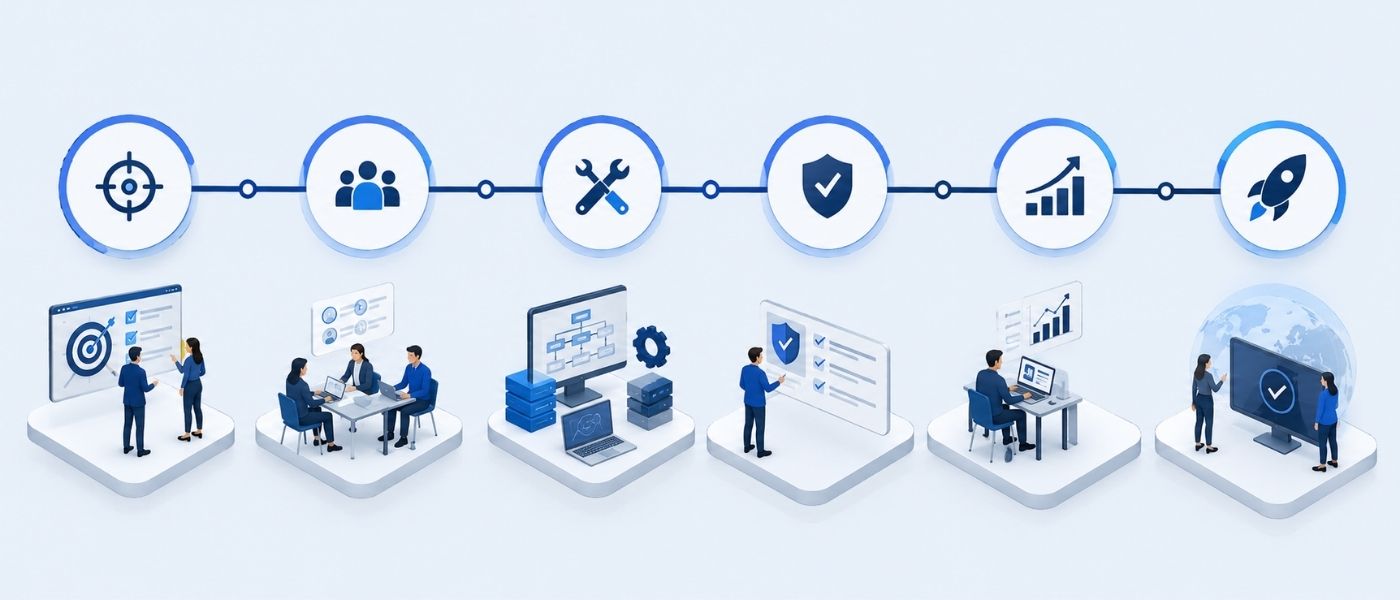
At iValuePlus, we guide US clients through a structured six-phase transition that is designed to be low-risk and operationally continuous:
Phase 1 — Initial Assessment (Weeks 1–2) Review of current ticket volumes, support categories, escalation paths, tools, and coverage gaps. This produces a scoped engagement plan with defined responsibilities and SLA targets agreed before any support activity begins.
Phase 2 — Documentation and SOP Creation (Weeks 2–4) Creation of Standard Operating Procedures for all support categories in scope. No offshore team should begin handling tickets without documented procedures for every scenario they will encounter. This phase also covers access provisioning and ITSM integration.
Phase 3 — Pilot Support Period (Weeks 4–6) Limited ticket scope, high-supervision. The offshore team handles a defined subset of ticket categories while US team oversight is active. This builds process familiarity, identifies gaps in documentation, and establishes operational trust before broader handover.
Phase 4 — Shared Operations (Weeks 6–10) Gradual handover of overnight coverage. US team remains available for escalation; offshore team handles the primary overnight queue. Handoff processes are refined. SLA performance is reviewed weekly.
Phase 5 — Full Overnight Coverage (Week 10+) Offshore team operates independently for agreed overnight hours. Escalation matrix is active. Daily handoff reporting is in place. US team reviews morning summaries and manages escalations.
Phase 6 — Continuous Optimisation (Ongoing) Monthly performance reviews, SLA compliance analysis, scope expansion discussions, and process improvement based on ticket trend data.
Before initiating this process, it is worth reviewing signs your business needs professional IT support, both to confirm the business case and to define the baseline from which offshore support improvement will be measured.
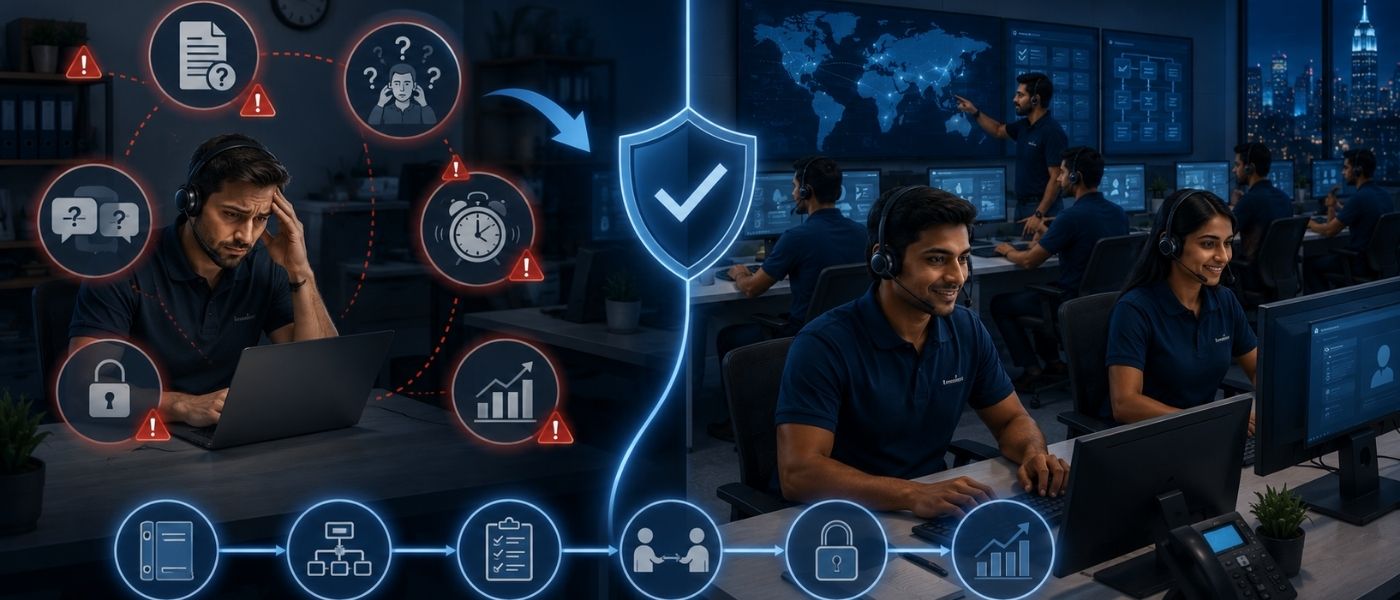
Common Challenges in Offshore IT Helpdesk Engagements — and How to Avoid Them
Most offshore helpdesk problems are predictable. They occur in specific, identifiable places and iValuePlus has structured its onboarding process specifically to prevent them.
Poor or missing documentation The most common failure point. If the offshore team doesn’t have clear SOPs for every ticket type they will encounter, they will either resolve tickets incorrectly or escalate everything, creating more work for the US team. Solution: invest heavily in documentation during Phase 2, before any ticket handling begins.
Undefined escalation paths When an unusual or complex ticket arrives overnight and the offshore team doesn’t know who to contact, how to reach them, or how urgently to escalate, response time suffers. Solution: every engagement needs a named escalation matrix specific people, contact methods, and thresholds, before go-live.
SLA targets that were never agreed Broad statements like “fast response” are not SLAs. Without defined response and resolution targets for each priority level, there is no shared basis for performance evaluation. Solution: SLA targets must be documented and mutually agreed before the engagement begins, not negotiated after the first performance review.
Communication gaps at shift handoff Handoff failures, where the outgoing offshore team doesn’t properly document open tickets, and the incoming US team starts the morning without context — are operationally disruptive. Solution: structured handoff documentation in the shared ITSM system, reviewed during morning briefing. Non-negotiable.
Tool access delays Offshore teams that arrive at go-live without the system access they need to actually handle tickets are a common and entirely avoidable problem. Solution: all access provisioning should be completed, tested, and verified during Phase 2 weeks before the first ticket is assigned.
Scope creep without governance As confidence builds, US teams sometimes informally expand offshore responsibilities without updating SOPs, SLAs, or access controls. Solution: formal scope review process at 90-day intervals ensures that expansion happens with appropriate documentation and governance.
The Future of Offshore IT Helpdesk Support
The offshore IT helpdesk model is not static. Several converging trends are reshaping how these engagements operate, and businesses planning long-term offshore support strategies should factor them in.
AI-assisted ticket triage is reducing the volume of repetitive Tier 1 tickets reaching human agents, while simultaneously increasing the complexity of what human agents handle. Offshore teams that integrate AI triage tools are resolving more tickets with the same staffing levels — and handling a higher proportion of technical work.
Predictive monitoring is shifting overnight operations from reactive to proactive. Rather than responding to alerts after a system degrades, sophisticated monitoring tools flag developing issues before they become incidents — allowing offshore teams to resolve problems that the US business never experiences as downtime.
Security operations integration is expanding the scope of offshore IT support into lightweight SOC functions monitoring for anomalies, investigating suspicious access patterns, and managing compliance documentation without requiring a dedicated full-scale Security Operations Centre.
Cloud-native support models mean that an increasing proportion of enterprise IT support no longer requires physical access to hardware. This expands the range of what offshore teams can manage effectively, and reduces the complexity of access security arrangements.
Throughout these changes, one factor remains constant: the need for experienced technical people who understand enterprise environments, can exercise operational judgment, and take responsibility for the systems in their care. Automation handles volume. People handle complexity. That distinction will define the quality of offshore helpdesk operations for the foreseeable future.
Conclusion
For US businesses managing distributed teams, cloud infrastructure, and operations that don’t stop at 6 PM EST, the gap between when IT support ends and when IT problems start is a genuine business liability.
Outsourcing IT helpdesk to India closes that gap not by lowering standards, but by using geography intelligently. India’s IT workforce is working its regular business day while US offices are dark. Tickets move. Alerts get investigated. Infrastructure gets monitored. Maintenance windows complete. And US teams arrive in the morning to a resolved queue rather than an overnight backlog.
iValuePlus has built its IT support practice specifically around this model, providing US and UK clients with structured offshore helpdesk operations from Gurugram, India. Our teams cover IT Support Desk, Remote Monitoring, Patch Management, Security Coordination, and cloud platform support, operating under defined SLA frameworks with full ITSM integration and daily handoff reporting.
The businesses that get the most from this model are the ones that approach it as an operational strategy rather than a procurement decision. With the right documentation, clear SLAs, structured onboarding, and a partner that takes governance seriously, offshore IT helpdesk support delivers measurable improvement in uptime, resolution speed, and operational continuity.
FAQ
How do US companies get 24/7 IT support by outsourcing to India?
US companies partner with India-based IT support teams like iValuePlus who operate during India’s regular business hours, which align with US overnight and early morning hours. This creates continuous helpdesk coverage without requiring US staff to work unsociable hours. Indian teams handle ticket resolution, infrastructure monitoring, alert response, and shift handoff documentation, so US operations managers start each morning with a resolved queue and an overnight activity summary.
Why is India the preferred destination for offshore IT helpdesk support?
India offers a combination of factors that few other countries match for technically complex IT support: a large English-speaking engineering workforce, strong enterprise platform experience (Microsoft 365, Azure, AWS, ServiceNow), established ITSM process maturity, and an outsourcing infrastructure refined over two decades of global operations. According to NASSCOM, India remains one of the world’s largest technology outsourcing destinations, supporting thousands of US and European businesses across support and operations functions.
What is the India–US timezone advantage for IT helpdesk coverage?
India Standard Time (IST) is 9.5 hours ahead of US Pacific Time (PST) and 10.5 hours ahead of US Eastern Standard Time (EST). This means when US offices close for the evening, Indian teams are beginning or mid-way through their working day. A US company on EST that closes at 6 PM EST has an India team that started work at 8:30 AM IST and will work through until the equivalent of 5 AM EST covering the entire US overnight window with active support.
Is outsourcing IT helpdesk support to India secure?
Yes, when managed through a provider with proper access controls and security governance. iValuePlus implements role-based access so offshore team members access only the systems required for their support scope, enforces MFA across all connections, uses VPN-secured remote sessions, and maintains full audit logs of all support activity. We document data handling procedures and align with client compliance requirements including SOC 2 awareness and GDPR considerations for internationally operating clients. Most US companies start with a limited-scope engagement and expand access as operational trust develops — which is consistent with standard enterprise security practice.
What ITSM tools do offshore IT helpdesk teams in India use?
At iValuePlus, our teams integrate directly into the client’s existing ITSM environment rather than operating a separate system. We work within platforms including ServiceNow, Jira Service Management, Zendesk, Freshservice, ManageEngine, and ConnectWise. This means your US team retains full visibility into overnight ticket activity through the same dashboards they use during business hour, with no data silo, no parallel ticketing system, and a complete audit trail.
How much can US companies save by outsourcing IT helpdesk to India?
Savings depend on support scope, team size, and current cost structure, but for companies replacing two to three overnight US support headcount, cost reductions of 40 to 60 percent on that specific function are commonly reported. The stronger business case, however, often lies in operational improvement rather than pure cost: overnight ticket resolution, reduced morning backlog, faster SLA response times, and infrastructure monitoring that doesn’t require US staff to be on-call. iValuePlus provides US clients with a custom cost and operational comparison during an initial consultation.
How long does it take to transition IT helpdesk operations to an offshore team in India?
A well-structured transition typically takes 10 to 12 weeks from initial assessment to full overnight coverage. The iValuePlus onboarding process runs through six phases: assessment, SOP documentation, pilot support, shared operations, full overnight coverage, and ongoing optimisation. Most of this timeline is spent in preparation and documentation, not active support delivery. Companies that attempt to compress this timeline by skipping documentation or piloting steps are the ones that experience operational problems. Done properly, the transition creates minimal disruption to US operations.
Recent Post
How to Set Up an Offshore QA Center of Excellence in India: A Practical Guide for Global Teams
Learn how to set up an offshore QA center of...
Managed IT Services for Small Businesses: Complete Guide (2026)
Discover what managed IT services for small businesses actually include,...

iValuePlus Services
iValuePlus is a one-stop solution to address all your needs to access, build and grow your business in the Indian market which is cost-effective & has a huge talent pool. Established in 2019 as a ‘Business Solution provider', our team has delivered successful growth projects in the international market.
Our services include setting up ODC (offshore development center), Staff Augmentation, Talent Acquisition, Digital Marketing, in the IT/ITES domain.