
Discover the best city to set up office in India...
Categories

Top 12 Innovations Reshaping Office Infrastructure in 2026
Office infrastructure has fundamentally changed over the past three years—accelerated by hybrid work, digital transformation, rising employee expectations, and the global shift toward smarter, more cost-efficient workplace operations. What was once a traditional fixed office setup is now becoming a dynamic ecosystem driven by technology, automation, employee well-being, sustainability, and data-powered decision-making.
As companies scale globally, operate across time zones, build distributed teams, and redesign physical spaces to be more agile, modern office infrastructure is emerging as one of the most strategic investment areas for 2026.
This guide explores the top 12 innovations transforming office infrastructure in 2026—and how organizations can adopt them to boost efficiency, reduce costs, enhance productivity, and build high-performance workplaces that are future-ready.
1. Hybrid-First Office Design: The New Normal for Global Teams
Hybrid work is not a trend anymore—it’s a long-term model shaping how office infrastructure is built and managed.
Why Hybrid Is Driving Infrastructure Change
- Only 30–40% of employees are in the office daily.
- Teams across US, UK, EU, and APAC now work in distributed shifts.
- Companies need flexible spaces that support collaboration AND focused work.
Key Infrastructure Shifts in 2026
- Hot-desking systems and shared flexible seating layouts
- Collaboration pods and soundproof video-meeting booths
- Modular meeting rooms with movable walls
- Digital room booking tools integrated with calendars
- IoT-enabled occupancy sensors to manage real-time space usage
Impact
Hybrid-first infrastructure eliminates wasted space, reduces real estate cost, and supports better productivity by aligning the office with actual usage—not assumptions.
2. AI-Powered Workplace Management Systems
AI has entered the workplace—not just for operations, but for managing the office itself.
AI is now embedded into:
- Space planning and forecasting
- Predictive maintenance of office assets
- Energy optimization
- Desk booking and room allocation
- Visitor management
- Resource usage insights
Examples
- AI identifies underutilized zones and suggests reallocation
- Predictive models reduce facility downtime by scheduling maintenance
- Smart climate systems adjust usage based on occupancy
Impact
Businesses save 20–30% in real estate, maintenance, and utility costs by automating decisions that were previously manual and inefficient.
3. Smart Office Automation Through IoT Sensors
IoT is the backbone of modern office infrastructure in 2026.
Sensors now track:
- Occupancy levels
- Air quality (CO2, humidity, temperature)
- Energy consumption
- Lighting automation
- Smart access control
- Printer/asset usage
Key Benefits
- Improved employee comfort
- Zero energy waste
- Enhanced workplace safety
- Real-time optimization of resources
- Better reporting for ESG compliance
Impact
IoT-powered offices are 40% more efficient, lowering operational overhead while delivering a transformative experience for employees.
4. Digital-First Office Infrastructure (Cloud + Collaboration)
The physical office now extends into the digital workplace. Companies are integrating digital infrastructure directly into their office infrastructure planning.
Infrastructure upgrades include:
- Cloud-first file management
- Digital workflows replacing paper processes
- Enterprise-grade collaboration suites
- AI note-taking, transcription, and meeting summarizers
- Remote-first communication tools
- Integrated workflow automation
Impact
Employees move seamlessly between home and office without losing continuity. Work happens anywhere, but infrastructure ensures the same experience everywhere.

5. Autonomous Security & Smart Access Control
Office security is now digitally driven and automated.
2026 Innovations
- Biometric and mobile authentication
- AI-powered CCTV with behavior analytics
- Visitor and vendor management software
- Geo-fencing for access levels
- Real-time security alerts across global sites
- Facial recognition for high-security zones
Why It Matters
- Protects company IP
- Prevents unauthorized access
- Reduces dependency on manual security teams
- Strengthens compliance
Impact
Modern offices today use zero-trust security models, ensuring every touchpoint is digitally verified and logged.
6. Sustainable Office Infrastructure & Green Design
Sustainability is no longer optional—it’s a workplace requirement.
Green Office Upgrades in 2026
- Energy-efficient HVAC systems
- Solar-powered facilities
- Low-energy LED automation
- Water-efficient plumbing
- Biophilic design (plants, natural materials)
- Carbon-neutral office materials
- Waste management automation
- Recyclable office furniture
Why It Matters
- Reduced environmental footprint
- Lower operational costs
- Improved employee health
- ESG compliance for global brands
Impact
Sustainability is now directly correlated with employee retention, brand reputation, and long-term cost efficiency.
7. High-Performance Network Infrastructure
In 2026, network reliability = business reliability.
Modern Network Standards
- 10G fiber connectivity
- Enterprise-grade Wi-Fi 6E/7
- Redundant failover networks
- Secure VPN for remote teams
- Cloud security gateways
- Zero-latency access to collaboration tools
Why It Drives Productivity
Weak networks cause:
- Meeting interruptions
- File sync failures
- Delayed communication
- Reduced employee morale
Impact
Modern office infrastructure ensures seamless digital operations—required for hybrid, remote, and global business functions.
If you’re planning a fresh workspace or upgrading a location, here’s a detailed guide on IT setup for a new office to help you build a secure, high-performance foundation.
8. Smart Workspace Personalization
Offices now adapt to people, not the other way around.
Personalized Experiences Enabled by Tech
- Adjustable workstation configurations
- Personalized lighting and temperature settings
- AI-based wellness alerts
- Ergonomic desk recommendations
- Dedicated productivity zones
- Employee mood + energy mapping
Impact
Employees feel more comfortable, focused, and motivated—boosting output by 10–15%.
9. Modern Meeting Rooms With Immersive Collaboration Tech
Meeting rooms have evolved from basic projectors to immersive collaboration hubs.
Upgraded Features
- AI-powered cameras that auto-focus speakers
- Noise-canceling microphones
- Large 4K collaboration displays
- Digital whiteboarding tools
- AR-powered brainstorming
- One-click virtual meeting integration
- Multi-language real-time transcription
Impact
Hybrid teams experience smooth communication with zero friction—improving meeting quality and reducing wasted time.
10. Flexible & Modular Office Spaces
Business growth today is unpredictable—so office infrastructure must be adaptable.
Modular Office Innovations
- Movable walls to reconfigure meeting rooms
- Flexible desks that convert into pods
- Multipurpose collaboration zones
- Temporary micro-offices
- Quick-reconfiguration floor layouts
Why Companies Love Modular Designs
- Scale up or down without heavy renovation
- Adapt seating to project needs
- Space reconfiguration takes hours, not weeks
Impact
Offices become more cost-efficient, flexible, and aligned with fast-moving business priorities.

11. Next-Gen Office Infrastructure for Global Teams
Modern offices must support teams across US, UK, Europe, India, and Southeast Asia.
Global Office Infrastructure Needs
- Unified communication tools
- Standardized equipment across locations
- Real-time collaboration dashboards
- Time-zone aware scheduling systems
- Global access control
- Remote troubleshooting for devices
- Global helpdesk support
Impact
Distributed teams operate cohesively as one synchronized global workforce.
12. Workplace Wellness Infrastructure
A modern office isn’t complete without infrastructure that supports mental and physical well-being.
Wellness Technology & Features
- Ergonomic furniture
- Natural lighting systems
- Air purification
- Noise-control panels
- Focus rooms & mindfulness spaces
- Wellness apps integrated into office systems
- Temperature and humidity optimization
Impact
Companies with strong wellness infrastructure see:
- Higher retention
- Better employee satisfaction
- Lower absenteeism
- Enhanced productivity
How Businesses Can Adopt These Innovations in 2026
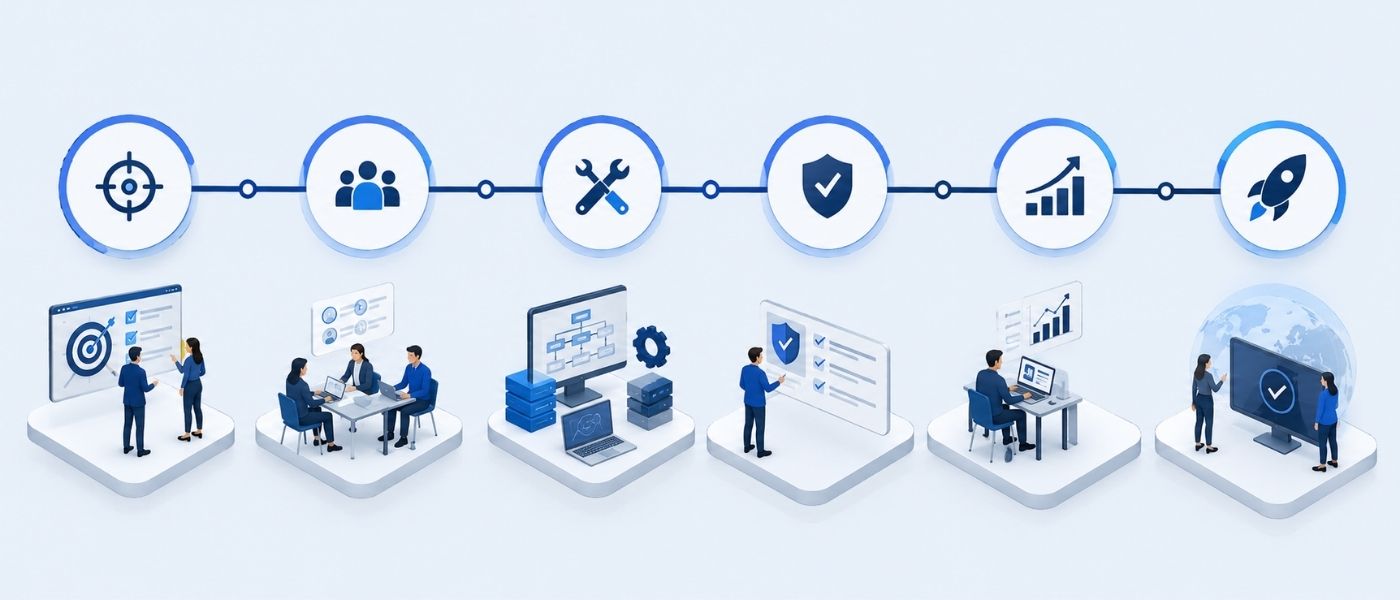
Step 1: Conduct an infrastructure audit
Identify gaps in technology, workspace design, security, and processes.
Step 2: Prioritize changes based on ROI
Focus on initiatives that deliver the fastest impact:
- Hybrid workspace
- Network upgrades
- AI automation
- Smart access control
Step 3: Build a 12–24 month modernization roadmap
Align infrastructure needs with growth plans.
Step 4: Leverage offshore support for cost efficiency
India and Southeast Asia offer:
- Facility management support
- Admin operations
- Virtual office management
- Hybrid workspace coordination
Step 5: Implement technology in phases
Avoid disruption by moving system-by-system.
Step 6: Train your workforce
New infrastructure requires updated skills.
The Future of Office Infrastructure
Over the next few years, office infrastructure will become:
- Intelligent (AI-driven)
AI will power decisions about energy use, space allocation, maintenance, and security.
- Automated (IoT-controlled)
Offices will self-adjust based on occupancy, usage, and environment.
- Hybrid-first (digital + physical)
Offices support flexibility without compromising productivity.
- Employee-centric (wellness-driven)
Spaces will be designed to optimize human well-being.
- Sustainable (green-certified)
Eco-conscious infrastructure will become mandatory, not optional.
- Global-ready
Offices will be designed to support worldwide teams seamlessly.
Conclusion
ffice infrastructure is no longer just desks, chairs, and Wi-Fi—it’s a powerful driver of business efficiency, employee experience, sustainability, and organizational scalability.
Companies that invest in smart, digital, hybrid, sustainable, and AI-powered office infrastructure will:
- Reduce operational costs
- Improve productivity
- Enhance employee engagement
- Strengthen brand reputation
- Scale without friction
- Stay competitive in a rapidly evolving market
2026 marks the beginning of a new era—Office Infrastructure 2.0, where technology, efficiency, and human-centric design converge to build the workplaces of the future.
Recent Post
How to Set Up an Offshore QA Center of Excellence in India: A Practical Guide for Global Teams
Learn how to set up an offshore QA center of...
Managed IT Services for Small Businesses: Complete Guide (2026)
Discover what managed IT services for small businesses actually include,...

iValuePlus Services
iValuePlus is a one-stop solution to address all your needs to access, build and grow your business in the Indian market which is cost-effective & has a huge talent pool. Established in 2019 as a ‘Business Solution provider', our team has delivered successful growth projects in the international market.
Our services include setting up ODC (offshore development center), Staff Augmentation, Talent Acquisition, Digital Marketing, in the IT/ITES domain.