
Discover the best city to set up office in India...
Tags
- Auto-scaling infrastructure
- Building Resilient Systems
- Cloud orchestration tools
- Cloud-Based Infrastructure
- Cloud-Native Applications
- Continuous Integration and Continuous Deployment (CI/CD)
- DevOps for Scalability
- Elastic cloud computing
- Infrastructure as Code (IaC)
- Load balancing techniques
- Microservices Architecture
- Resilient Cloud Architecture
- Scalable Cloud Systems
- Serverless computing

Building Resilient and Scalable Systems with DevOps and Cloud Practices
In today’s digital-first economy, businesses operate in environments where downtime is costly, user expectations are high, and market demands evolve rapidly. Organizations can no longer rely on rigid IT infrastructures or manual deployment processes. Instead, they must adopt DevOps and cloud practices to build systems that are resilient, scalable, secure, and future-ready.
Resilience ensures systems continue functioning even under failure conditions, while scalability enables applications to handle growth in users, data, and workloads without performance degradation. When combined with modern cloud-native architecture and DevOps implementation strategies, organizations gain agility, operational efficiency, and competitive advantage.
This comprehensive guide explores how businesses can build resilient and scalable cloud systems using DevOps methodologies, automation frameworks, Infrastructure as Code (IaC), CI/CD pipelines, and cloud scalability solutions.
Understanding Resilient and Scalable Systems
What is System Resilience?
A resilient system is designed to:
- Withstand failures and disruptions
- Automatically recover from errors
- Maintain high availability
- Minimize downtime
- Ensure business continuity
Resilience is achieved through fault-tolerant systems, redundancy, disaster recovery planning, and proactive monitoring.
What is Scalability?
Scalability refers to a system’s ability to:
- Handle increased workloads
- Support more users without performance issues
- Expand computing resources dynamically
- Maintain optimal performance during peak demand
Cloud scalability solutions enable elastic cloud computing, allowing organizations to scale vertically (upgrading resources) or horizontally (adding instances).
Why DevOps and Cloud Practices Are Essential
Traditional IT models create silos between development and operations, slowing down innovation and increasing risk. Modern DevOps services eliminates these barriers through:
- Continuous collaboration
- Automation
- Agile development practices
- Faster deployment cycles
When combined with cloud infrastructure, DevOps enables:
- Rapid provisioning
- Auto-scaling infrastructure
- Automated deployment pipelines
- Zero-downtime deployment
This integration supports digital transformation strategies and enhances overall business agility.
Core DevOps Practices for Resilience and Scalability
- Continuous Integration and Continuous Deployment (CI/CD)
CI/CD pipelines automate:
- Code integration
- Testing
- Security checks
- Deployment
Benefits include:
- Faster release cycles
- Reduced human error
- Improved system reliability
- Consistent production environments
CI/CD ensures that applications can scale efficiently while maintaining performance and stability.
- Infrastructure as Code (IaC)
Infrastructure as Code allows teams to define infrastructure using configuration files instead of manual processes.
Advantages:
- Repeatable infrastructure provisioning
- Version control for infrastructure
- Faster environment setup
- Reduced configuration drift
Tools commonly used:
- Terraform
- AWS CloudFormation
- Azure Resource Manager
IaC is fundamental for building scalable cloud systems and maintaining environment consistency.
- Microservices Architecture
Microservices architecture breaks applications into smaller, independent services.
Benefits include:
- Independent scaling
- Faster development cycles
- Fault isolation
- Better resource utilization
Each service can scale based on demand, improving system resilience and performance optimization in cloud environments.
- Containerization and Orchestration
Containerization tools like Docker package applications with dependencies. Kubernetes manages and orchestrates these containers.
Key benefits:
- Efficient resource utilization
- Auto-scaling infrastructure
- Self-healing capabilities
- Load balancing techniques
Container orchestration ensures high availability and seamless deployment across cloud environments.
Cloud Practices for High Availability and Scalability
- Elastic Cloud Computing
Cloud providers offer elastic infrastructure that dynamically scales based on demand.
Key features:
- Auto-scaling groups
- Load balancing
- On-demand resource provisioning
Elastic cloud computing prevents performance bottlenecks during traffic spikes.
- High Availability Architecture
High availability architecture includes:
- Redundant servers
- Multi-zone deployment
- Failover mechanisms
- Distributed databases
This ensures minimal service disruption even during infrastructure failure.
- Disaster Recovery Planning
A strong disaster recovery plan includes:
- Regular data backups
- Geo-redundancy
- Recovery time objectives (RTO)
- Recovery point objectives (RPO)
Cloud-based disaster recovery enhances business continuity planning.
- Multi-Cloud and Hybrid Cloud Strategy
Organizations increasingly adopt multi-cloud strategies to:
- Avoid vendor lock-in
- Improve redundancy
- Enhance cost optimization
- Increase geographic availability
Hybrid cloud infrastructure allows sensitive workloads to remain on-premise while leveraging cloud scalability.
Security in DevOps and Cloud Environments (DevSecOps)
Security must be integrated throughout the DevOps lifecycle.
Key DevSecOps practices:
- Automated vulnerability scanning
- Role-based access control
- Encryption at rest and in transit
- Continuous compliance monitoring
Cloud security best practices ensure scalable systems remain protected without compromising performance.
Monitoring, Logging, and Observability
Effective infrastructure monitoring solutions provide:
- Real-time system health visibility
- Performance analytics
- Proactive alerting
- Root cause analysis
Monitoring tools support:
- Application resilience
- Performance optimization
- Incident response
Observability is critical for maintaining high availability and reducing downtime.
Load Balancing and Auto-Scaling
Load balancing distributes traffic evenly across servers to:
- Prevent overload
- Improve responsiveness
- Enhance system reliability
Auto-scaling ensures systems expand or contract based on real-time demand, supporting elastic cloud computing.
Serverless Computing and Cloud-Native Applications
Serverless computing allows developers to run code without managing servers.
Advantages:
- Automatic scaling
- Reduced operational overhead
- Cost efficiency
- Faster development
Cloud-native applications are designed specifically for distributed cloud environments, enhancing agility and scalability.
Site Reliability Engineering (SRE)
SRE applies software engineering principles to IT operations.
Core components include:
- Service Level Objectives (SLOs)
- Error budgets
- Automation-driven reliability
- Incident management
SRE ensures system resilience through measurable reliability standards.
Cloud Cost Optimization Strategies
Scalability must align with cost efficiency.
Best practices:
- Rightsizing instances
- Using reserved capacity
- Implementing auto-scaling
- Monitoring usage patterns
- Eliminating idle resources
Cloud cost optimization prevents unnecessary expenditure while maintaining performance.
Zero-Downtime Deployment Strategies
Zero-downtime deployment ensures seamless updates.
Common strategies:
- Blue-green deployments
- Canary releases
- Rolling updates
These approaches minimize risk while maintaining application availability.
DevOps Lifecycle Management
A mature DevOps lifecycle includes:
- Planning
- Development
- Integration
- Testing
- Deployment
- Monitoring
- Feedback
Lifecycle automation improves operational efficiency and accelerates innovation.
Business Benefits of Resilient and Scalable Cloud Systems
Organizations adopting DevOps and cloud practices experience:
- Faster time-to-market
- Reduced operational costs
- Improved customer experience
- Increased innovation capacity
- Greater competitive advantage
Resilient systems ensure uninterrupted service, while scalable systems accommodate growth without infrastructure overhaul.

Challenges in Implementing DevOps and Cloud Practices
Common challenges include:
- Cultural resistance
- Skill gaps
- Legacy system integration
- Security concerns
- Budget constraints
Addressing these requires:
- Leadership support
- Structured DevOps adoption roadmap
- Continuous training
- Strategic cloud migration planning
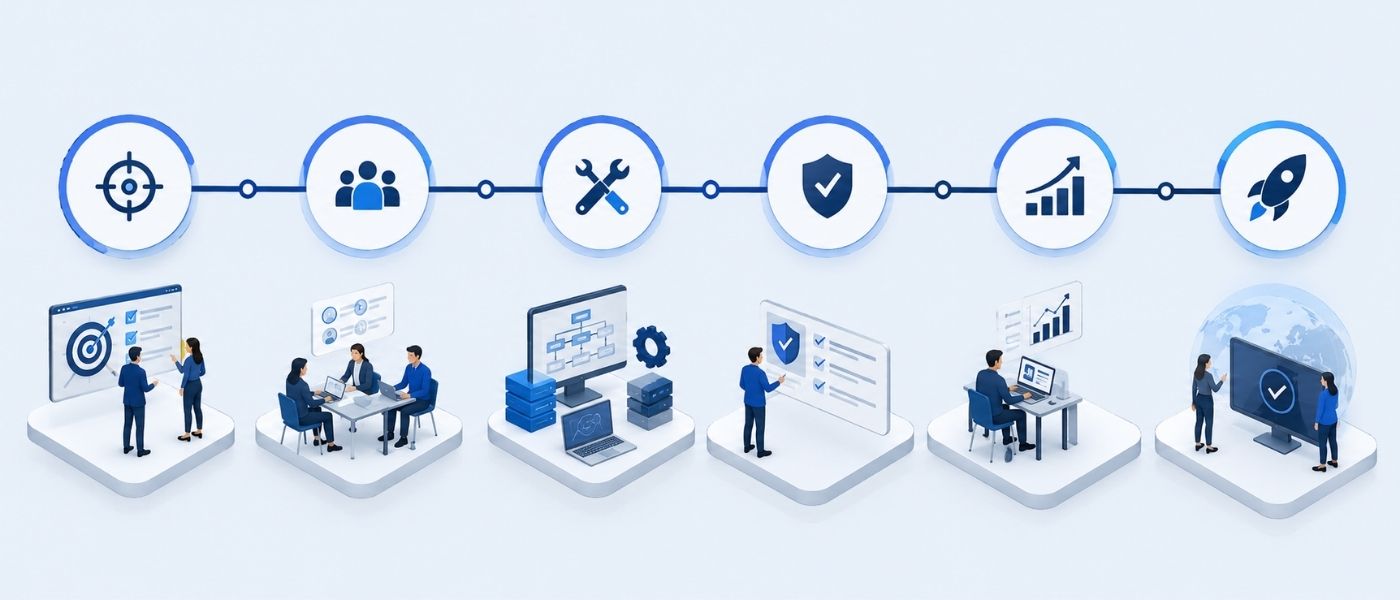
Implementation Roadmap for Businesses
- Assess current IT infrastructure
- Identify scalability and resilience gaps
- Define DevOps strategy
- Implement CI/CD pipelines
- Adopt Infrastructure as Code
- Transition to microservices architecture
- Deploy monitoring and logging tools
- Optimize cloud costs
- Strengthen security integration
- Continuously improve through analytics
Future Trends in DevOps and Cloud Scalability
Emerging trends include:
- AI-driven infrastructure monitoring
- Predictive auto-scaling
- Edge computing integration
- Advanced DevSecOps automation
- Cloud sustainability initiatives
Businesses investing early in these innovations gain long-term scalability and resilience.
Conclusion
Building resilient and scalable systems is no longer optional—it is a strategic necessity. DevOps and cloud practices empower organizations to create flexible, fault-tolerant, and high-performing infrastructures that adapt to evolving business demands.
By integrating CI/CD pipelines, Infrastructure as Code, microservices architecture, containerization, cloud-native applications, and advanced monitoring solutions, businesses can achieve true operational excellence.
A well-implemented DevOps and cloud strategy not only enhances resilience and scalability but also strengthens security, optimizes costs, and accelerates digital transformation.
Get in touch today to discuss how we can transform your IT infrastructure into a resilient, scalable, and future-ready ecosystem.
FAQ
- How do DevOps and cloud practices improve system scalability?
DevOps automates development and deployment processes through CI/CD and Infrastructure as Code, while cloud platforms provide elastic computing resources. Together, they enable systems to scale automatically based on demand without manual intervention.
- What is the difference between resilience and scalability in cloud systems?
Resilience refers to a system’s ability to recover from failures and maintain uptime, while scalability refers to the ability to handle increasing workloads by expanding resources dynamically.
- Why is Infrastructure as Code important for building scalable systems?
Infrastructure as Code ensures consistent, repeatable, and automated provisioning of cloud resources, reducing errors and enabling rapid scaling across environments.
- What are the best practices for ensuring high availability in cloud architecture?
High availability can be achieved through multi-zone deployment, load balancing, redundancy, auto-scaling, real-time monitoring, and disaster recovery planning.
- How does containerization support resilient cloud systems?
Containerization isolates applications into independent units, enabling faster deployment, easier scaling, self-healing orchestration, and improved fault tolerance.
Recent Post
How to Set Up an Offshore QA Center of Excellence in India: A Practical Guide for Global Teams
Learn how to set up an offshore QA center of...
Managed IT Services for Small Businesses: Complete Guide (2026)
Discover what managed IT services for small businesses actually include,...

iValuePlus Services
iValuePlus is a one-stop solution to address all your needs to access, build and grow your business in the Indian market which is cost-effective & has a huge talent pool. Established in 2019 as a ‘Business Solution provider', our team has delivered successful growth projects in the international market.
Our services include setting up ODC (offshore development center), Staff Augmentation, Talent Acquisition, Digital Marketing, in the IT/ITES domain.