
Discover the best city to set up office in India...
Categories
Tags
- BOT model for GCC
- BOT vs captive centre
- BOT vs outsourcing
- Build Operate Transfer outsourcing
- captive centre setup
- digital transformation GCC
- enterprise global expansion
- enterprise offshore strategy
- GCC setup in India
- GCC transformation
- Global Capability Centre (GCC)
- global delivery centre
- global talent strategy
- Offshore capability centre
- offshore development centre
- offshore expansion strategy

Enterprise GCC Transformation: The Strategic Role of Build-Operate-Transfer Model
The global business environment is undergoing a profound transformation. Enterprises are increasingly rethinking how they design their operating models, access talent, manage costs, and drive innovation at scale. In this context, the Global Capability Centre (GCC) has emerged as a strategic enabler rather than just a cost-saving mechanism. Today’s organizations are no longer setting up offshore centres merely for support functions; instead, they are building high-value technology capability centres, innovation hubs, and global operations platforms that support long-term enterprise growth.
One of the most effective approaches to establishing a successful GCC is the Build Operate Transfer model. This model offers a structured, low-risk, and scalable pathway for organizations to create captive centres in high-potential locations such as India. As companies move from traditional outsourcing to strategic offshore ownership, the BOT model for GCC is becoming a preferred choice for global companies seeking operational control, data security, governance, and long-term value.
This blog explores the strategic role of the Build Operate Transfer model in enterprise GCC transformation, the benefits it offers, how it compares with outsourcing and captive models, and how organizations can design a future-ready offshore capability centre.
Understanding the Evolution of Global Capability Centres
From Cost Centres to Strategic Innovation Hubs
Historically, offshore centres were focused on cost arbitrage. Enterprises outsourced non-core functions such as back-office processing, IT maintenance, and customer support to reduce operational costs. However, this traditional model limited strategic value and often resulted in low alignment with business goals.
The modern GCC is different. Today, organizations are establishing next-generation GCCs that focus on:
Digital transformation
AI and automation
Advanced analytics
Product engineering
Cybersecurity
Enterprise shared services
Strategic decision support
These centres serve as global delivery centres and innovation engines. They support distributed global workforce strategies and help companies build resilient and scalable offshore teams.
Why India Leads the GCC Transformation
India has become the preferred destination for GCC setup due to:
Access to skilled talent
Strong technology ecosystem
Mature regulatory environment
Robust data security frameworks
Cost optimization
Global delivery expertise
As a result, global enterprises are expanding their offshore capability centres in India to drive innovation, scale operations, and enhance competitiveness.
What is the Build Operate Transfer Model?
The Build Operate Transfer model is a structured outsourcing-to-ownership pathway. In this approach, a specialized partner builds and operates the offshore centre on behalf of the enterprise and then transfers full ownership after a defined period.
The three key stages include:
1. Build
During this phase, the partner:
Identifies the location
Designs the operating model
Ensures regulatory compliance
Sets up infrastructure
Establishes governance frameworks
Implements data security
Recruits and trains the workforce
This phase focuses on building a scalable offshore operating model aligned with enterprise goals.
2. Operate
In the operational stage, the partner:
Manages daily operations
Ensures service delivery
Optimizes performance
Implements process excellence
Strengthens workforce strategy
Builds domain capability
The enterprise gains visibility and operational control while minimizing risk.
3. Transfer
After the centre reaches maturity, ownership is transferred to the enterprise. This enables:
Long-term cost control
Strategic autonomy
Direct governance
Data ownership
Talent retention
The result is a fully functional captive centre built with minimal risk and investment.
The Strategic Importance of BOT in Enterprise Offshore Strategy
Risk Mitigation and Structured Expansion
One of the biggest challenges in offshore expansion strategy is risk. Enterprises must manage:
Regulatory complexity
Talent acquisition
Infrastructure
Cultural integration
Compliance
Security
The Build Operate Transfer outsourcing model reduces these risks by leveraging local expertise.
Faster Time-to-Market
A BOT model enables rapid GCC setup in India by using pre-built frameworks, networks, and operational experience. This accelerates transformation and allows enterprises to focus on core priorities.
Cost Optimization and Scalability
Cost optimization through GCC is a major driver of transformation. BOT enables:
Scalable offshore teams
Flexible workforce strategy
Operational efficiency
Reduced upfront investment
This approach supports both short-term savings and long-term strategic value.
BOT vs Outsourcing vs Captive Centre
Traditional Outsourcing
Outsourcing offers speed and cost benefits but comes with limitations:
Limited operational control
Data security concerns
Vendor dependency
Reduced alignment
This model is best suited for transactional functions.
Captive Centre Setup
A captive centre provides full control and strategic alignment but requires:
High upfront investment
Strong local expertise
Longer setup timelines
It also exposes enterprises to operational risks.
Build Operate Transfer Model
The BOT model for global companies combines the strengths of both approaches:
Speed of outsourcing
Control of captive
Structured transition
Reduced risk
This makes it a preferred offshore centre ownership model.

Key Benefits of Build Operate Transfer for GCC
1. Strategic Control and Governance
Governance framework in GCC is critical for global operations. BOT ensures:
Transparency
Compliance
Performance monitoring
Strategic alignment
2. Access to Skilled Talent
Global talent acquisition is one of the strongest advantages. Enterprises gain access to:
Engineers
Data scientists
AI specialists
Digital experts
India’s large talent pool supports innovation and scalability.
3. Data Security and Regulatory Compliance
Data security in GCC is a top priority. BOT partners implement:
Global security standards
Compliance frameworks
Risk management
Governance
This ensures secure enterprise offshore operations.
4. Scalability and Flexibility
Organizations can expand teams, technology, and capabilities based on business needs.
5. Long-Term Cost Efficiency
BOT enables cost optimization without compromising quality.
GCC Transformation and Digital Innovation
Modern enterprises are using GCCs to drive digital transformation. These centres are evolving into:
AI and automation hubs
Cloud transformation centres
Product engineering labs
Innovation centres in India
BOT plays a crucial role in enabling this transformation by providing a structured pathway to scale.
Designing a Future-Ready Enterprise GCC Strategy
Aligning GCC with Business Objectives
A strong enterprise GCC strategy focuses on:
Business outcomes
Innovation
Agility
Customer experience
Hybrid Global Delivery Model
The future of GCC includes distributed global workforce and hybrid operating models that combine onshore and offshore capabilities.
Workforce and Talent Strategy
Organizations must build:
Leadership
Culture
Skill development
Technology and Automation
AI and automation in GCC are driving efficiency and innovation.
Offshore Risk Management and Governance
Successful offshore operations require:
Clear governance
Strong compliance
Data protection
Risk frameworks
BOT partners help enterprises establish operational control offshore.
Transition from Outsourcing to GCC
Many enterprises start with outsourcing and move toward GCC ownership. BOT provides a structured transition path.
This journey typically includes:
Vendor-led operations
Capability building
Governance alignment
Ownership transfer
This model supports enterprise global expansion and long-term sustainability.
The Future of GCC: Next-Generation Operating Models
The future of GCC includes:
Strategic offshore hubs
Digital-first operations
Innovation-led growth
Global business services
Enterprises are investing in next-generation GCCs that drive value beyond cost.
How to Build a Global Capability Centre Using BOT
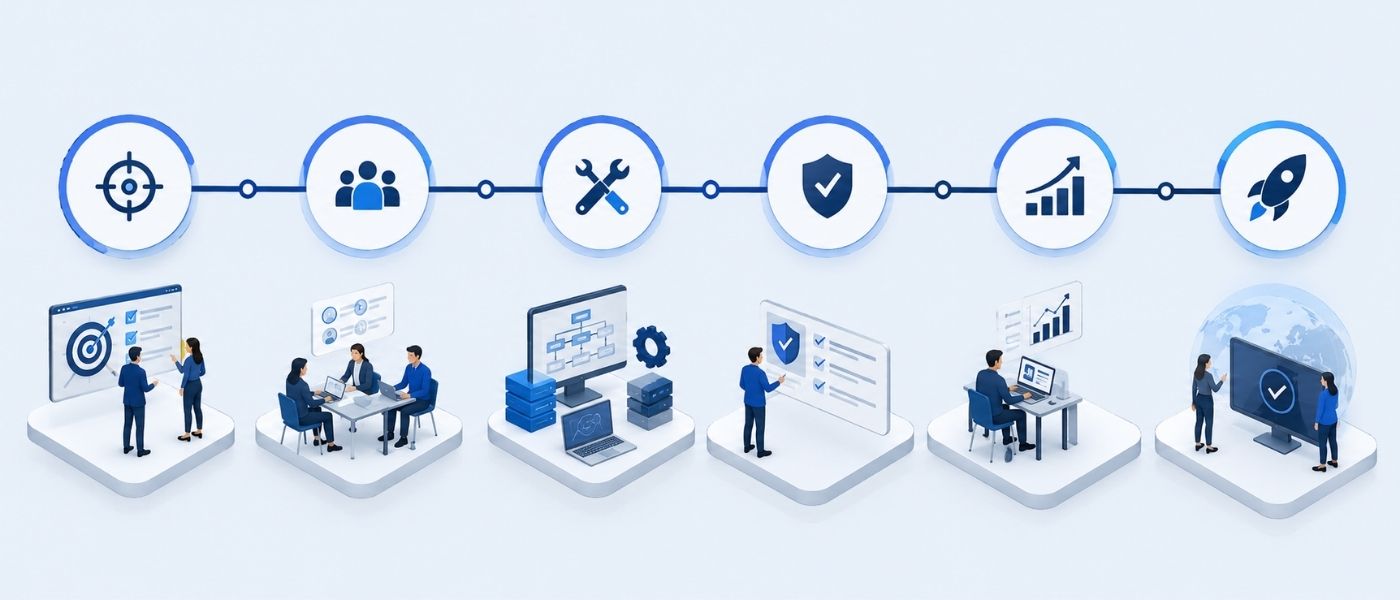
Step 1: Define Vision and Strategy
Identify the long-term objectives.
Step 2: Select the Right Location
Evaluate talent, ecosystem, and regulatory environment.
Step 3: Choose the Right Partner
Partner expertise is critical.
Step 4: Build Scalable Infrastructure
Design flexible and secure operating models.
Step 5: Focus on Talent and Culture
Build a strong workforce.
Step 6: Transfer Ownership
Ensure smooth transition and governance
Conclusion
Enterprise GCC transformation is no longer optional. It is a strategic necessity for organizations seeking resilience, innovation, and global competitiveness. The Build Operate Transfer model offers a structured, scalable, and low-risk pathway for building high-value offshore capability centres. By combining the speed of outsourcing with the control of a captive centre, BOT enables enterprises to create future-ready global operations.
Organizations that adopt a strategic approach to GCC transformation will gain access to talent, accelerate digital initiatives, optimize costs, and build innovation-driven global delivery models.
Get in touch with us to explore how the Build Operate Transfer model can accelerate your global transformation journey.
Recent Post
How to Set Up an Offshore QA Center of Excellence in India: A Practical Guide for Global Teams
Learn how to set up an offshore QA center of...
Managed IT Services for Small Businesses: Complete Guide (2026)
Discover what managed IT services for small businesses actually include,...

iValuePlus Services
iValuePlus is a one-stop solution to address all your needs to access, build and grow your business in the Indian market which is cost-effective & has a huge talent pool. Established in 2019 as a ‘Business Solution provider', our team has delivered successful growth projects in the international market.
Our services include setting up ODC (offshore development center), Staff Augmentation, Talent Acquisition, Digital Marketing, in the IT/ITES domain.