
Discover the best city to set up office in India...

Staff Augmentation + GCC: A Hybrid Model for Agile Enterprises
September 15, 2025
Building the Future: How Offshore Development Centers Evolve into Global Capability Centers
September 16, 2025
Categories
Tags
- cost-effective offshore strategy
- de-risk global operations
- enterprise offshore growth
- GCC setup
- GCC transition
- Global Capability Centers
- global expansion models
- India ODC
- innovation hubs
- IT offshore centers
- iValuePlus ODC services
- iValuePlus offshore solutions
- odc india
- ODC scaling
- ODC to GCC
- ODC transition roadmap
- ODC vs GCC
- offshore development center
- offshore risk mitigation
- offshore team India

How Offshore Development Centers De-Risk the Transition to GCC Models
When a global enterprise considers setting up a Global Capability Center (GCC), the vision is ambitious: a self-sufficient hub that delivers innovation, accelerates transformation, and strengthens global competitiveness. Yet for many companies, the path to a GCC is fraught with risks — from massive upfront investment and governance challenges to cultural misalignment and unpredictable attrition.
This is where Offshore Development Centers (ODCs) prove to be a strategic game-changer. By acting as a controlled pilot environment, ODCs allow enterprises to test, learn, and optimize before taking the leap into a full-fledged GCC.
In this article, we’ll explore how ODCs mitigate risks and accelerate the transition to GCCs, why India has become the preferred destination for both, and how iValuePlus helps enterprises design a smooth ODC-to-GCC journey.
The Strategic Shift: From Cost Arbitrage to Value Creation
Traditionally, global companies turned to offshore models for one reason: cost arbitrage. India, Eastern Europe, and Southeast Asia became synonymous with outsourcing because they offered skilled labor at a fraction of the cost.
But in 2025–26, the narrative has changed. Companies are no longer looking at offshore centers as “outsourced cost centers” but as strategic capability hubs that drive innovation. The rise of GCCs is proof of this transformation: over 1,600 GCCs already operate in India, and the number is expected to surpass 2,000 by 2030.
Yet, diving directly into a GCC is risky. This is why more enterprises are adopting the ODC-first approach, gradually maturing into a GCC model once the ecosystem proves successful.
Understanding Offshore Development Centers (ODCs)
An Offshore Development Center (ODC) is a dedicated, remote team of professionals located in a country like India. Unlike generic outsourcing, ODCs are:
- Exclusive to one client
- Aligned with the company’s processes and culture
- Focused on specific functions like product engineering, IT, analytics, or support
ODCs are essentially miniature extensions of the parent company’s team, offering more control, better alignment, and the ability to scale.
Benefits of ODCs
- Cost Optimization – Reduce overhead while maintaining quality.
- Talent Access – Tap into large pools of specialized skills.
- Scalability – Expand or shrink teams as projects evolve.
- Cultural Alignment – Unlike outsourcing vendors, ODC teams work exclusively for you.
- Knowledge Retention – Build long-term expertise within your ecosystem.

Global Capability Centers (GCCs): The Next Frontier
Global Capability Centers (GCCs) represent the evolution of offshoring. These are not just delivery hubs; they are integrated innovation centers that handle:
- End-to-end product engineering
- Advanced analytics and AI-driven insights
- R&D and IP creation
- Strategic business functions
Unlike ODCs, GCCs are owned and operated entirely by the parent company, making them long-term strategic assets.
Why GCCs Are Attractive
- Control and Ownership – Full authority over operations, culture, and strategy.
- Innovation Potential – Capability to co-create products and solutions.
- Resilience – Diversify operations beyond home markets.
- Talent Development – Build leadership pipelines in global locations.
However, these benefits come with challenges.
The Risks of Setting Up a GCC Directly
While GCCs are powerful, companies that dive straight into setting them up often underestimate the risks:
- Financial Risk – Initial investments often run into tens of millions.
- Governance Complexity – Navigating compliance, tax laws, and local regulations.
- Talent Market Uncertainty – High attrition rates in emerging markets.
- Operational Overload – Running HR, payroll, infrastructure, and vendor management from day one.
- Cultural Misalignment – Integration with global HQ is not always smooth.
A poorly executed GCC setup can turn into a costly liability.
How ODCs De-Risk the Transition to GCCs
ODCs act as a sandbox environment for global enterprises to test and validate their offshore strategy before committing to a GCC. Here’s how they reduce risk:
- Pilot Without Heavy Investment
Companies can validate feasibility with smaller teams before scaling into a full GCC.
- Test Talent Ecosystems
ODCs allow businesses to assess skill availability, retention, and market competitiveness.
- Operational Flexibility
With ODCs, enterprises can experiment with processes, tools, and workflows without full commitment.
- Compliance Light
Since ODCs are operated with the help of partners like iValuePlus, enterprises bypass the regulatory complexities of setting up their own entity.
- Knowledge Transfer
Once the ODC proves successful, knowledge and processes seamlessly transfer into a GCC framework.
The Three-Stage Evolution Model
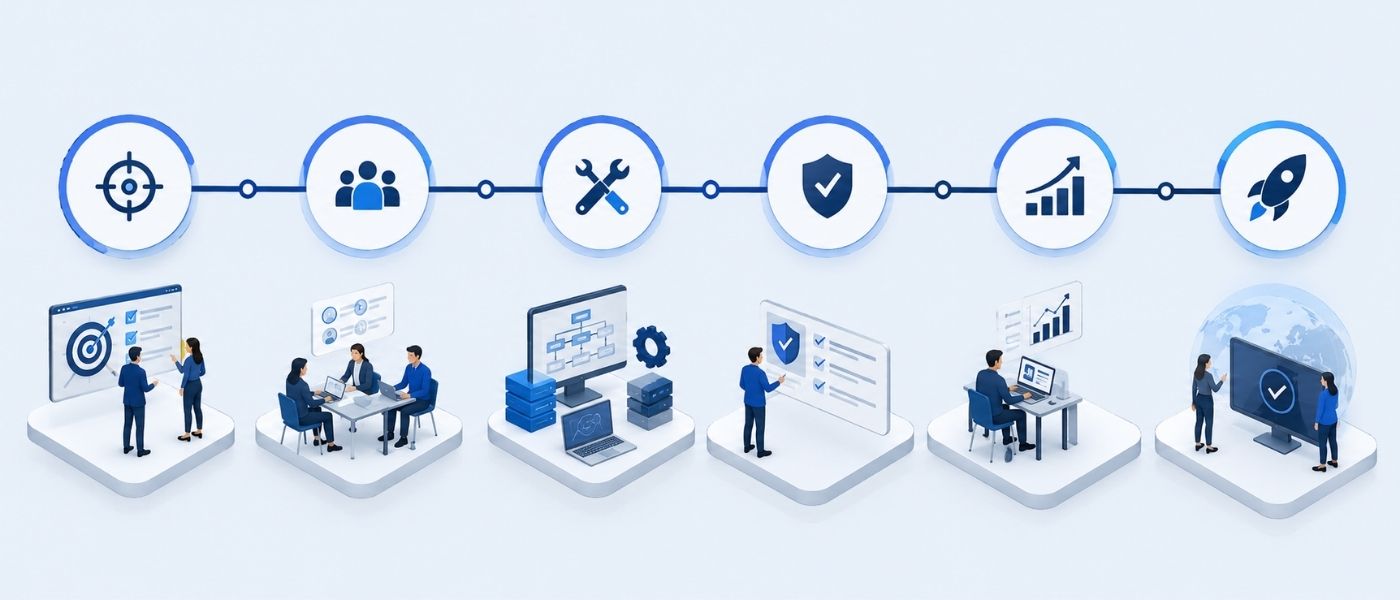
iValuePlus has developed a proven roadmap to help companies transition safely from ODCs to GCCs:
- Pilot Phase (ODC) – Start with a dedicated offshore team managed under IVP’s ecosystem.
- Scale-Up Phase (ODC+) – Expand functions, integrate processes, and prepare leadership pipelines.
- Institutional Phase (GCC) – Transition to a fully owned GCC with mature governance and innovation.
Case Study 1: A Fintech Company’s Journey
A US-based fintech startup wanted to scale operations globally but was concerned about compliance and attrition in India. With iValuePlus, they set up an ODC of 40 engineers.
- Within 18 months, the ODC expanded to 150+ employees.
- The company tested multiple functions, from app development to analytics.
- After three years, the ODC transitioned into a full-fledged GCC, saving 45% in costs and accelerating product launches by 30%.
Case Study 2: A European SaaS Scale-Up
A SaaS company in Germany considered setting up a GCC directly but was wary of the €20M+ upfront investment. Instead, they partnered with iValuePlus for an ODC.
- The ODC started with 25 developers.
- Within two years, it included R&D, DevOps, and customer support.
- The company later converted it into a GCC in Bangalore, benefiting from India’s advanced AI ecosystem.
Why India Leads the ODC-to-GCC Journey
India’s advantages go far beyond cost:
- Talent Depth – 5M+ engineers, 1.5M annual graduates.
- Tech Expertise – AI, ML, cloud, and cybersecurity hubs.
- Government Support – Ease of business reforms and SEZs.
- Proven Ecosystem – 1600+ GCCs already thriving.
India is not just a destination — it is the launchpad for global innovation.
The iValuePlus Advantage
iValuePlus doesn’t just set up ODCs; it acts as an architect of transition.
- End-to-End ODC Setup – Talent acquisition, compliance, and infrastructure.
- Risk Mitigation – Lower upfront costs, shared responsibility.
- Seamless Scaling – Expand teams as projects evolve.
- GCC Transition Expertise – Support in shifting from ODC to fully-owned GCC models.
By choosing iValuePlus, companies move from uncertainty to confidence in their global expansion journey.
The Future of ODCs and GCCs
As we move into 2026 and beyond, several trends will reshape the ODC-to-GCC evolution:
- AI-Managed ODCs – Automating governance and operations.
- Distributed GCCs – Multiple micro-hubs instead of one large center.
- Hybrid Models – Staff augmentation, ODC, and GCC co-existing.
- Innovation-First GCCs – GCCs driving R&D and IP creation, not just support.
ODCs will remain the safest gateway to de-risk the journey, while GCCs will become the strategic backbone of global enterprises.
Conclusion
Setting up a GCC is a bold move, but it doesn’t have to be a risky one. By starting with an ODC, enterprises can test the waters, build trust in the talent ecosystem, and transition with confidence.
With iValuePlus as a trusted partner, companies not only minimize risks but also accelerate their journey from offshore teams to global innovation powerhouses.
The future of global expansion belongs to enterprises that treat ODCs not as cost-saving experiments, but as strategic springboards to build resilient, innovative, and globally integrated GCCs.
Ready to take the first step toward building your GCC? Get in touch today for a free consultation and start scaling with confidence.
Recent Post
How to Set Up an Offshore QA Center of Excellence in India: A Practical Guide for Global Teams
Learn how to set up an offshore QA center of...
Managed IT Services for Small Businesses: Complete Guide (2026)
Discover what managed IT services for small businesses actually include,...

iValuePlus Services
iValuePlus is a one-stop solution to address all your needs to access, build and grow your business in the Indian market which is cost-effective & has a huge talent pool. Established in 2019 as a ‘Business Solution provider', our team has delivered successful growth projects in the international market.
Our services include setting up ODC (offshore development center), Staff Augmentation, Talent Acquisition, Digital Marketing, in the IT/ITES domain.