
Discover the best city to set up office in India...
Categories

In-House Marketing Team vs. Outsourcing: The Complete ROI Guide for Growing Businesses
If you’re a business owner or founder, there’s a good chance you’ve asked yourself this question at least once:
“Do I build an in-house marketing team, or do I outsource to a digital marketing agency?“
It feels like a straightforward yes-or-no. But this decision — if made without proper analysis — can cost your business significant money, months of lost growth, and a great deal of unnecessary complexity.
In this guide, we break down the real costs, the real returns, and a practical 5-step decision framework so you can make the right call for your business — right now.
For most small and mid-sized businesses, outsourcing to a specialist digital marketing agency delivers significantly better ROI than building an in-house team — especially in the early and mid-growth stages. Read on for the full breakdown.
What Do 'In-House' and 'Outsourcing' Actually Mean?
Before comparing the two, it’s worth making sure we’re talking about the same thing.
In-House Marketing Team
An in-house marketing team means hiring one or more full-time employees who work exclusively for your brand. This might include a Marketing Manager, a Content Writer, an SEO Specialist, a Paid Ads Manager, a Graphic Designer, or a Social Media Executive. Some businesses hire a single ‘marketing generalist’ to start, and grow the team over time.
Outsourced Digital Marketing
Outsourcing means partnering with a digital marketing agency — like iValuePlus Digital — that provides a full team of specialists under one retainer. You get access to SEO experts, content strategists, paid ad managers, designers, and analysts, without the overhead of hiring each individually.
The core difference isn’t just cost — it’s depth of expertise and speed to results. An agency brings pre-built processes, tested frameworks, and cross-industry experience from day one. An in-house hire brings time-on-task focus, but at a steeper ramp-up cost.
The True Cost of an In-House Marketing Team
Most businesses calculate the cost of hiring incorrectly. They look at the salary and stop there. In reality, the fully loaded cost of an in-house hire is 1.5x to 2x the base salary — and that’s before you account for attrition, tools, or lost productivity.
Direct Costs
- Gross salary + annual increment (typically 10–15% YoY in marketing roles)
- Employee Provident Fund (EPF): 12% employer contribution
- Gratuity, health insurance, and other statutory benefits
- Paid leaves, sick leaves, and national holiday pay
Hidden / Indirect Costs
- Recruitment: Job portal listings, agency fees (if any), and interview time — this alone adds up faster than most businesses expect
- Onboarding and training: A new hire typically takes 3–6 months to reach full productivity
- Tools and subscriptions: SEMrush, Ahrefs, Google Workspace, Canva Pro, scheduling tools — a lean team’s annual tool stack costs more than most businesses budget for
- Management overhead: Senior leadership time spent directing, reviewing, and mentoring the team
- Attrition risk: The average marketing professional in India changes jobs every 18–24 months — meaning you absorb recruitment and training costs repeatedly
Real Cost Estimate
Cost Component | Estimated Annual Cost |
Marketing Manager | Competitive market salary + annual increment |
Content Writer / SEO Executive | Entry-to-mid level salary + annual increment |
Paid Ads / Social Media Executive | Entry-to-mid level salary + annual increment |
Benefits & compliance (EPF, etc.) | ~15–20% of salaries |
Tools & subscriptions | Significant annual overhead per tool stack |
Recruitment & onboarding (amortised) | Recurring cost per hire cycle |
TOTAL ESTIMATED COST | Substantially higher than most SMBs budget |
That budget buys you a team of generalists. For deep expertise in SEO, paid ads, content, analytics, and design — you’d need significantly more people, and the costs compound quickly.
What You Actually Get When You Outsource
When you partner with a digital marketing company, you’re not just purchasing a service — you’re accessing an entire ecosystem of expertise, processes, and tools that would take years and significant investment to build internally.
What a Full-Service Agency Partnership Typically Includes
- SEO specialists who monitor algorithm changes, build backlink profiles, and optimise technical health
- Google Ads and paid search experts who manage bidding strategies, Quality Scores, and ROAS optimisation
- Content strategists and writers who create blog posts, landing pages, and social content aligned to search intent
- Graphic designers and video editors for ad creatives, social visuals, and brand assets
- Analytics and reporting — weekly/monthly dashboards that track traffic, leads, conversions, and ROI
- Proactive strategy and ideation — they bring new campaign ideas, seasonal strategies, and competitive intelligence
- Scalability — easily scale up during growth phases or peak seasons without hiring cycles
The Speed Advantage
An experienced agency is not learning on your budget. They’ve already run campaigns in your vertical, tested messaging approaches, identified what converts, and built workflows that eliminate common mistakes. The time-to-results is significantly faster — typically 30–90 days for measurable traction vs. 4–6 months for a new in-house hire.
Businesses that transition from an in-house generalist to iValuePlus consistently report: faster organic ranking improvements within 60–90 days, lower cost per lead through optimised paid campaigns, and clearer ROI visibility through structured monthly reporting.
ROI Comparison
Let’s put both models side by side. The following comparison applies the same marketing budget two different ways — a scenario that plays out for thousands of SMBs every year.
Scenario A: Building an In-House Team
Factor | In-House Team |
3 salaries (generalists) | Majority of budget (3 generalist salaries) |
Tools & subscriptions | Significant portion (tools & subscriptions) |
Recruitment & onboarding | Additional overhead (recruitment & onboarding) |
Actual ad spend budget remaining | None — entire budget absorbed by team costs |
Specialist depth | Low (generalists) |
Time to full productivity | 4–6 months |
Attrition risk | High |
Accountability / KPI structure | Informal |
Scenario B: Outsourcing to a Full-Service Agency
Factor | Outsourced Agency |
Agency retainer (full-service) | Retainer covers full specialist team |
Ad spend budget (Google / Meta) | Dedicated ad spend budget (managed by experts) |
Tools & subscriptions | Included |
Recruitment & onboarding | Included in agency retainer |
Specialist depth | High (dedicated experts) |
Time to first results | 30–90 days |
Attrition risk | None (agency continuity) |
Accountability / KPI structure | Formal SLAs + monthly reports |
Business B not only gets more specialist depth — they also have active ad spend working for them from day one, driving measurable traffic and leads while Business A is still in the onboarding phase.
When In-House Is the Right Choice
We believe in giving you a balanced picture. There are scenarios where building an in-house team is genuinely the better long-term play:
- Your business is at a scale where 5+ dedicated marketers can be kept fully occupied with ongoing work
- You operate in a highly regulated or niche industry where deep institutional knowledge is non-negotiable
- You have experienced senior marketing leadership already in place to recruit, manage, and mentor a team
- Marketing is your core product — for example, if you’re a media company, publisher, or content platform
- You’ve reached significant scale and marketing is now a core strategic function that needs full-time internal ownership
For the vast majority of SMBs? These conditions don’t apply. And yet many businesses spend as though they do — and pay the price in slower growth and higher overhead.

When Outsourcing Is the Smarter Move
Outsourcing to a digital marketing agency is almost always the stronger ROI choice when:
- You’re a small or mid-sized business with limited bandwidth and a lean leadership team
- You need results faster than a 3–6 month hiring and onboarding cycle allows
- You want access to deep specialists — SEO, content, paid ads, design — not a single generalist
- You need flexible, scalable spend that adjusts with your business needs
- You want formal accountability — SLAs, KPIs, and monthly performance reports
- You cannot afford — or don’t want — to manage a marketing team on top of running your core business
- You’ve tried in-house marketing and haven’t seen the results you expected
This is precisely the gap iValuePlus was built to bridge. We work with businesses who know that marketing matters — but who don’t want the overhead, complexity, or unpredictability of building it from scratch.
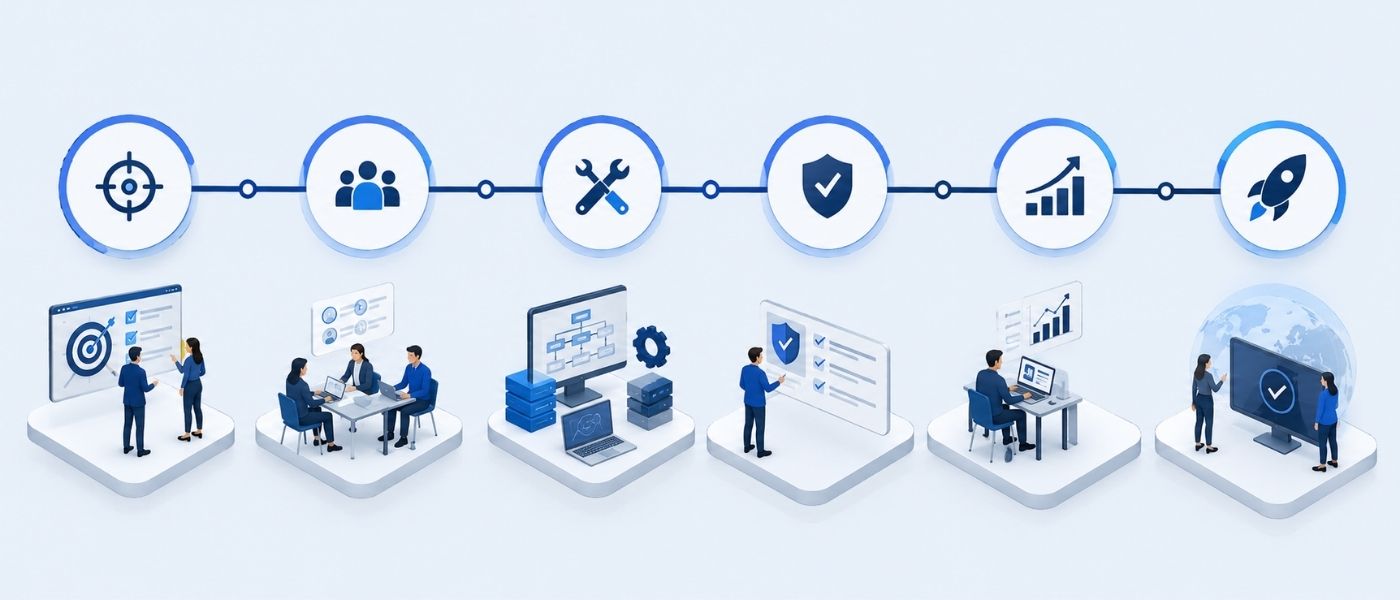
How to Decide: A 5-Step Framework
Use this framework to make a clear, data-backed decision — not an emotional one.
Step 1: Calculate Your Real In-House Cost
Don’t stop at salaries. Factor in benefits, tools, recruitment, onboarding time, management bandwidth, and attrition risk. Use the table in Section 2 as your starting point. Most businesses are surprised by how quickly the number grows.
Step 2: Define Your Marketing Goals Clearly
Are you trying to increase organic website traffic? Generate more qualified leads? Improve your Google Ads ROAS? Grow your social media presence? The more specific your goals, the easier it is to evaluate which model — and which agency — can actually deliver them.
Step 3: Audit What’s Currently Working
Whether you have a marketing team or not — run an honest audit. Where is your traffic coming from? What is your current cost per lead? Which channels are converting? What has been tried and failed? This baseline makes every future investment more intelligent.
Step 4: Interview Agencies Like You Would a Senior Hire
When evaluating an agency, ask:
- What KPIs will you commit to in the first 90 days?
- How do you handle it if targets are missed?
- Can you share results from businesses similar to mine?
- What does your reporting and communication cadence look like?
- How do you stay current with algorithm changes and platform updates?
The right agency will answer these with specifics — not vague promises.
Step 5: Start Focused, Then Expand
You don’t need to hand over your entire marketing function on day one. Start with one channel — SEO, or Google Ads — set clear 90-day goals, and measure the results. If the agency delivers, expand the scope. If not, you’ve learned something important with a contained investment.
Common Myths About Outsourcing Marketing
Myth | Reality |
“Agencies don’t understand our brand” | A good onboarding process solves this within 2–4 weeks. Agencies bring brand understanding + external perspective. |
“It’s more expensive than hiring” | When you calculate the fully loaded cost of an in-house hire, outsourcing is almost always more cost-efficient at SMB scale. |
“We’ll lose control of our marketing” | A structured agency relationship with clear KPIs gives you more visibility and control — not less. |
“Agencies use the same strategy for everyone” | Reputable agencies build custom strategies based on your goals, audience, industry, and competitive landscape. |
“We can do it ourselves with AI tools” | AI tools assist marketing — they don’t replace strategy, expertise, or the human judgment that drives real business outcomes. |
FAQs
Is it cheaper to outsource marketing or hire in-house?
For most SMBs, outsourcing is significantly cheaper when you account for the fully loaded cost of in-house hiring — salaries, benefits, tools, recruitment, and management overhead. A full-service agency retainer typically costs 30–50% less than maintaining an equivalent in-house team while delivering greater specialist depth.
What is a reasonable budget for outsourcing digital marketing in India?
For a growing SMB, a full-service digital marketing retainer is typically structured to fit your budget and scope — covering SEO, content, paid ads, social media, and reporting. The cost is almost always substantially lower than the fully loaded cost of building an equivalent in-house team.
How long does it take to see results from an outsourced marketing agency?
For paid campaigns (Google Ads, Meta Ads), results are often visible within 2–4 weeks. For SEO and organic growth, expect meaningful traction in 60–120 days, with compounding returns over 6–12 months. A transparent agency will set these expectations clearly upfront.
What should I look for in a digital marketing agency?
Look for: demonstrated results in your industry or niche, a clear onboarding and strategy process, formal KPI commitments, transparent reporting, and a team structure with named specialists (not a one-person agency). Avoid agencies that guarantee specific ranking positions — no ethical agency can guarantee Google rankings.
Can a small business afford a digital marketing agency?
Yes — in fact, small businesses often benefit most from agency partnerships precisely because they can’t afford to build in-house expertise across SEO, ads, content, and analytics. iValuePlus Digital works with businesses of all sizes and designs engagement scopes to match your current budget and growth stage.
Conclusion
There is no one-size-fits-all answer to in-house vs. outsourcing. But for most growing businesses — especially those in early and mid-growth stages — the evidence consistently points in one direction:
Outsourcing your digital marketing to a specialist agency delivers more expertise, faster results, and better ROI than building an equivalent in-house team at SMB scale. The savings in overhead alone often free up meaningful additional budget for active ad spend.
The smartest move isn’t waiting until you’re leaving revenue on the table. It’s making the right decision now — with a clear brief, a focused scope, and an agency that’s accountable to your results.
Ready to find out what a focused digital marketing partnership can do for your business? Get in touch with us today!
Recent Post
How to Set Up an Offshore QA Center of Excellence in India: A Practical Guide for Global Teams
Learn how to set up an offshore QA center of...
Managed IT Services for Small Businesses: Complete Guide (2026)
Discover what managed IT services for small businesses actually include,...

iValuePlus Services
iValuePlus is a one-stop solution to address all your needs to access, build and grow your business in the Indian market which is cost-effective & has a huge talent pool. Established in 2019 as a ‘Business Solution provider', our team has delivered successful growth projects in the international market.
Our services include setting up ODC (offshore development center), Staff Augmentation, Talent Acquisition, Digital Marketing, in the IT/ITES domain.