
Discover the best city to set up office in India...
Categories

Offshore Staffing Solutions: How Global Companies Scale Talent Efficiently
Why Offshore Staffing Solutions Are a Strategic Imperative in 2026
In 2026, talent—not capital—is the most critical constraint to growth. Across the US, UK, and Europe, companies face a perfect storm: persistent skill shortages, rising labor costs, long hiring cycles, and increasing pressure to scale faster than ever before. In this environment, offshore staffing solutions have evolved from a cost-saving tactic into a strategic operating model for global businesses.
Offshore staffing today is no longer about low-cost outsourcing. It is about building globally distributed teams that are tightly integrated with onshore operations, governed by enterprise standards, and aligned with long-term business outcomes.
This article provides a complete, end-to-end view of offshore staffing solutions—what they are, how they work, the models available, benefits, risks, governance frameworks, and best practices for sustainable success.
What Are Offshore Staffing Solutions?
Offshore staffing solutions refer to structured models that enable companies to hire, manage, and scale dedicated teams in overseas locations—most commonly India, Eastern Europe, Southeast Asia, and Latin America—while retaining strategic control over work, quality, and outcomes.
Unlike traditional outsourcing, offshore staffing focuses on:
- Dedicated resources
- Long-term engagement
- Deep integration with internal teams
- Transparent governance and accountability
Evolution of Offshore Staffing: From Cost Arbitrage to Capability Building
Then: Transactional Outsourcing
- Vendor-managed teams
- Limited control
- Short-term cost focus
Now: Strategic Offshore Staffing
- Client-owned priorities
- Dedicated teams
- IP and knowledge retention
- Long-term capability creation
Modern offshore staffing solutions are increasingly aligned with enterprise-wide transformation initiatives, as explained in how offshore staffing drives digital transformation across departments.

Why Companies Are Adopting Offshore Staffing Solutions in 2026
Global Talent Shortages
Local hiring markets are constrained by:
- Skill gaps in AI, cloud, data, cybersecurity
- High salary inflation
- Lengthy recruitment cycles
Offshore staffing unlocks global talent pools at scale.
Cost Optimization With Control
Offshore staffing typically delivers:
- 40–60% cost savings vs onshore teams
- Predictable cost structures
- Higher productivity per dollar
Crucially, companies retain day-to-day control, unlike outsourcing.
Faster Time to Scale
With offshore staffing solutions, companies can:
- Ramp teams in weeks instead of months
- Scale up or down based on demand
- Launch new initiatives without long-term hiring risk
Business Resilience & Risk Diversification
Distributed teams reduce dependency on:
- Single geographies
- Local disruptions
- Talent market volatility
Offshore staffing is now a core resilience strategy.
Common Offshore Staffing Models
Offshore Staff Augmentation
What it is:
Dedicated offshore professionals integrated directly into onshore teams using structured staff augmentation models.
Best for:
- Project-based scaling
- Skill gap coverage
- Short- to mid-term needs
Pros:
- Fast onboarding
- High flexibility
- Minimal setup
Cons:
- Limited long-term institutional knowledge if not managed well
Dedicated Offshore Teams
What it is:
A long-term, dedicated offshore team working exclusively for one client.
Best for:
- Product development
- Ongoing operations
- Engineering and digital teams
Pros:
- Strong alignment
- Knowledge retention
- Stable delivery
Offshore Development / Delivery Centers (ODC)
What it is:
A semi-captive offshore team with defined governance and processes.
Best for:
- Scaling technology or operations
- Companies not ready for full GCC ownership
BOT (Build–Operate–Transfer)
What it is:
A partner builds and runs the offshore team, then transfers ownership.
Best for:
- First-time offshore adopters
- Risk-averse enterprises
- Long-term scaling plans
Hybrid Offshore Staffing Models
Combines:
- Staff augmentation
- Dedicated teams
- BOT or captive elements
Most mature organizations adopt hybrid models that blend staff augmentation, dedicated teams, and BOT structures to balance speed, control, and cost—an approach aligned with the future of work and offshore staff augmentation in 2026.
Why India Is the Preferred Destination for Offshore Staffing Solutions
India remains the global leader in offshore staffing due to:
Talent Depth and Quality
- 1.5M+ STEM graduates annually
- Strong expertise in digital, engineering, operations
- Experienced middle management
Cost–Capability Advantage
- High-quality talent at globally competitive costs
- Lower attrition in well-managed offshore teams
Mature Ecosystem
- Strong legal and compliance frameworks
- Deep vendor and partner ecosystem
- Proven offshore delivery culture
Functions Commonly Delivered via Offshore Staffing Solutions
Technology
- Software development
- Cloud & DevOps
- Data engineering & analytics
- AI/ML
- Cybersecurity
- QA & automation
Business Operations
- Finance & accounting
- Payroll & compliance
- Procurement
- HR operations
Sales & Marketing
- Digital marketing
- CRM operations
- Marketing automation
- Sales operations support
Support Functions
- IT support
- Infrastructure monitoring
- Customer service (non-voice and technical)
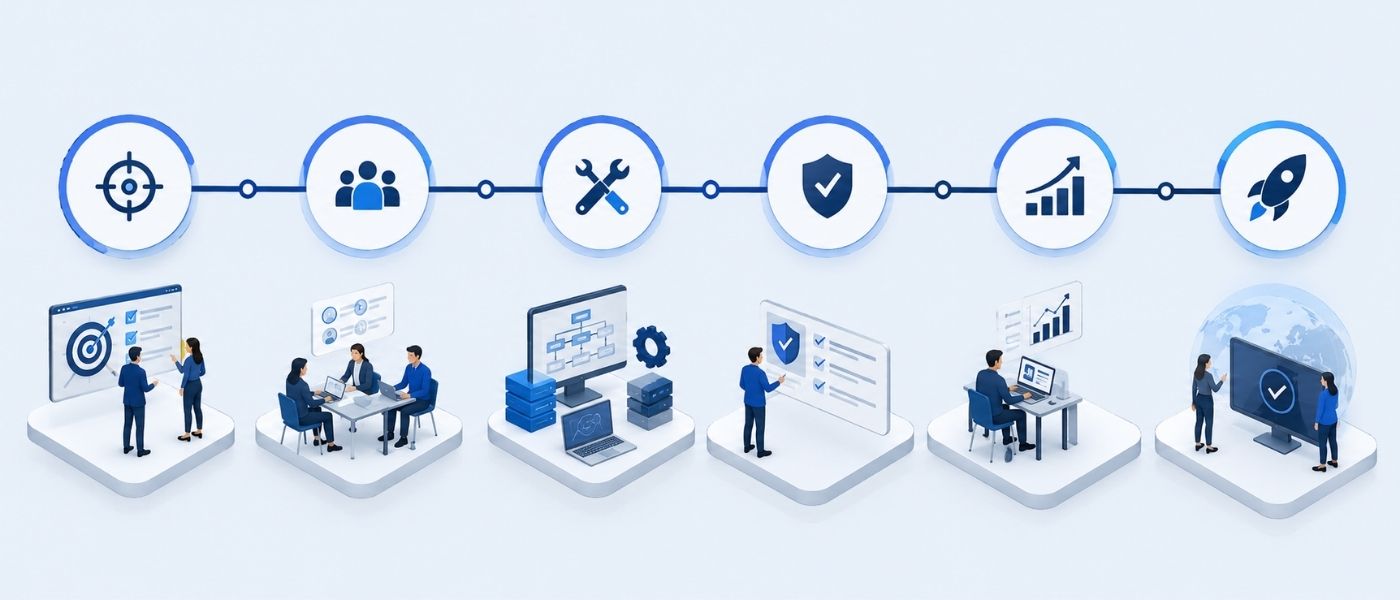
How Offshore Staffing Solutions Work: Step-by-Step
Step 1: Define Objectives
- Cost reduction?
- Faster scaling?
- Skill access?
- Long-term capability?
Step 2: Choose the Right Model
- Staff augmentation vs dedicated teams vs BOT
- Short-term vs long-term horizon
Step 3: Partner Selection
Evaluate partners on:
- Talent quality
- Governance maturity
- Compliance capability
- Transparency
- Cultural alignment
Step 4: Talent Hiring & Onboarding
- Joint interview process
- Client-led skill assessment
- Cultural and process onboarding
Step 5: Governance & Performance Management
- SLAs and KPIs
- Reporting cadence
- Escalation frameworks
- Security and compliance controls

Governance Framework for Offshore Staffing Success
Strong governance is the difference between success and failure.
Key Governance Elements
- Clear ownership model
- Defined decision rights
- Performance metrics
- Security and IP protection
- Compliance oversight
High-performing offshore teams are governed like internal departments, not vendors.
Cost Structure of Offshore Staffing Solutions
Typical Cost Components
- Talent cost
- Partner management fee
- Infrastructure & IT
- HR and compliance
- Governance overhead
Cost Comparison (Indicative)
Model | Cost vs Onshore |
Staff Augmentation | 40–50% lower |
Dedicated Teams | 50–60% lower |
BOT / Captive | Highest long-term ROI |
Risk Factors in Offshore Staffing (and How to Mitigate Them)
Common Risks
- Talent attrition
- Communication gaps
- Quality inconsistency
- IP/security concerns
- Over-dependence on partners
Mitigation Strategies
- Strong leadership hiring
- Clear processes
- Regular performance reviews
- Phased scaling
- Robust security frameworks
Offshore Staffing vs Outsourcing
Dimension | Offshore Staffing | Traditional Outsourcing |
Control | High | Low |
Talent Ownership | Dedicated | Shared |
IP Protection | Strong | Moderate |
Flexibility | High | Limited |
Long-term Value | High | Transactional |
KPIs to Measure Offshore Staffing Effectiveness
Key metrics include:
- Cost savings
- Productivity per FTE
- Quality and defect rates
- Time to scale
- Attrition rates
- Business outcome alignment
Cultural Integration and Collaboration
Successful offshore staffing solutions emphasize:
- Overlapping work hours
- Regular communication
- Leadership exchanges
- Shared KPIs
- Cultural training
Culture—not cost—is often the biggest success factor.
Technology Enablement for Offshore Teams
Tools commonly used:
- Collaboration platforms (Slack, Teams)
- Agile project management tools
- Secure access and VPNs
- Performance dashboards
- Automation and AI tools
Technology ensures offshore teams operate as one global unit.
Future of Offshore Staffing Solutions
Key trends:
- AI-augmented offshore teams
- Smaller, high-value teams
- Product-centric staffing
- Hybrid GCC + staffing models
- Outcome-based staffing contracts
Offshore staffing will increasingly be embedded into global operating models.
Conclusion
In 2026, offshore staffing solutions are no longer optional—they are foundational to how global companies operate, innovate, and scale. When executed with the right model, partner, governance, and mindset, offshore staffing delivers far more than cost savings:
- Faster growth
- Better access to talent
- Operational resilience
- Strategic flexibility
- Sustainable competitive advantage
The companies that win globally will not ask whether to adopt offshore staffing—but how well they design and govern it.
Recent Post
How to Set Up an Offshore QA Center of Excellence in India: A Practical Guide for Global Teams
Learn how to set up an offshore QA center of...
Managed IT Services for Small Businesses: Complete Guide (2026)
Discover what managed IT services for small businesses actually include,...

iValuePlus Services
iValuePlus is a one-stop solution to address all your needs to access, build and grow your business in the Indian market which is cost-effective & has a huge talent pool. Established in 2019 as a ‘Business Solution provider', our team has delivered successful growth projects in the international market.
Our services include setting up ODC (offshore development center), Staff Augmentation, Talent Acquisition, Digital Marketing, in the IT/ITES domain.