
Discover the best city to set up office in India...

How to Reduce Business Operating Costs Without Slowing Growth
To reduce business operating costs without slowing growth, companies should outsource non-core functions (HR, payroll, IT, admin), leverage staff augmentation instead of permanent hires, use offshore or hybrid teams to access cost-effective talent, and adopt managed services for predictable IT expenditure. These strategies convert fixed overhead into flexible, scalable costs — preserving capital for growth investments while maintaining operational quality.
Every growing business reaches a point where the cost of running operations starts to outpace the revenue those operations generate. Margins compress. Budgets tighten. Leadership faces an uncomfortable question: where do you cut without cutting growth?
The instinctive answer — reduce headcount — is often the wrong one. Layoffs are costly to execute, destructive to culture, and leave organisations understaffed precisely when they need to accelerate. The smarter answer is structural: redesign how work gets done, not simply how many people do it.
This guide breaks down the most effective, sustainable strategies for reducing business operating costs while keeping growth intact — drawing on approaches used by scaling companies across industries globally.
Understanding What "Operating Costs" Actually Includes
Before cutting costs intelligently, you need to see them clearly. Operating costs — also called operational expenditure (OpEx) — encompass all costs required to run the business day-to-day, excluding capital investment. For most companies, these fall into five buckets:
- 60–70% of operating costs are people-related (salaries, benefits, recruitment)
- 15–25% go to facilities, utilities, and physical infrastructure
- 10–20% are technology, software, and IT operations
- 5–15% cover admin, compliance, finance, and back-office functions
The key insight: the bulk of operating costs is in people and infrastructure — both of which are highly addressable through modern outsourcing, augmentation, and managed service models. The goal isn’t to eliminate capability; it’s to deliver the same capability at a lower total cost.
For most businesses, 60–70% of operating costs are people-related. This means the most impactful cost reduction strategies target how talent is sourced, structured, and managed — not just how many employees appear on the payroll.
Why Traditional Cost-Cutting Strategies Backfire
Across-the-board budget cuts, hiring freezes, and redundancies are the most common responses to cost pressure — and among the least effective when growth is the objective. Here’s why:
- Hiring freezes create capability gaps that persist long after the freeze is lifted, slowing product delivery, customer service, and market responsiveness.
- Redundancies destroy institutional knowledge and trigger a secondary wave of voluntary departures as remaining staff reassess their security.
- Undifferentiated budget cuts often hit training, technology, and marketing — precisely the investments that generate future revenue.
- Renegotiating vendor contracts produces one-time savings but doesn’t change the underlying cost structure.
The real goal is not to spend less on the same things — it’s to spend differently so that every pound or dollar of operational spend generates more output, more capability, or more growth. This is the difference between cost-cutting and cost optimisation.
Strategy 1: Outsource Non-Core Business Functions
The single highest-impact lever for reducing operational costs in a company is outsourcing functions that are essential but not core to your competitive advantage. Payroll, HR administration, accounting, office management, IT helpdesk support — these functions must be executed well, but they don’t need to be executed in-house.
How outsourcing reduces business costs
When a business manages a function in-house, it bears the full cost stack: salary, employer NI/PF contributions, benefits, paid leave, recruitment, onboarding, training, management overhead, and the physical infrastructure to support the team. Outsourcing converts this into a single service fee — typically 40–60% lower than the fully-loaded in-house cost.
Outsourcing reduces business operating costs by converting fixed employment costs (salaries, benefits, office space, management overhead) into variable service fees. Businesses avoid recruitment, training, and attrition costs, and gain access to specialist expertise without maintaining in-house capability year-round.
Which functions are best suited for outsourcing?
Business Function | Outsourcing Suitability | Typical Cost Saving vs. In-House |
Payroll Processing | ✓ High | 35–55% |
HR Administration & Generalist | ✓ High | 30–50% |
Office & Facilities Administration | ✓ High | 30–45% |
IT Support & Helpdesk | ✓ High | 40–60% |
Accounting & Finance | ✓ High | 35–55% |
Recruitment & Hiring | ✓ High | 20–40% |
Quality Assurance / Testing | ✓ High | 40–65% |
Strategy 2: Use Staff Augmentation Instead of Permanent Hires
One of the most costly decisions a growing business makes is hiring full-time employees for roles that are project-based, cyclical, or skills-specific. Staff augmentation — bringing in vetted external professionals to work under your management on demand — solves this without the commitment or cost of a permanent hire.
Staff augmentation cost benefits: the real numbers
A permanent hire comes with a cost structure far beyond their salary. When you account for employer contributions, benefits, paid leave entitlements, recruitment fees (typically 15–25% of first-year salary), onboarding time, equipment, software licences, and the risk of 3–6 months’ notice or severance — the true cost of a permanent employee is typically 1.5–2× their headline salary.
Staff augmentation through a provider like iValuePlus eliminates most of that cost structure. You pay a single engagement fee for a vetted, ready-to-deploy professional. No recruitment cost, no employer contributions, no notice periods. Engagement scales up or down with business demand.
Staff Augmentation vs Permanent Hiring
Staff augmentation typically costs 40–60% less than a permanent hire when accounting for the full employment cost stack — including recruitment, benefits, contributions, and severance risk. It also eliminates ramp-up time, since augmented professionals are pre-vetted and ready to contribute from day one.
iValuePlus delivers vetted tech, operations, and business function talent through its staff augmentation model — with professionals typically deployed within 7 days and fully integrated into client workflows.
Strategy 3: Build an Offshore or Hybrid Team
For businesses that need sustained, scalable delivery capacity — not just project-based support — offshore staffing represents the most structurally transformative cost optimisation available. Rather than augmenting individual roles, offshore teams allow companies to build entire functional units (engineering, QA, operations, finance) at a fraction of the onshore cost.
How offshore staffing reduces operational costs
India has emerged as the world’s most developed market for offshore professional talent — not simply because of lower wage rates, but because of an unmatched combination of English-language proficiency, deep technical education pipelines, and a mature services ecosystem. A senior full-stack developer in India costs roughly one-quarter to one-third of their equivalent in the US or UK, with comparable qualification and output quality.
- 50–70% cost saving vs. equivalent onshore hiring (India)
- 7 days average deployment time for iValuePlus offshore talent
- 3.1M+ IT graduates produced by Indian universities annually
- 24/7 operational coverage enabled by timezone overlap models
Offshore engagement models compared
| Model | Best For | Control Level | Setup Time | Cost Profile |
|---|---|---|---|---|
| Staff Augmentation | Filling skill gaps; project-based scale-up | High (client-managed) | 3–7 days | Per-resource monthly fee |
| Offshore Development Centre (ODC) | Dedicated long-term tech team | High (client-directed) | 4–8 weeks | Fixed monthly; all-in |
| Build-Operate-Transfer (BOT) | Companies intending to own an India entity | Grows over time | 3–6 months | Structured; transitions to ownership |
| Global Capability Centre (GCC) | Enterprise-scale strategic offshore capability | Full (owned) | 6–12 months | Higher setup; lowest long-term cost |
Strategy 4: Replace In-House IT with Managed IT Services
IT is one of the most expensive and most unpredictable operational costs for growing businesses. Maintaining a full-time in-house IT team — across infrastructure management, support, security, and DevOps — requires significant headcount, specialist knowledge that spans multiple disciplines, and ongoing training to stay current.
Managed IT services replace this complexity with a single monthly engagement that covers the breadth of IT operations at a predictable, scalable cost.
IT outsourcing cost savings: what to expect
Businesses that switch from in-house IT to managed IT services typically reduce IT operational costs by 25–45%. The saving comes from eliminating the full employment cost of IT staff, converting unpredictable break-fix costs into a fixed monthly fee, and gaining access to specialist expertise (cybersecurity, cloud, networking) that would require multiple senior hires to replicate in-house.
IT Support
End-user support, helpdesk, and issue resolution — managed remotely, available when your teams need it.
IT Infrastructure
Network management, server oversight, cloud infrastructure, and security monitoring at predictable cost.
Managed IT (Full)
Comprehensive managed IT services replacing your in-house team — from helpdesk to strategic IT planning.
DevOps
CI/CD pipeline management, release automation, and infrastructure-as-code for development teams.
Strategy 5: Outsource Payroll and HR Administration
Payroll and HR administration are textbook examples of necessary-but-non-core functions. They demand precision, compliance awareness, and significant time from senior staff — yet they contribute nothing to competitive differentiation. For small and mid-sized businesses in particular, managing payroll and HR compliance in-house is both disproportionately costly and disproportionately risky.
Cost reduction strategies for payroll and HR
The costs of in-house payroll extend well beyond the salary of whoever processes it. Payroll software licences, statutory compliance updates, audit trails, tax filing obligations, and the professional liability of errors — these add up quickly. Outsourcing payroll to a specialist provider eliminates the software overhead, guarantees compliance with current legislation, and typically reduces the total cost of payroll administration by 30–50%.
HR administration — contracts, onboarding documentation, leave management, performance review processes, statutory reporting — is similarly resource-intensive without being revenue-generating. iValuePlus’s HR Generalist service and Payroll outsourcing allow businesses to access professional, compliant HR and payroll delivery without the full-time headcount.
Payroll & HR Outsourcing
Outsourcing payroll and HR administration reduces costs in three ways: it eliminates the salary and benefits of in-house staff, removes the need for payroll software licences and compliance tools, and eliminates the financial and reputational risk of errors. Businesses typically save 30–50% on total payroll and HR administration costs through outsourcing.
Strategy 6: Consolidate and Optimise Office Administration
For businesses with physical office presences, facilities and administration represent a significant overhead cost — particularly in high-cost urban markets. Office administration tasks (reception, vendor management, supplies procurement, travel coordination, facilities compliance) can account for 8–15% of total operational overhead in some organisations.
The optimal approach combines three levers: remote and hybrid working policies that reduce physical footprint; outsourced office administration that eliminates the need for full-time facilities staff; and vendor consolidation that reduces the number of separate supplier relationships (and associated management overhead) in the business.
iValuePlus’s Office Administration service handles the operational fabric of office management — allowing leadership to focus on the business, not the building.

Building a Cost Reduction Roadmap: Where to Start
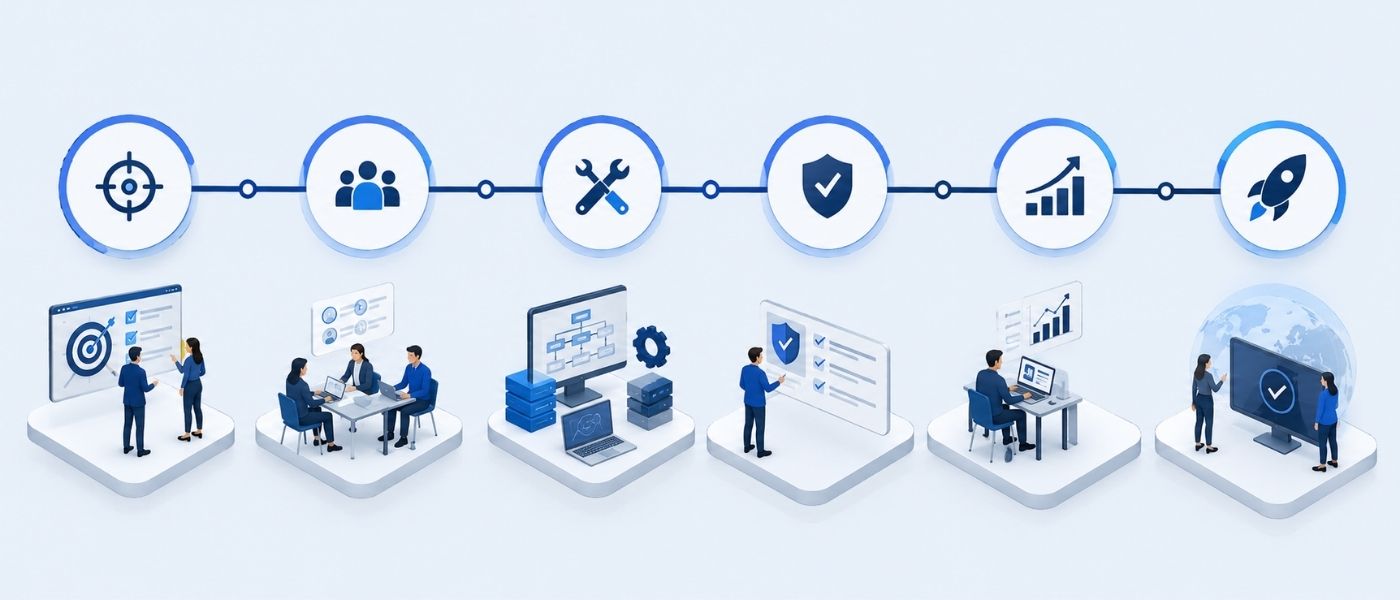
For businesses approaching this for the first time, the question isn’t which strategy to use — it’s where to start. The following sequence is recommended based on speed-to-savings and implementation complexity:
- Audit your full employment cost stack
Map every role against its total cost (salary, benefits, contributions, infrastructure). Identify functions where the output could be delivered at lower total cost through outsourcing or augmentation.
- Categorise functions: core vs. non-core
Core functions directly generate competitive advantage — product, sales, strategy. Non-core functions are essential but not differentiating. Focus outsourcing on the latter.
- Start with highest-cost, lowest-risk functions
Payroll, IT support, and office administration are ideal starting points — well-established outsourcing markets, clear service specifications, and fast time-to-value.
- Select engagement models carefully
Staff augmentation for immediate talent gaps; managed services for ongoing functions; offshore teams for sustained delivery at scale. Each has a different risk/return profile.
- Measure and reinvest the savings
Track cost reduction against baseline quarterly. Reinvest freed capital into growth-generating activity — product development, sales, marketing, customer success.
How to Scale Business with a Limited Budget
To scale a business with a limited budget, convert fixed overhead into variable costs through outsourcing and staff augmentation, leverage offshore talent for cost-effective delivery, and use managed services to eliminate the capital cost of IT and operations infrastructure. Reinvest the savings into revenue-generating activity — the compounding effect accelerates growth without proportionally increasing overhead.
Cost Reduction Strategies Compared: Which Is Right for Your Business?
| Strategy | Best Company Profile | Savings Potential | Speed to Value | Growth Impact |
|---|---|---|---|---|
| Outsource non-core functions | SMEs; companies with high back-office headcount | 30–60% | 4–8 weeks | Positive |
| Staff augmentation | Tech and ops teams with variable workloads | 40–60% | Under 2 weeks | Positive |
| Offshore team (ODC) | Scaling companies with sustained delivery needs | 50–70% | 4–8 weeks | Strongly Positive |
| Managed IT services | Companies with 20+ employees and unreliable IT | 25–45% | 2–4 weeks | Positive |
| Payroll & HR outsourcing | All company sizes; compliance-sensitive sectors | 30–50% | 2–6 weeks | Neutral–Positive |
| Build-Operate-Transfer | Companies with long-term India expansion plans | 55–70% | 3–6 months | Strongly Positive |
| Headcount reduction (layoffs) | Distressed / restructuring situations | Variable | Immediate | Negative |
Why Experience and Expertise Matter When Choosing a Cost Reduction Partner
The strategies outlined above are only as effective as the partner executing them. Poorly structured outsourcing arrangements — with misaligned incentives, unclear SLAs, or inadequate talent vetting — can create costs and disruptions that exceed what they save.
When evaluating a provider to help reduce operational costs, look for:
- Demonstrated track record — verified client outcomes, not just case study marketing. iValuePlus holds multiple Clutch awards including Top HR Outsourcing Company India 2024, Top IT Services Company Delhi, and Top Staff Augmentation Company Delhi.
- Transparent engagement models — clear SLAs, defined deliverables, and no opaque markups. iValuePlus publishes its engagement model structures across four distinct models.
- Integrated delivery capability — a provider who can support you across multiple functions (IT, HR, operations, finance) removes vendor proliferation risk and simplifies management overhead.
- Technology-backed operations — iValuePlus operates IVPHub, a proprietary talent management platform that streamlines onboarding, tracking, and real-time visibility into deployed teams.
FAQ
How can a business reduce operating costs without layoffs?
Companies can reduce operating costs without layoffs by outsourcing non-core functions (IT, payroll, HR admin), adopting staff augmentation to replace permanent hires with on-demand talent, shifting to managed services for predictable costs, and leveraging offshore or hybrid teams. These approaches reduce the cost structure without eliminating roles — and often improve quality by bringing in specialist expertise.
What are the best ways to cut operational costs in a company?
The most effective ways to cut operational costs are: (1) outsource non-core business functions like payroll, IT, and HR; (2) use staff augmentation to replace permanent hires; (3) build offshore teams for sustained delivery at lower cost; (4) move to managed IT services instead of an in-house IT team; (5) consolidate vendors and eliminate duplicate software subscriptions. These structural changes reduce costs sustainably rather than through one-time cuts.
How does outsourcing reduce business operating costs?
Outsourcing reduces business operating costs by converting full employment costs (salary, benefits, employer contributions, recruitment, training, infrastructure) into a single service fee that is typically 40–60% lower. It also eliminates the cost of errors and compliance failures in specialist areas like payroll and IT, and provides access to expertise that would require multiple senior hires to replicate in-house.
How do offshore teams help reduce operational costs?
Offshore teams — particularly India-based — save businesses 50–70% compared to equivalent onshore hiring costs. The saving comes from lower local salary benchmarks, included employer infrastructure (office, equipment, compliance), and a provider-managed talent pipeline that eliminates recruitment cost and attrition risk. Unlike outsourcing a task, offshore teams are integrated into the client’s processes and culture, maintaining quality and control while dramatically reducing cost.
How can small businesses lower overhead costs?
Small businesses can lower overhead costs by: outsourcing payroll and HR administration to eliminate compliance overhead; using IT support managed services instead of maintaining an IT employee; adopting staff augmentation for project-based skill needs rather than hiring; moving to remote or hybrid working to reduce office footprint; and consolidating to a single business services provider for back-office functions. Each of these converts fixed overhead into flexible, scalable costs aligned to business demand.
What is the difference between staff augmentation and outsourcing?
Staff augmentation means adding external professionals to your existing team, under your direct management — ideal for filling skill gaps or scaling capacity without permanent hires. Outsourcing delegates an entire business function or project to an external provider who manages it independently. Staff augmentation preserves management control; outsourcing transfers management responsibility. Both reduce costs, but the right choice depends on how much control and integration is needed.
How can a company optimise business expenses without compromising growth?
The key to optimising expenses without compromising growth is targeting non-core overhead — not the investments that generate revenue. Outsource functions that are essential but not differentiating (payroll, IT support, admin), use staff augmentation to flex capacity without fixed headcount, and reinvest the savings into product, sales, and customer success. This approach reduces overhead while preserving or accelerating growth capacity.
Ready to Reduce Costs Without Reducing Capability?
iValuePlus helps growing businesses redesign their operational cost structure through outsourcing, staff augmentation, offshore teams, and managed IT — deployed within days, not months. Get in touch today!
Recent Post
How to Set Up an Offshore QA Center of Excellence in India: A Practical Guide for Global Teams
Learn how to set up an offshore QA center of...
Managed IT Services for Small Businesses: Complete Guide (2026)
Discover what managed IT services for small businesses actually include,...

iValuePlus Services
iValuePlus is a one-stop solution to address all your needs to access, build and grow your business in the Indian market which is cost-effective & has a huge talent pool. Established in 2019 as a ‘Business Solution provider', our team has delivered successful growth projects in the international market.
Our services include setting up ODC (offshore development center), Staff Augmentation, Talent Acquisition, Digital Marketing, in the IT/ITES domain.