
Discover the best city to set up office in India...
Categories
Tags
- cost-effective IT outsourcing
- dedicated offshore team
- global delivery model
- ODC services
- offshore delivery center
- offshore delivery center model
- Offshore Delivery Center setup
- offshore development center
- Offshore IT Services
- offshore outsourcing services
- offshore software development
- offshore team model
- remote development team

Setting Up an Offshore Delivery Center to Reduce Costs and Accelerate Project Delivery
Global businesses are no longer asking whether to go offshore—they are asking how to do it strategically without losing control, quality, or speed.
Rising talent shortages, margin pressure, and the need for continuous innovation are forcing organizations to rethink traditional delivery structures. Hiring locally is expensive and slow. Pure outsourcing often lacks ownership. Remote freelancers create fragmentation.
A well-designed Offshore Delivery Center (ODC) solves these problems by offering a scalable, cost-efficient, and high-performance extension of your core team.
Today, leading enterprises and high-growth startups alike use ODCs not just to reduce costs, but to:
Accelerate product development
Expand technical capabilities
Enter new markets faster
Build 24/7 delivery capacity
Strengthen operational resilience
This guide explores how to build an Offshore Delivery Center that drives measurable business value — not just operational support.
Offshore Delivery Centers: A Strategic Perspective
An offshore delivery center is a dedicated, client-aligned team located in a different geography that operates as a true extension of the parent organization.
Unlike traditional outsourcing vendors juggling multiple clients, an ODC:
Works exclusively for your organization
Follows your workflows and culture
Aligns with your KPIs and roadmap
Operates under your governance structure
In mature setups, clients view their ODC as a global capability center, not a third-party vendor.
This shift from vendor to strategic partner is what differentiates high-ROI ODCs from low-value outsourcing contracts.
Why CXOs Are Prioritizing Offshore Delivery Centers
1) Structural Cost Advantage (Not Just Wage Arbitrage)
Smart leaders look beyond salary differences. The real savings come from structural efficiency, including:
Reduced infrastructure investment
Lower recruitment and HR costs
Minimized compliance burden
Lower attrition replacement costs
Optimized operational overheads
Many organizations achieve 40–60% cost optimization while maintaining delivery quality.
But the biggest gain?
Freed-up capital that can be reinvested in growth and innovation.
2) Access to Deep Talent Pools
Tech skill shortages are now a global issue. Local hiring alone cannot sustain growth.
An ODC provides access to:
Senior engineers at scale
Cloud and DevOps specialists
AI/ML and data experts
Cybersecurity professionals
Product engineering talent
Countries like India offer large, English-speaking, technically strong talent ecosystems — making them ideal for offshore delivery models.
3) Speed as a Competitive Advantage
Time-to-market determines winners.
An offshore delivery center enables:
Round-the-clock development cycles
Faster release iterations
Parallel project execution
Rapid prototyping
This “follow-the-sun” model helps companies ship faster than competitors relying only on local teams.
4) Scalability Without Risk
Business demand fluctuates. ODCs provide elastic capacity.
You can:
Ramp up for product launches
Scale down post-delivery
Add niche expertise quickly
Support multiple product lines
This flexibility reduces long-term fixed workforce risk.
Offshore Delivery Center vs Traditional Outsourcing
Decision-makers often misunderstand this difference.
| Aspect | Outsourcing | Offshore Delivery Center |
|---|---|---|
| Ownership | Vendor-led | Client-aligned |
| Control | Limited | High |
| Team Stability | Variable | Dedicated |
| Strategic Value | Low–Medium | High |
| Cultural Fit | Moderate | Strong |
| Long-Term ROI | Uncertain | Predictable |
An ODC is about capability building, not task delegation.
How Offshore Delivery Centers Drive Revenue
A lead-oriented perspective must include revenue impact.
ODCs enable:
Faster Product Launches
→ Earlier revenue capture
Innovation Capacity
→ New offerings and IP creation
Market Expansion
→ Enter regions without heavy hiring
Customer Experience Improvements
→ Better retention and upsell potential
When measured correctly, ODCs often contribute to top-line growth, not only bottom-line savings.

How Offshore Delivery Centers Drive Revenue
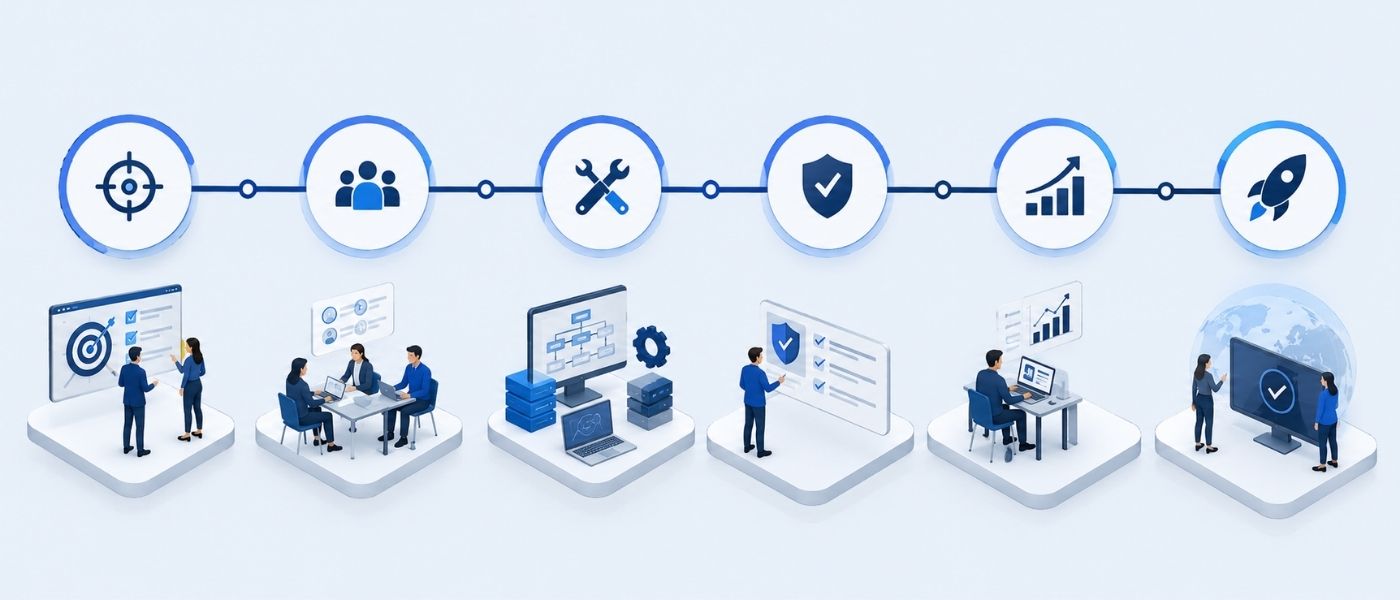
Step 1: Define Strategic Intent
Ask leadership-level questions:
Are we optimizing cost or building capability?
Is this short-term or long-term?
Do we need innovation or execution support?
How will success be measured?
Clear intent prevents misaligned investments.
Step 2: Choose the Right Delivery Model
Different businesses need different structures.
Many leaders evaluate models through resources explaining how to choose the right offshore delivery model for long-term growth.
Options include:
Dedicated ODC
Managed ODC
Build-Operate-Transfer (BOT)
Hybrid models
Each has financial and operational implications.
Step 3: Location Strategy
Key evaluation criteria:
Talent depth
Cost competitiveness
IP laws
Infrastructure maturity
Political stability
Time-zone overlap
India remains a leading ODC destination due to its talent ecosystem and delivery maturity.
Step 4: Partner Selection
Your partner determines success.
Evaluate:
Governance maturity
Talent retention record
Security certifications
Industry experience
Cultural compatibility
Organizations often explore structured offshore development centre frameworks to assess readiness and engagement models:
Step 5: Governance and Control
Successful ODCs operate with:
Clear reporting lines
Defined KPIs
SLA frameworks
Quarterly performance reviews
Transparent communication channels
Without governance, even skilled teams underperform.
Step 6: Cultural Integration
Productivity rises when teams feel included.
Best practices:
Shared onboarding
Cross-location leadership syncs
Unified agile frameworks
Knowledge transfer programs
Companies investing in building a global operating model that aligns onshore-offshore teams achieve stronger collaboration:
Step 7: Security and Compliance
Protecting IP is non-negotiable.
Essential measures:
Access controls
Encrypted environments
Secure VPNs
Compliance audits
NDAs and contractual safeguards
Common Mistakes That Kill ODC ROI
Treating ODC as cheap labor
Weak leadership involvement
Poor communication structure
Ignoring cultural alignment
Scaling too fast without governance
Avoiding these mistakes dramatically improves success rates.
The Future: ODCs as Innovation Hubs
Modern ODCs contribute to:
R&D initiatives
AI development
Automation frameworks
Platform engineering
Product strategy inputs
Industry consensus increasingly supports that the future of global delivery models lies in a dedicated offshore development center
strategy — it is a competitiveness strategy.
Measuring ODC ROI Like a CXO
Track beyond cost savings:
Time-to-market reduction
Release velocity
Quality metrics
Innovation contributions
Customer satisfaction impact
Revenue enablement
High-performing ODCs show ROI within 12–18 months.
Who Should Consider an Offshore Delivery Center?
ODCs are ideal for:
SaaS companies scaling products
Enterprises undergoing digital transformation
Startups needing rapid growth
Firms facing hiring shortages
Companies expanding globally
If delivery speed and talent access are critical, ODCs become a logical move.

Conclusion
A dedicated offshore team is not just a staffing solution — it is a strategic scaling model.
It enables companies to:
Expand capacity intelligently
Control operational costs
Access global talent
Accelerate delivery
Improve resilience
Businesses that view offshore teams as long-term capability investments consistently outperform competitors.
In today’s global economy, the real advantage lies not in whether you build offshore teams — but in how strategically you build them.
FAQs
1) What is a dedicated offshore team?
A dedicated offshore team is a group of professionals located in another country who work exclusively for one company. They function as a remote extension of the in-house team and follow the company’s processes, tools, and goals.
2) How does a dedicated offshore team help businesses scale faster?
A dedicated offshore team allows companies to quickly add skilled resources without long hiring cycles. This enables faster product development, quicker project delivery, and flexible team scaling based on demand.
3) How much cost savings can a dedicated offshore team provide?
Businesses typically save 40–60% in staffing and operational costs by using a dedicated offshore team due to lower salary benchmarks, reduced infrastructure costs, and minimized recruitment expenses.
4) What roles can be included in a dedicated offshore team?
A dedicated offshore team can include software developers, QA engineers, DevOps specialists, designers, data analysts, digital marketers, and support staff depending on business needs.
5) How do companies manage dedicated offshore teams effectively?
Companies manage offshore teams through clear KPIs, regular communication, collaboration tools, and structured governance models. Many also rely on experienced offshore partners for operational oversight.
6) Is a dedicated offshore team suitable for small and mid-sized businesses?
Yes. Startups and SMEs often benefit the most because dedicated offshore teams provide access to global talent and scalability without the high cost of building large in-house teams.
Recent Post
How to Set Up an Offshore QA Center of Excellence in India: A Practical Guide for Global Teams
Learn how to set up an offshore QA center of...
Managed IT Services for Small Businesses: Complete Guide (2026)
Discover what managed IT services for small businesses actually include,...

iValuePlus Services
iValuePlus is a one-stop solution to address all your needs to access, build and grow your business in the Indian market which is cost-effective & has a huge talent pool. Established in 2019 as a ‘Business Solution provider', our team has delivered successful growth projects in the international market.
Our services include setting up ODC (offshore development center), Staff Augmentation, Talent Acquisition, Digital Marketing, in the IT/ITES domain.