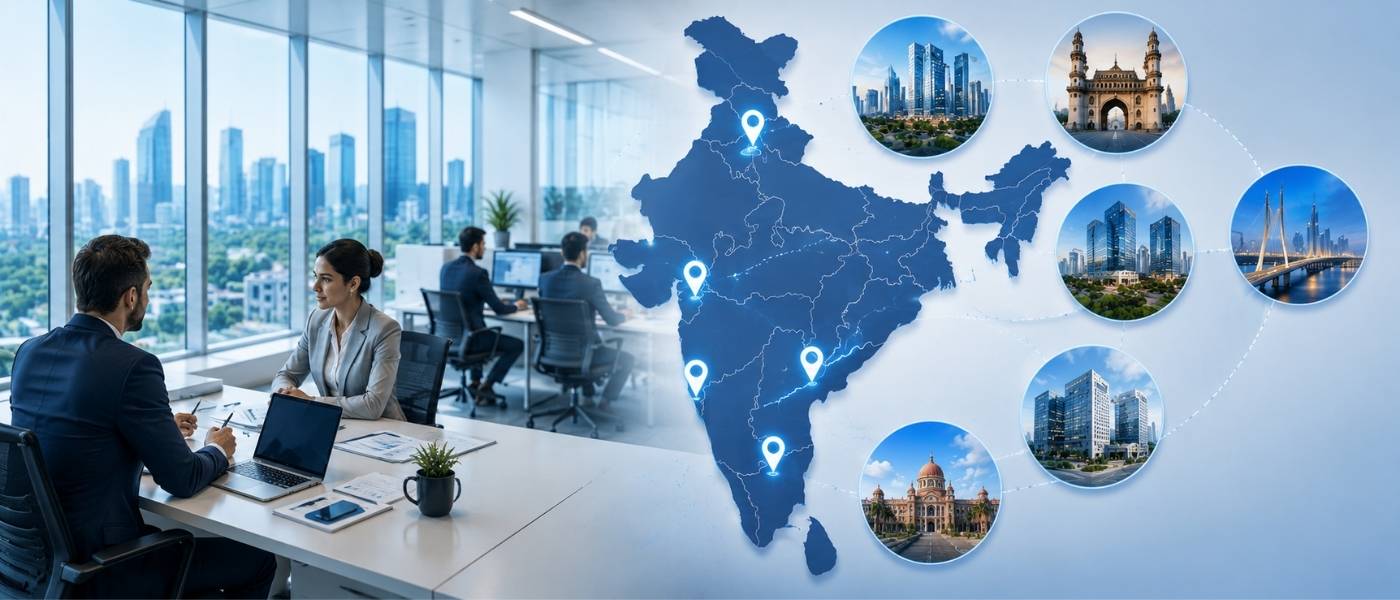

Discover the best city to set up office in India...

The Business Case for Investing in Modern Office Workspace Solutions
Rethinking Workspaces for the Modern Enterprise
In the post-pandemic business era, the office has evolved from a physical space into a strategic asset — shaping productivity, innovation, and company culture. As global organizations adopt hybrid workspaces, the demand for modern office workspace solutions has surged, transforming how we think about collaboration and performance.
Today’s offices must do more than house employees — they need to foster creativity, enhance well-being, and reflect the brand’s identity. With intelligent infrastructure setup, smart design, and sustainability at the core, businesses can turn office investments into long-term growth drivers.
From Traditional Offices to Smart Workspaces
The conventional office — fixed desks and cubicles — has given way to smart offices powered by technology and data. The shift reflects a growing focus on workspace optimization and employee experience.
Era | Characteristics | Objective |
Pre-2019 Offices | Fixed layouts, isolated departments | Space efficiency |
2020–2023 Hybrid Model | Remote + on-site mix, flexible design | Flexibility |
2025–26 Smart Workspace | Data-driven, connected environments | Productivity + Experience |
Modern office infrastructure setup now integrates IoT, automation, and AI, enabling real-time data collection for occupancy, air quality, and energy consumption. This transformation helps businesses operate smarter, greener, and more efficiently.
Why Modern Office Workspace Solutions Matter
- Enhancing Employee Experience
According to research by CBRE and JLL, companies with adaptive, human-centered workplaces see up to 40% higher retention rates. Smart systems that regulate air, temperature, and lighting create comfortable environments that improve focus and morale.
By integrating modern office design with workspace sustainability, organizations turn workspaces into ecosystems that support health, collaboration, and innovation.
- Maximizing Real Estate Efficiency
The rise of hybrid workspaces means underutilized office space is a growing challenge. AI-based workspace optimization tools analyze real-time data to identify unused areas and recommend efficient layouts.
This not only improves infrastructure setup efficiency but also reduces operational costs related to rent, energy, and maintenance.
- Sustainability and ESG Integration
Future-ready offices prioritize workspace sustainability — from green materials to automated energy control systems. Smart offices designed with LEED and WELL certifications reduce carbon emissions and attract ESG-focused investors. In India, cities like Bengaluru and Pune are leading this shift, showcasing how office workspace solutions can support both business growth and environmental responsibility.
- Technology-Driven Infrastructure Setup
The backbone of a modern workspace lies in its IT infrastructure setup checklist ensuring seamless connectivity and digital collaboration. Features like cloud integration, AI-based facility management, and AR/VR-enabled meeting zones empower employees to work efficiently, anywhere.
This level of infrastructure setup precision transforms offices into intelligent, responsive, and future-ready environments.
- Strengthening Brand Identity
Your office is your brand’s silent ambassador. A well-designed, modern office design communicates innovation, trust, and progressiveness to clients and employees alike. From smart lobbies to digitally enabled meeting zones, office workspace solutions now play a vital role in shaping corporate perception.
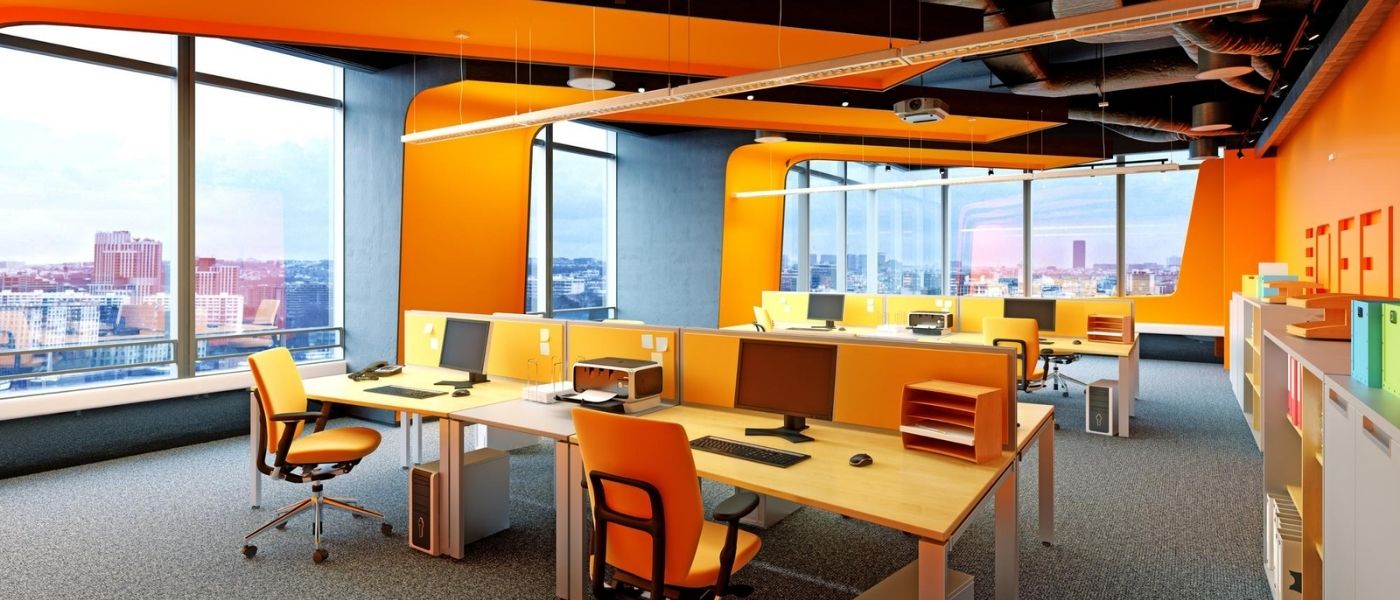
Designing Future-Ready Workspaces: 5 Key Pillars
- Flexibility by Design: Modular furniture and convertible meeting spaces support business scalability.
- Wellness and Inclusivity: Ergonomic furniture and biophilic elements boost engagement and morale.
- Smart Infrastructure: IoT sensors and automated systems drive workspace optimization.
- Collaborative Ecosystems: Innovation zones and open lounges promote cross-functional teamwork.
- Security and Compliance: Modern infrastructure setup ensures digital and physical safety for hybrid operations.
ROI of Investing in Office Workspace Solutions
Businesses adopting smart offices report:
- 25–35% better space utilization
- 30% lower energy costs through automation
- 40% improvement in collaboration and productivity
- Significant boosts in employee satisfaction and retention
These outcomes position office workspace solutions as long-term investments rather than expenses — fueling innovation, sustainability, and efficiency.
India’s Growing Market for Smart Workspaces
India’s office ecosystem is rapidly evolving. With a 12% projected CAGR by 2026, office workspace solutions are redefining real estate strategies. Global firms are choosing office infrastructure setup partners to create cost-efficient, scalable, and compliant hybrid environments.
This growth reflects how workspace sustainability and technology are becoming inseparable in business strategy.
Conclusion
Modern office workspace solutions combine design intelligence, digital enablement, and sustainability — transforming offices into strategic growth enablers. As companies evolve, their workplaces must evolve too — blending physical comfort, digital connectivity, and environmental responsibility.
Those who invest in smart offices today will lead tomorrow’s market — where the best workplaces aren’t just built, but intelligently designed for people, performance, and the planet.
Recent Post
How to Set Up an Offshore QA Center of Excellence in India: A Practical Guide for Global Teams
Learn how to set up an offshore QA center of...
Managed IT Services for Small Businesses: Complete Guide (2026)
Discover what managed IT services for small businesses actually include,...

iValuePlus Services
iValuePlus is a one-stop solution to address all your needs to access, build and grow your business in the Indian market which is cost-effective & has a huge talent pool. Established in 2019 as a ‘Business Solution provider', our team has delivered successful growth projects in the international market.
Our services include setting up ODC (offshore development center), Staff Augmentation, Talent Acquisition, Digital Marketing, in the IT/ITES domain.