



Scale global teams with proven offshore team management strategies. Learn...
Categories

Why Resource Augmentation Services Are Replacing Traditional Hiring Models
For decades, traditional hiring—recruiting, onboarding, and retaining full-time employees—was the default workforce model. But in 2026, business complexity, global competition, digital acceleration, and talent mobility economics have fundamentally shifted how companies build teams.
Resource augmentation services are rapidly replacing traditional hiring models, particularly in dynamic, project-driven, and technology-led industries. These services offer on-demand access to specialized talent without the long-term commitments and hidden costs of conventional hiring. By integrating external specialists directly into business teams while controlling strategic direction internally organizations gain speed, flexibility, and capability at scale.
This article explains:
- The structural limitations of traditional hiring
- Why resource augmentation is now a strategic workforce model
- Detailed comparisons (augmented teams vs traditional hiring vs outsourcing)
- When and how to implement resource augmentation
- A roadmap to choosing the right augmentation partner
- FAQs to clarify common questions
Throughout the article, we also highlight how iValuePlus resource augmentation services help organizations transition to this future-ready talent strategy.
Traditional Hiring Models: The Old Paradigm
The Economic Assumptions of Traditional Hiring
Traditional hiring assumes:
- Workforce needs are stable over time
- Full-time employees deliver better institutional knowledge retention
- Internal control is always cost-efficient
This made sense in stable industries with predictable workload cycles. In this model, companies build permanent teams aligned to projected workload and strategic priorities.
However, those assumptions are breaking.
Hidden Costs and Risks in Traditional Hiring
While traditional hiring offers ownership of talent, it also brings:
- Recruitment and onboarding costs: Hiring takes time, money, and management attention.
- Salary rigidity: Full-time compensation and benefits are fixed costs, even during slow periods.
- Attrition risk: Losing a full-time employee means high replacement costs and knowledge gaps.
- Skill obsolescence: Rapid technological change makes some skills transient, yet FTEs are permanent.
These factors create risk when skills demand is uncertain or rapidly changing.
What Are Resource Augmentation Services?
Resource augmentation services provide on-demand access to specialized professionals who integrate with internal teams to deliver work according to client direction while remaining on the provider’s payroll.
It is a hybrid workforce model:
- Like outsourcing, the engagement is external
- Like in-house teams, the client retains control over tasks, processes, and deliverables
Key Characteristics
- Flexibility: Scale talent up or down based on project needs.
- Specialization: Access niche skills rapidly.
- Speed: Onboard skilled professionals in weeks, not months.
- Control: Your company defines priorities and direction.
For companies expanding beyond local talent pools, global offshore staffing solutions play a critical role in scaling efficiently without compromising governance, as outlined in how global companies scale talent efficiently through offshore staffing.
Why Traditional Hiring Is Losing Ground
Rapid Evolution of Work and Skills
In tech, digital marketing, data analytics, and product development, skills evolve faster than internal training cycles. Traditional hiring struggles to keep pace with:
- Emerging technologies (AI/ML, cloud, DevOps)
- New compliance requirements
- Shifts in consumer behavior
This makes static teams less competitive.
High Cost of Inaction
Maintaining an internal team that can do everything well is expensive:
Expense Category | Traditional Hiring | Resource Augmentation |
Recruitment Cost | High | Low |
Hiring Time | Months | Weeks |
Training Cost | High | Minimal |
Benefits & Overhead | Yes | No |
Scalability | Slow | Fast |
Skill Updates | Internal | Partner-driven |
What often accelerates this transition is cost visibility. When companies compare long-term hiring expenses against flexible engagement models, the difference becomes clear. A deeper breakdown of the true price of IT staff augmentation in India shows how recruitment, benefits, infrastructure, and exit costs significantly inflate the total cost of full-time hiring.
Strategic Risk in Talent Lags
When companies cannot access the right skills at the right time:
- Projects slow down or fail
- Time-to-market increases
- Competitors pull ahead
Resource augmentation mitigates this by rapidly inserting the right expertise without internal hiring delays.
Resource Augmentation vs Traditional Hiring vs Outsourcing
To understand why resource augmentation is gaining ground, it helps to compare it with the other workforce models.
Feature / Model | Traditional Hiring | Outsourcing | Resource Augmentation |
Workforce Control | High | Low | High |
Fixed Cost | Yes | No | No |
Skill Flexibility | Low | Variable | High |
Onboarding Time | Months | Weeks | Weeks |
Outcome Ownership | Internal | Vendor | Internal |
Team Integration | Full | Partial | Full |
Project-to-Project | Hard | Easy | Easy |
Scaling Up/Down | Hard | Easy | Easy |
Key Insights
- Traditional hiring offers control but lacks flexibility and speed.
- Outsourcing delivers execution but limited strategic integration.
- Resource augmentation balances internal control with operational flexibility—making it ideal for dynamic environments.

When Resource Augmentation Makes Strategic Sense
Resource augmentation is not universally required—but it shines in
Rapid Growth Phases
When business demands spike (e.g., new product launch, geographic expansion), traditional hiring may be too slow or expensive. Resource augmentation fills gaps immediately.
Short-Term or Project-Based Needs
Seasonal demands, pilots, or one-off initiatives benefit from specialists brought in for defined timelines without long-term commitments.
Skill Gaps That Are Hard to Hire For
For roles like
- DevOps engineers
- Data scientists
- Cloud architects
- Product marketers
- UX/UI designers
Finding full-time talent can take months; resource augmentation delivers instant expertise.
Cost Optimization Without Skill Sacrifice
When budgets are tight, but execution quality cannot be compromised, resource augmentation allows firms to access senior talent at fraction of the permanent cost.
How Resource Augmentation Works in Practice
Engagement Lifecycle
- Needs Assessment
Define required skills, timeline, and output expectations. - Talent Mapping
Provider sources candidates aligned with requirements. - Rapid Onboarding
Augmented professionals join your workflow with clear objectives. - Ongoing Governance
Your internal leadership retains oversight and task direction. - Scale, modify, or release.
Adjust team size as project needs evolve.
Roles and Responsibilities
Party | Responsibility |
Client | Strategy, priorities, results ownership |
Augmented Resource | Task execution, specialist delivery |
Provider | Payroll, compliance, HR support |
This delineation preserves strategic control while sharing execution risk.
Governance and Control in Augmented Teams
The most successful implementations emphasize:
- Shared documentation and processes
- Clear performance expectations
- Defined escalation paths
- Regular reviews and KPIs
This ensures resource augmentation integrates smoothly with internal operations.
Tools and Technology in Resource Augmentation
Modern augmentation does not mean “external bodies only.” It is often supported by:
Collaboration Platforms
Slack, Teams, Asana, JIRA—for integrated teamwork
Analytics and Reporting
Power BI, Tableau—for performance transparency
Security and Access Control
SSO, MFA—for secure access to systems
These tools ensure external professionals work as if they were internal, but without HR risk.
Cost Dynamics: Augmentation vs Hiring
Total Cost of Ownership
Cost Element | Traditional Hiring | Resource Augmentation |
Recruitment | High | Low |
Benefits & Payroll Taxes | Yes | No |
Infrastructure | Yes | No |
Onboarding Time | Long | Short |
Skill Refresh Training | Yes | No |
Exit Cost | High | Minimal |
Resource augmentation turns fixed costs (headcount) into variable, scalable costs tied to business needs.
Case Example
A mid-sized SaaS firm needed a senior DevOps engineer and a data analyst for three months to accelerate a cloud migration. Traditional hiring risked:
- Long recruitment cycles
- High salary commitments
- Uncertain skill match
Instead, they engaged resource augmentation services. Within weeks:
- Experts were embedded in sprints
- Knowledge was transferred to internal teams
- The engagement ended on time, without retention costs
This illustrates how augmentation can drive both speed and capability.
Choosing the Right Resource Augmentation Partner
Selecting a partner matters. Key evaluation criteria include:
Domain Expertise
Industry and function knowledge
Example: marketing, IT, finance, analytics
Talent Quality
Screening rigor and fit with culture
Governance Framework
How performance, communication, and escalation are handled
Technology Enablement
Provisioning secure access, collaboration tools, and reporting dashboards
Scalability
Ability to add or release resources as demand changes
A strong partner enables business leaders to focus on strategy, not administrative coordination. Increasingly, companies are turning to resource augmentation services for talent acquisition to balance speed, cost control, and execution quality in an unpredictable business environment.
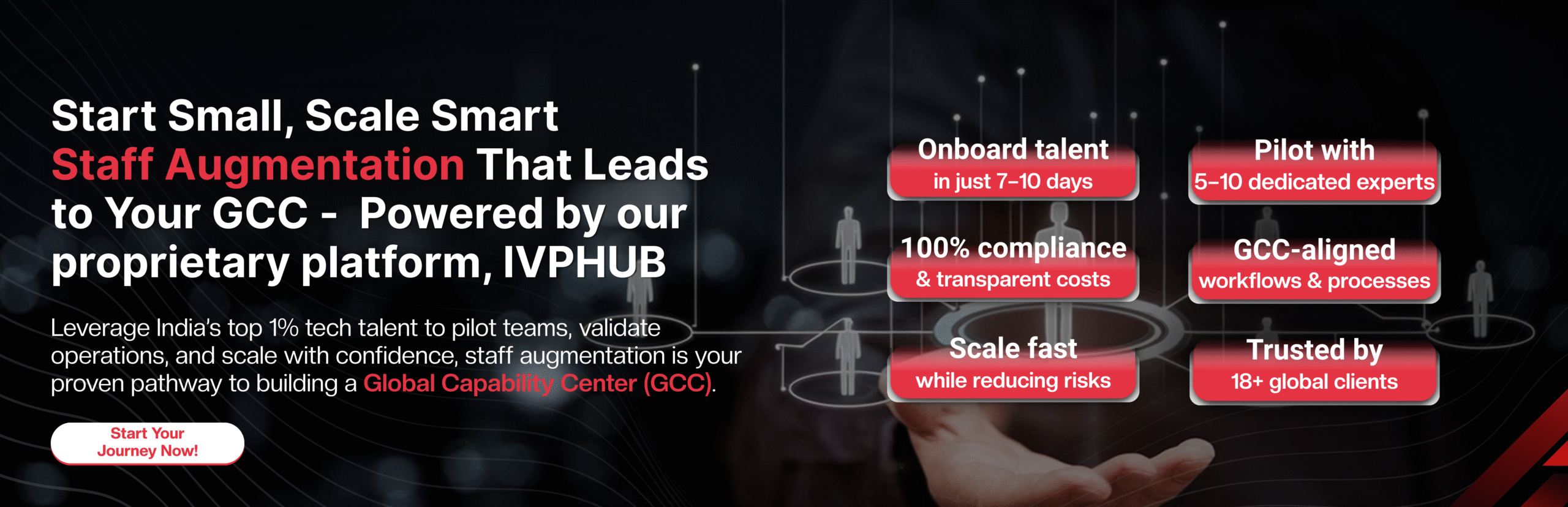
Promoting Growth with iValuePlus Resource Augmentation
iValuePlus offers enterprise-grade resource augmentation services designed for organizations transitioning from traditional hiring to flexible, scalable teams.
With iValuePlus, small and mid-sized businesses gain:
- Rapid access to specialized talent
- Alignment with strategic priorities
- Transparent performance governance
- Integration with internal teams
- Scalable engagement models
Explore how iValuePlus augments your capabilities without the long ramp times and fixed costs of traditional hiring.
Their structured approach integrates experts into client workflows while the client retains control of priorities, results, and direction—the ideal balance of flexibility and governance.
Implementation Roadmap
Phase 1: Define the Need
- Articulate skills gap
- Set delivery milestones
- Estimate engagement duration
Phase 2: Evaluate Partners
- Assess track record
- Review candidate profiles
- Validate governance models
Phase 3: Pilot Engagement
- Onboard a small team
- Monitor performance
- Adjust scope
Phase 4: Scale or Transition
- Add specialists as needed
- Absorb knowledge internally
- Release when done
This phased approach reduces risk and ensures alignment.
Common Pitfalls and How to Avoid Them
Pitfall 1: Not Defining Clear Outcomes
Set specific deliverables, not vague tasks.
Pitfall 2: Ignoring Governance
Define KPIs, review cycles, accountability.
Pitfall 3: Treating Augmented Resources as Vendors
They are part of your execution team—manage them as such.
Pitfall 4: Failing to Capture Knowledge Transfer
Document learning during engagement.
Avoid these, and augmentation becomes a force multiplier.
The Future of Work: Flexible, Capability-Driven Teams
Workforce models are evolving toward:
- Hybrid internal + external teams
- Skill-on-demand models
- Shorter engagement cycles
- Outcome-based delivery
Resource augmentation services represent this evolution—balancing control, speed, and expertise.
Today’s businesses can no longer afford static teams in a dynamic world.
Conclusion
Resource augmentation services are not a fad—they are a strategic response to a changing workforce reality. They reconcile the tension between flexibility and control, capability and cost, and speed and governance.
For modern organizations, especially small and mid-sized businesses, moving from traditional hiring models to resource augmentation is not just efficient—it is pragmatically imperative for growth.
And with partners like iValuePlus, that transition becomes structured, measurable, and aligned with long-term business goals.
FAQs
Q1: What are resource augmentation services?
A: They are on-demand talent solutions that embed specialized professionals into your teams while you retain strategic control.
Q2: How are resource augmentation services different from outsourcing?
A: Outsourcing often transfers responsibility to a vendor. Resource augmentation keeps execution under your direction while providing external specialists.
Q3: When should a company use resource augmentation over hiring?
A: Use it when you need speed, specialized skills, or scalability, when hiring full-time is too slow or costly.
Q4: Does augmentation replace internal teams?
A: Not usually. It fills gaps and accelerates execution while internal teams retain vision and oversight.
Q5: How quickly can augmentation resources be deployed?
A: Often within weeks, depending on skill requirements and onboarding readiness.
Q6: Does resource augmentation work for all departments?
A: Yes. Common functions include IT, marketing, finance, analytics, product development, and operations.
Q7: How do I measure the performance of augmentation resources?
A: Through KPIs tied to deliverables, velocity, quality, and impact on business outcomes.
Q8: Is resource augmentation cost-effective?
A: Yes—because costs are tied to needs, not permanent overhead, and specialized skills reduce rework risk.
Recent Post
From Support Function to Strategic Hub: Unlocking the Full Potential of GCCs
Discover how Global Capability Centers (GCCs) evolve from support functions...
Unlocking Workforce Efficiency with Integrated HR Generalist Solutions
Unlock workforce productivity and efficiency with integrated HR Generalist Solutions....

iValuePlus Services
iValuePlus is a one-stop solution to address all your needs to access, build and grow your business in the Indian market which is cost-effective & has a huge talent pool. Established in 2019 as a ‘Business Solution provider', our team has delivered successful growth projects in the international market.
Our services include setting up ODC (offshore development center), Staff Augmentation, Talent Acquisition, Digital Marketing, in the IT/ITES domain.


