
Discover the best city to set up office in India...
Categories

Future-Proofing with Pre-GCC: A Smarter Way to Build GCCs in India
The global business landscape is evolving rapidly, and enterprises across industries are rethinking their operating models to stay competitive. One of the most significant shifts in recent years has been the rise of Global Capability Centers (GCCs), also known as Global In-House Centers (GICs). These centers are no longer just cost-saving hubs—they are strategic growth engines driving innovation, digital transformation, and business resilience.
But while the opportunity is massive, setting up a Global Capability Center in India or any other location is not without risks. Enterprises that rush into a GCC without proper planning often face compliance challenges, talent shortages, misaligned operating models, or higher-than-expected costs.
That’s where Pre-GCC planning comes in. By validating business assumptions, testing the talent market, and ensuring compliance readiness, enterprises can future-proof their GCC investment. In this article, we’ll explore why Pre-GCC is critical, how it reduces risks, and how enterprises can leverage it to scale confidently in India.
What is a Global Capability Center (GCC)?
A Global Capability Center (GCC) is an offshore or nearshore extension of an enterprise that delivers a wide range of business functions, from IT and product development to finance, HR, and analytics. Unlike traditional outsourcing, GCCs are owned and controlled by the enterprise, ensuring better alignment with long-term business objectives.
Key characteristics of a GCC:
- Ownership & Control – Unlike outsourcing, enterprises directly manage the center.
- Strategic Role – Beyond cost efficiency, GCCs drive innovation and transformation.
- Scalability – Flexible models to expand operations as business grows.
India has emerged as the global leader in this space, with thousands of GCC companies in India across IT, BFSI, healthcare, and retail sectors. Many global brands have chosen India due to its large talent pool, strong infrastructure, and cost advantage.
What is Pre-GCC?
Pre-GCC is the planning and validation stage that happens before an enterprise sets up a Global Capability Center. It acts as a risk mitigation layer—helping companies test feasibility, analyze costs, and assess compliance before making large investments.
Think of it as a blueprint that ensures the GCC is designed for sustainability and scalability.
Key benefits of Pre-GCC:
- Provides clarity on business objectives.
- Ensures the chosen location strategy (e.g., GCC India) is aligned with goals.
- Assesses talent availability for niche skills.
- Benchmarks costs and ROI projections.
- Tests the operating model before scaling.
- Prepares enterprises for legal, tax, and compliance frameworks.
Why Skipping Pre-GCC Can Be Risky
Enterprises that skip the Pre-GCC phase often face avoidable roadblocks:
- Compliance Gaps – India has complex tax, labor, and regulatory frameworks. Ignoring these can delay GCC setup India timelines.
- Talent Shortages – Without prior assessment, enterprises may find that niche talent is scarce in the chosen city.
- Cost Overruns – Over-optimistic savings projections can backfire when hidden costs emerge.
- Misaligned Models – Adopting a GCC operating model without validation often results in inefficiencies.
- Longer Transition Times – Without Pre-GCC, enterprises may spend months fixing issues that could have been prevented.

Future-Proofing with Pre-GCC: How It De-Risks GCC Investments
Pre-GCC ensures enterprises build for the future, not just the present. Here’s how:
- Strategic Fit Validation
Not all business functions are suitable for a GCC. Pre-GCC helps identify which processes should be centralized in India, ensuring alignment with global objectives.
- Cost Benchmarking
A Pre-GCC checklist includes a detailed cost vs. ROI analysis. Enterprises can compare GCC outsourcing India with setting up their own GCC, ensuring they choose the most sustainable model.
- Talent Market Insights
India’s talent pool is vast, but niche roles require careful validation. Pre-GCC involves talent mapping, ensuring availability of required skills before scaling.
- Operating Model Testing
From Build-Operate-Transfer (BOT) to captive models, Pre-GCC allows enterprises to test which GCC operating model works best.
- Regulatory Compliance Readiness
Legal, tax, and labor laws in India can be complex. Pre-GCC ensures compliance frameworks are in place, reducing legal risks.
- Scalability and Future Growth
Enterprises can test scalability during Pre-GCC—whether they want to start with 30 people or 300—and design a roadmap for long-term growth.
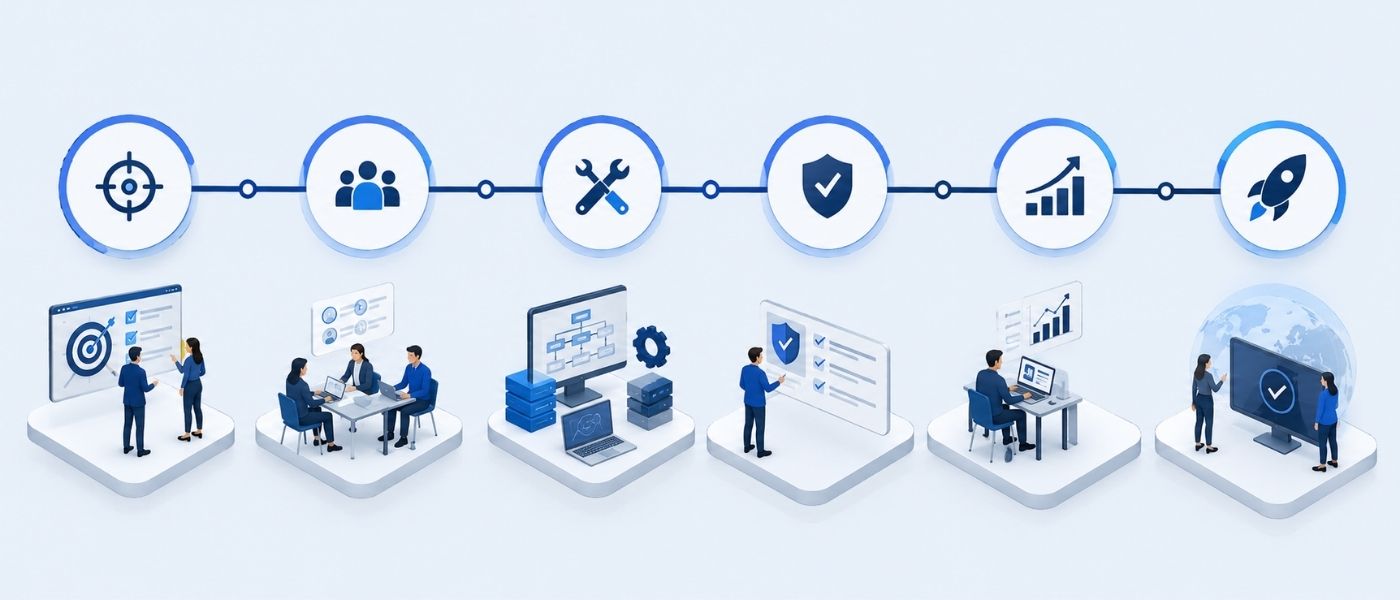
Pre-GCC Roadmap for Enterprises
A well-structured Pre-GCC roadmap includes:
- Define Objectives – What business functions will the GCC handle?
- Select Location – Bangalore, Hyderabad, Pune, or Tier-2 cities depending on cost and talent.
- Conduct Feasibility Study – Assess compliance, infrastructure, and local ecosystem.
- Pilot Programs – Use staff augmentation or ODC models to test the market.
- Evaluate Results – Validate ROI, culture fit, and scalability.
- Transition to Full GCC – Once validated, scale operations confidently.
Role of GCC Service Providers in India
While enterprises can attempt Pre-GCC alone, most prefer to engage specialized GCC service providers.
For example, iValuePlus (IVP) has been helping global enterprises establish GCCs in India with a strong focus on risk reduction, compliance, and scalability.
How iValuePlus supports Pre-GCC and GCC setup:
- Compliance & Regulatory Management – Handling tax, labor, and legal frameworks.
- Talent Acquisition & Staff Augmentation – Providing skilled teams quickly.
- ODC to GCC Transition – Helping enterprises pilot via offshore development centers before scaling into full GCCs.
- Customized Operating Models – Designing GCC operating models tailored to business needs.
- Cost Benchmarking & ROI Validation – Ensuring financial sustainability.
By blending Pre-GCC pilots with long-term GCC strategies, enterprises working with iValuePlus can de-risk investments and scale faster in India.
Case Snapshot: De-Risking a European GCC in India
A European enterprise exploring a Global Capability Center in India considered a direct setup but faced uncertainties about compliance and talent. Instead, they ran a Pre-GCC pilot with 40 engineers via a partner.
Within six months, they validated talent availability, tested cost structures, and ensured compliance frameworks. Encouraged by the results, they scaled into a 500+ member GCC in Bangalore—saving 25% in costs compared to their original estimates.
This example highlights how Pre-GCC can future-proof a GCC investment by reducing risks and ensuring smoother transitions.
Conclusion
The GCC model is becoming the backbone of global enterprises, and India remains the most preferred destination for setting up Global Capability Centers. But as the market matures, enterprises can no longer afford to rush into GCC setup without proper planning.
Pre-GCC planning is the key to future-proofing. It reduces risks, validates ROI, ensures compliance, and sets a foundation for long-term success.
For enterprises exploring GCC setup in India, partnering with experienced enablers like iValuePlus can make the difference between a smooth transition and a costly misstep. With proven expertise in Pre-GCC, staff augmentation, ODCs, and full GCC operations, iValuePlus helps enterprises confidently build and scale their Global Capability Centers in India.
Recent Post
How to Set Up an Offshore QA Center of Excellence in India: A Practical Guide for Global Teams
Learn how to set up an offshore QA center of...
Managed IT Services for Small Businesses: Complete Guide (2026)
Discover what managed IT services for small businesses actually include,...

iValuePlus Services
iValuePlus is a one-stop solution to address all your needs to access, build and grow your business in the Indian market which is cost-effective & has a huge talent pool. Established in 2019 as a ‘Business Solution provider', our team has delivered successful growth projects in the international market.
Our services include setting up ODC (offshore development center), Staff Augmentation, Talent Acquisition, Digital Marketing, in the IT/ITES domain.